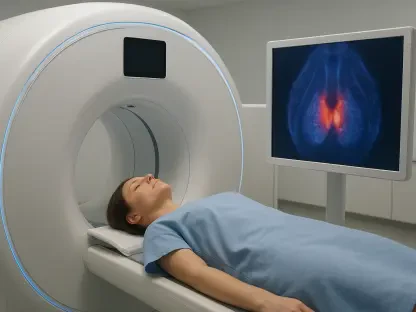

The sudden occlusion of a major cerebral artery presents one of the most time-critical challenges in modern emergency medicine, requiring surgeons to navigate a complex labyrinth of vasculature with high-stakes precision. Traditional methods of performing mechanical thrombectomy have long relied on two-dimensional fluoroscopic imaging, which frequently leaves clinicians guessing about the specific characteristics of the blockage. This lack of clarity often necessitates multiple attempts to retrieve a clot, increasing the risk of vessel damage and prolonging the time patients remain in a state of neurological distress. However, the integration of advanced sensor technology with high-precision vascular robotics is fundamentally altering this landscape by introducing data-driven insights into the operating room. By transforming standard interventional tools into intelligent instruments capable of feeling the biological environment, medical professionals can move beyond the limitations of visual observation, ensuring that every maneuver is informed by real-time diagnostic data.
Sensing the Invisible: Biological Intelligence in the Vessel
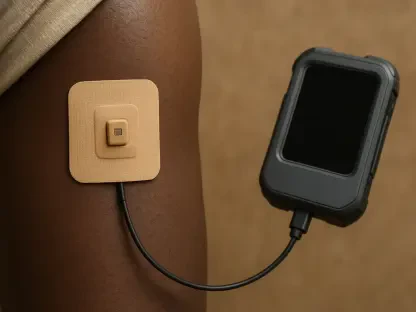
At the core of this technological leap is the Clotild Smart Guidewire, a sophisticated device that incorporates an ultra-miniature electrical impedance sensor at its distal tip to monitor the internal vascular environment. Unlike traditional guidewires that serve as passive mechanical conduits, this intelligent system actively analyzes the tissue it encounters, providing instantaneous feedback on the cellular composition of an obstruction. By measuring the electrical resistance and conductivity of the material, the sensor can differentiate between clots rich in red blood cells and those primarily composed of fibrin, a distinction that is crucial for selecting the appropriate retrieval tool. This immediate characterization allows the interventional team to bypass the guesswork associated with standard imaging, which often provides only a silhouette of the blockage. Consequently, the procedure transitions from reactive adjustments to targeted, evidence-based intervention where the clot profile guides the surgical strategy.
Transitioning from visual estimation to precise sensor data effectively minimizes the trial-and-error aspect of stroke treatment, which has historically been a significant bottleneck in successful outcomes. When a surgeon knows the exact boundaries and density of a clot, they can optimize the application of aspiration catheters or stent retrievers, significantly reducing the number of passes required to achieve recanalization. Each unsuccessful pass increases the cumulative risk of arterial injury and potential hemorrhagic complications, making the first-pass success rate a critical metric for long-term recovery. This sensor-driven approach also creates a continuous stream of data that can be used to refine predictive models, helping the clinical team anticipate how a specific obstruction might respond to mechanical forces. As this technology becomes more deeply integrated into standard protocols from 2026 to 2028, the focus is shifting toward a personalized model where the biological profile of the condition directly guides the mechanical solution.
Precision and Access: The Impact of Robotic Integration
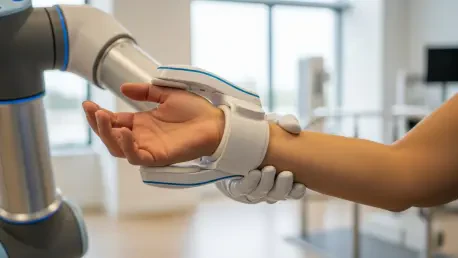
The integration of Sensome’s smart guidewire with Robocath’s vascular robotic platforms addressed the persistent hurdle of tactile feedback loss in digital surgery. In traditional manual procedures, a surgeon relied on the subtle resistance felt through their fingertips to gauge the interaction between the tool and the vessel wall. Robotics, while offering superior mechanical stability, often disconnected the operator from these sensations, which increased the risk of accidental vessel injury. By pairing the sensory input from the Clotild wire with the motorized control of the robot, the system restored this vital connection through real-time data visualization. Recent proof-of-concept tests demonstrated that the robot could maintain steady navigation while the wire provided the necessary alerts regarding clot location and vessel resistance. This synergy ensured that the mechanical advantages of robotics did not come at the cost of safety, providing a stabilized environment where the surgeon could operate with microscopic accuracy.
The successful integration of these technologies offered a clear roadmap for democratizing high-level stroke care, particularly for patients in remote regions where specialized expertise was historically unavailable. Clinical leaders recognized that the combination of robotics and biological sensing allowed specialists at urban centers to perform life-saving procedures via secure tele-robotic links, effectively bridging the geographical gap during the critical golden hour. Strategic investments were directed toward enhancing the cybersecurity of these remote connections and refining the user interfaces that translated complex sensor data into actionable surgical insights. These steps ensured that the technological advancements moved beyond the laboratory and into standardized medical protocols that improved patient safety across diverse healthcare networks. Moving forward, the focus shifted to training a new generation of physicians to oversee semi-autonomous systems that could navigate the vasculature with superhuman consistency, ensuring that high-quality thrombectomy became a universal standard of care.