
The American healthcare system relies fundamentally on the colonoscopy as the primary diagnostic tool for the early detection and prevention of colorectal cancer, yet the safety of this routine procedure is currently under unprecedented scrutiny. At the heart of this intensifying controversy is the Olympus Corporation, a Japanese conglomerate that maintains a commanding grip on approximately 70 percent of the global market for these specialized medical instruments. While the technology has undoubtedly saved countless lives through early intervention, a troubling pattern of microbial transmission has emerged, casting a shadow over the corporation’s engineering choices and corporate oversight. This intersection of medical necessity and manufacturer dominance has created a complex public health crisis where the tools designed to identify disease are themselves becoming vectors for life-threatening infections. As hospitals continue to perform millions of these procedures annually, the persistent threat of cross-contamination challenges the foundational safety protocols that patients and providers have long taken for granted.
Engineering Challenges: The Mechanical Origins of Infection Risks
Structural Vulnerabilities: The Hidden Danger of Biofilm
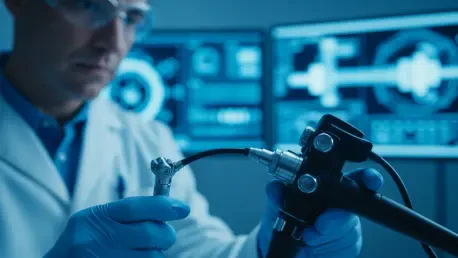
The intricate architecture of a modern colonoscope presents a significant engineering challenge, primarily because the device must be flexible enough to navigate the human anatomy while containing multiple internal channels for air, water, and surgical tools. These internal lumens are extremely narrow and long, creating microscopic environments that are notoriously difficult to access during the standard cleaning process. Even with the use of specialized brushes and high-level disinfectants, organic material from a patient can remain trapped in the distal tip or within the crevices of the elevator mechanism. This residual biological debris provides a fertile breeding ground for bacteria, which quickly organize into a resilient, glue-like structure known as biofilm. Once a biofilm has established itself on the inner surfaces of the scope, it acts as a protective shield that prevents chemical sterilants from reaching the underlying pathogens, effectively rendering the standard reprocessing cycle insufficient for ensuring patient safety.
Biofilm formation represents a fundamental failure of the current reusable device model, as it creates a physical barrier that is largely immune to the heat-based and chemical-based sterilization techniques used in most hospital settings. These microbial communities are not merely a collection of loose bacteria but are complex biological structures that bond with the synthetic materials of the scope at a molecular level. Because these films are often invisible to the naked eye and can form in areas of the device that are impossible to inspect visually, medical staff may inadvertently believe a device is sterile when it still harbors dangerous microorganisms. This design flaw suggests that the very materials used to construct these high-end medical tools may be fundamentally incompatible with the goal of total sterilization. Consequently, the transition from one patient to the next involves a calculated risk that the previous patient’s biological remnants have been adequately neutralized, a gamble that has increasingly resulted in catastrophic health outcomes for unsuspecting individuals.
The mechanical complexity of Olympus scopes further exacerbates these risks, as the moving parts and seals required for functionality often degrade over time through repeated use. As the device undergoes hundreds of cleaning cycles, microscopic cracks and scratches appear on the internal surfaces, providing even more space for bacteria to hide and flourish. These “micro-refuges” are essentially unreachable by standard mechanical scrubbing, allowing pathogens to persist through the most rigorous hospital protocols. The industry has struggled to balance the need for a durable, reusable instrument with the absolute necessity of biological purity. This tension has led to a situation where the engineering limitations of the device are outpaced by the evolution of resilient bacteria, leaving healthcare providers in a difficult position where they must rely on equipment that may have inherent, unfixable safety defects built into its very design.
Reprocessing Limitations: Why Standard Cleaning Protocols Fail
The process of high-level disinfection, commonly referred to as reprocessing, is a multi-step protocol that involves manual cleaning followed by immersion in automated endoscope reprocessors. While these systems are designed to eliminate the vast majority of pathogens, they are heavily dependent on the physical integrity of the scope and the meticulousness of the technician. In a high-volume clinical environment, the time pressure to turn around equipment for the next procedure can lead to subtle lapses in cleaning technique, but evidence suggests that even perfect adherence to Olympus’s instructions may not be enough. The structural design of the Olympus TJF-Q180V and similar models features tight spaces where fluids do not circulate effectively, meaning that the disinfectant may never actually touch the bacteria it is intended to kill. This creates a false sense of security among medical professionals who believe they are following the best available practices.
Furthermore, the chemicals used in reprocessing, such as glutaraldehyde or ortho-phthalaldehyde, are highly toxic and intended to denature proteins and destroy cellular membranes. However, if these chemicals cannot penetrate the protective layer of a biofilm or reach the deepest recesses of the internal channels, their effectiveness is completely neutralized. Some studies have suggested that the repeated exposure to these chemicals can actually make certain bacterial strains more resilient, selecting for the most dangerous and hard-to-kill organisms. This creates a cycle where the cleaning process itself may be contributing to the development of more resistant microbial populations within the hospital’s equipment inventory. The reliance on chemical disinfection as a substitute for true sterilization has proven to be a major vulnerability in the endoscopic workflow, leading to calls for a complete overhaul of how these instruments are maintained between patient uses.
Beyond the chemical limitations, the human element of reprocessing remains a significant point of failure that the industry has struggled to address through automation. While automated machines handle the final stages of disinfection, the initial manual pre-cleaning is vital for removing the bulk of organic matter, yet this stage is highly subjective and labor-intensive. When the design of the scope makes this manual cleaning nearly impossible to perform perfectly every time, the entire safety chain is compromised. This systemic weakness highlights the need for a shift in how medical devices are evaluated for safety, moving away from theoretical cleaning models toward real-world performance metrics. The realization that standard protocols are failing has forced a reevaluation of the relationship between medical device manufacturers and the hospitals that use their products, placing more pressure on companies like Olympus to innovate beyond the traditional reusable framework.
Pathogenic Threats: The Clinical Impact of Contaminated Scopes
The Rise of Superbugs: Confronting Antibiotic-Resistant Bacteria
The most alarming consequence of contaminated colonoscopes is the transmission of “superbugs,” which are bacterial strains that have developed resistance to nearly all available antibiotics and modern medical treatments. Among these, Carbapenem-resistant Enterobacterales, or CRE, has emerged as a particularly terrifying threat within the clinical setting. Often described by health officials as “nightmare bacteria,” CRE can have a mortality rate as high as 50 percent once it enters the bloodstream. Because these bacteria are often introduced directly into the gastrointestinal tract or deeper tissues during an endoscopic procedure, they can bypass the body’s natural defenses and lead to rapid-onset infections. This direct transmission route means that a patient who arrives for a routine screening can leave the hospital with a latent infection that is essentially untreatable by conventional medicine, turning a preventive measure into a life-threatening event.
Major outbreaks of CRE and other resistant pathogens have been documented at prestigious medical centers in cities such as Los Angeles and Seattle, where dozens of patients were infected by a single contaminated instrument. These incidents have demonstrated that even the best-funded and most reputable hospitals are not immune to the risks posed by defective device designs. The asymptomatic nature of many colonoscopy patients further complicates the issue, as a single carrier of a resistant strain can contaminate a scope that then spreads the bacteria to multiple subsequent patients before the outbreak is even detected. This delay in identification allows the bacteria to gain a foothold in the hospital environment, making it incredibly difficult to eradicate and leading to a prolonged period of risk for the local community. The clinical reality of these infections is often a grueling battle with multi-drug therapy, long-term hospitalization, and, in many tragic cases, systemic organ failure.
The genetic adaptability of these superbugs allows them to swap resistance genes with other bacteria within the biofilm of a colonoscope, creating a “hotspot” for microbial evolution. This means that a relatively benign bacterial strain can become highly dangerous simply by co-existing with more resilient pathogens in the dark, moist environment of an uncleaned lumen. Healthcare providers are now finding themselves in a race against time, as the traditional arsenal of antibiotics continues to lose its efficacy against these scope-borne threats. The psychological impact on patients is also profound, as the fear of contracting a “nightmare” infection can discourage individuals from seeking necessary screenings, potentially leading to a rise in undiagnosed colorectal cancers. This secondary effect represents a significant public health setback, illustrating how corporate negligence in device safety can have far-reaching consequences for the entire medical infrastructure.
Systemic Health Risks: Beyond Specialized Bacterial Strains
While antibiotic-resistant bacteria dominate the headlines, the risks associated with contaminated colonoscopes extend to a much broader range of pathogens, including viral agents and more common bacterial threats. Methicillin-resistant Staphylococcus aureus (MRSA) and Tuberculosis have both been linked to transmission via inadequately reprocessed endoscopes, illustrating the versatility of the device as a vector for disease. These infections may not always lead to the immediate mortality associated with CRE, but they can cause chronic health problems, lengthy recovery periods, and significant financial burdens for patients and their families. The introduction of these pathogens into the sterile environments of the body can trigger a systemic inflammatory response, leading to sepsis, a condition where the body’s immune system attacks its own organs. Sepsis remains a leading cause of death in hospital settings and can progress from minor symptoms to multi-organ failure within a matter of hours.
Viral transmission is another critical concern, as agents like Hepatitis B and C are highly resilient and can survive on surfaces for extended periods if not properly neutralized. While modern screening and vaccination programs have reduced the prevalence of these viruses, the reuse of medical equipment always carries an inherent risk of bloodborne pathogen transmission. The microscopic nature of these threats means that a device can appear visually clean while still harboring millions of viral particles. Patients who undergo procedures with contaminated equipment may not develop symptoms for weeks or even months, making it difficult to trace the infection back to the specific medical event. This lack of immediate feedback often protects manufacturers from scrutiny, as the link between the procedure and the illness becomes obscured by the passage of time and the complexities of human health.
The broader implications for patient safety also include the potential for transmitting non-conventional agents, such as prions, which are notoriously difficult to destroy through standard sterilization methods. Although prion transmission via colonoscopy is considered rare, the possibility highlights the extreme vulnerability of reusable medical devices. The cumulative risk profile of these instruments suggests that the medical community may have reached a tipping point where the benefits of reusability are outweighed by the systemic dangers of cross-contamination. As the variety of pathogens continues to expand and their resistance profiles grow more complex, the reliance on a single, aging device design becomes increasingly untenable. This environment necessitates a rigorous reevaluation of patient consent forms and hospital transparency, ensuring that individuals are fully aware of the microbial risks they face when undergoing routine diagnostic procedures.
Regulatory Oversight: Federal Measures and Market Consequences
Enforcement Actions: The Implications of the June 2025 Import Alert
The regulatory landscape shifted dramatically in mid-2025 when the Food and Drug Administration took the unprecedented step of issuing a comprehensive import alert against various Olympus products. This move followed years of mounting evidence and multiple warning letters that the company had failed to adequately address the safety defects in its endoscopic line. The import alert effectively halted the shipment of new colonoscopes, specialized cleaners, and essential accessories into the United States, creating a massive disruption in the medical device market. This was not merely a procedural slap on the wrist but a clear signal from federal regulators that the status quo of corporate self-monitoring was no longer acceptable. The FDA’s decision was based on findings that Olympus had not only designed flawed products but had also failed to report known infections and deaths to the agency in a timely manner.
The impact of this federal ban has been felt throughout the healthcare industry, as hospitals that rely exclusively on Olympus equipment find themselves unable to replace aging inventory or expand their diagnostic capabilities. This has led to a sudden surge in demand for alternative manufacturers, though the 70 percent market share held by Olympus means that the supply chain is poorly equipped to handle such a rapid shift. The regulatory action also triggered a series of mandatory safety recalls and rigorous inspections of existing equipment, placing an enormous administrative and financial burden on medical facilities. By moving from a posture of observation to one of active enforcement, the FDA has forced a conversation about the responsibilities of global conglomerates to prioritize patient safety over market dominance and manufacturing efficiency. This regulatory intervention serves as a landmark case in how federal agencies can exercise their authority to protect the public from systemic corporate failures.
Beyond the immediate ban on imports, the FDA has implemented more stringent requirements for the approval of any future endoscopic technologies, focusing heavily on “cleanability” as a primary metric for safety. Manufacturers must now provide empirical evidence that their devices can be returned to a state of total sterility in real-world clinical conditions, a standard that many legacy products may never be able to meet. This shift in regulatory philosophy marks the end of an era where incremental design changes were sufficient to maintain market access. The 2025 enforcement actions have set a new benchmark for the entire medical device industry, signaling that the federal government will no longer tolerate the distribution of products that harbor hidden dangers. For Olympus, the path back to regulatory compliance will require a total overhaul of their engineering and reporting practices, a process that will likely take years and cost billions in lost revenue and research and development.
Industry Accountability: Shifting Standards for Medical Device Safety
The fallout from the Olympus controversy has prompted a wider reflection on the standards of accountability within the medical device industry, particularly regarding how manufacturers interact with healthcare providers and the public. For years, the burden of ensuring device safety was placed almost entirely on the shoulders of hospital reprocessing staff, while the inherent design flaws of the equipment were downplayed or ignored. The current crisis has exposed the limitations of this model, showing that even the most diligent staff cannot overcome the physical obstacles presented by a poorly designed instrument. This realization has sparked a movement toward “human-centered design” in medical technology, where the ease of cleaning and the reduction of infection risk are prioritized at every stage of the development process. The industry is now being forced to move away from complex, multi-component reusable tools toward simpler, more robust designs that minimize the potential for biological buildup.
One of the most significant shifts in the industry is the accelerating transition toward single-use or disposable endoscopic technology. While these devices were once considered too expensive or technically inferior to their reusable counterparts, the rising costs of infection-related litigation and hospital-acquired infections have changed the economic calculus. Single-use scopes eliminate the risk of cross-patient contamination entirely, providing a level of safety that is simply impossible to achieve with reusable instruments. Major hospital systems are increasingly adopting these disposable solutions for high-risk patients or procedures where the threat of infection is particularly acute. This trend represents a fundamental disruption of the traditional medical device business model, which relied on the long-term sale of reusable hardware and associated cleaning chemicals. The move toward disposables is not just a technological change but a moral one, reflecting a commitment to the principle that no patient should be harmed by the tools intended to heal them.
Corporate transparency has also become a focal point of industry reform, with new mandates requiring companies to disclose safety data and infection reports more openly. The “black box” of proprietary engineering is being opened to third-party auditors and independent researchers who can verify the safety claims made by manufacturers. This increased transparency is intended to prevent the kind of delayed reporting and data manipulation that characterized the Olympus response to the superbug outbreaks. By fostering an environment of open communication and rigorous oversight, the industry hopes to rebuild the trust that has been eroded by years of safety scandals. The current progress from 2026 to 2028 will likely see a complete transformation of the endoscopic market, as safety-first innovations replace the aging and dangerous designs of the past. This evolution is a necessary response to a crisis that has demonstrated the high cost of corporate negligence in the modern medical landscape.
Legal Advocacy: Pursuing Justice for Affected Patients
Litigation Strategies: Establishing Liability for Design Flaws
The surge in life-threatening infections linked to Olympus colonoscopes has ignited a massive wave of litigation, as patients and their families seek to hold the manufacturer accountable for the harm they have suffered. These lawsuits are built on the legal premise that the devices were “unreasonably dangerous” because their design made them impossible to clean effectively, even when all manufacturer-provided instructions were followed. Attorneys representing the victims are focusing on the concept of strict liability, arguing that the corporation is responsible for the injuries caused by its defective products regardless of the specific intent or level of care exercised. This legal strategy aims to prove that the risk of infection was a foreseeable consequence of the scope’s intricate mechanical structure and that the company failed to provide adequate warnings or solutions to the medical community. The discovery process in these cases has revealed internal documents suggesting that Olympus was aware of the infection risks years before taking any public action.
Establishing causation is a critical component of these legal battles, as plaintiffs must demonstrate a direct link between the colonoscopy procedure and the subsequent infection. This often involves detailed microbiological testing to match the bacterial strain found in the patient with the specific scope used during the procedure. In many cases, the timing of the symptoms provides compelling evidence; for instance, a patient who develops a severe CRE infection within days of a colonoscopy is much more likely to have contracted it from the instrument than from a community-wide outbreak. For families who have lost loved ones, wrongful death claims focus on the tragic reality that a routine, preventive screening resulted in a fatal illness. These lawsuits are not just about financial compensation; they are a vital mechanism for forcing corporate change and ensuring that the safety failures of the past are not repeated. The legal pressure has already compelled Olympus to settle numerous high-profile cases, though many more remain in the court system.
The role of expert testimony is also pivotal in these cases, as engineers, microbiologists, and infectious disease specialists provide insight into how the design flaws led to patient harm. These experts explain the complex behavior of biofilms and the limitations of reprocessing to juries who may not be familiar with the technical details of medical device maintenance. This educational aspect of litigation is crucial for building public awareness and creating a broader mandate for safety reform. As more information comes to light, the legal landscape is shifting in favor of the victims, with several landmark verdicts setting the stage for future claims. The ongoing litigation serves as a powerful deterrent against future corporate negligence, reinforcing the idea that the health and safety of patients must always take precedence over the profit margins of global corporations. The court system has become the final line of defense for individuals who have been let down by the manufacturers and the regulatory systems intended to protect them.
Future Safeguards: Transitioning Toward Safer Endoscopic Technology
Patients who must undergo an endoscopic procedure in the current environment are advised to take an active role in their healthcare by asking detailed questions about the equipment being used. It is entirely appropriate to inquire whether the hospital uses the latest reprocessing standards or if they have integrated single-use technology into their practice. Recognizing the early symptoms of a post-operative infection, such as high fever, persistent chills, and severe abdominal pain, is essential for seeking the rapid medical intervention required to treat antibiotic-resistant strains. Education remains the most effective tool for patient advocacy, as informed individuals can make better decisions about where and how they receive care. Healthcare providers also have a responsibility to be transparent about the risks associated with reusable devices and to provide clear instructions for monitoring health in the weeks following a procedure.
The healthcare industry responded to these systemic challenges by accelerating the adoption of single-use endoscopes and implementing more stringent third-party verification for reprocessing systems. Hospital administrators took the lead in diversifying their equipment providers to avoid the risks associated with a single-manufacturer monopoly, thereby enhancing the overall resilience of the medical supply chain. Research institutions and engineering firms partnered to develop new biocompatible materials that naturally resist the formation of biofilms, ensuring that future devices were inherently safer than their predecessors. These actions collectively moved the standard of care toward a more cautious and safety-oriented approach, where the elimination of cross-patient contamination became a non-negotiable requirement for all diagnostic tools. The transition period between 2026 and 2028 saw a significant reduction in reported superbug outbreaks, demonstrating that structural changes in technology and oversight were effective in mitigating the crisis.
Ultimately, the lessons learned from the Olympus controversy provided a roadmap for the future of medical device regulation and corporate accountability. By prioritizing the development of single-use technologies and rigorous transparency, the medical community successfully reclaimed the safety of routine screenings. Regulatory agencies maintained their aggressive enforcement stance, ensuring that any new products entering the market were subjected to exhaustive real-world testing. Patients gained greater access to information regarding the safety records of the facilities they visited, fostering a culture of accountability that extended from the manufacturing floor to the operating room. This comprehensive overhaul of the endoscopic landscape ensured that the vital work of cancer prevention could continue without the looming threat of preventable infectious disease. The legacy of this period was a renewed commitment to the principle that medical innovation must be matched by an equal commitment to the biological security of every patient.