
The convergence of high-capacity computing and clinical medicine is currently reshaping the boundaries of oncology, turning static diagnostic procedures into proactive biological assessments. This fundamental shift is exemplified by the strategic alliance between Imagene AI and the Tel Aviv Sourasky University Medical Center, also known as Ichilov, which has established a clinical AI infrastructure designed to process vast amounts of medical data. By integrating multimodal artificial intelligence directly into the operations of a premier academic hospital, the partnership effectively bridges the gap between sophisticated computational research and the daily realities of frontline patient care. This collaboration moves beyond traditional methods by identifying unique patient subgroups and uncovering critical biomarkers that were once invisible to the human eye. Digital pathology is no longer viewed as a mere diagnostic record but has instead evolved into a dynamic engine for oncology intelligence that drives treatment decisions.
Establishing a Clinical AI Ecosystem
Merging Multimodal Tech with Hospital Workflows
Proprietary multimodal foundation models sit at the core of this transformation, synthesizing diverse medical data such as traditional H&E stained slides and complex molecular profiles into a unified diagnostic view. These technological foundations allow for the creation of AI-powered pathology assays, such as companion diagnostics that translate biological insights into clear clinical strategies. A prime example of this success is LungOI®, a multi-gene biomarker panel for lung cancer that has achieved significant regulatory and economic milestones, proving that AI-driven tools can meet the rigorous standards required for global healthcare deployment.
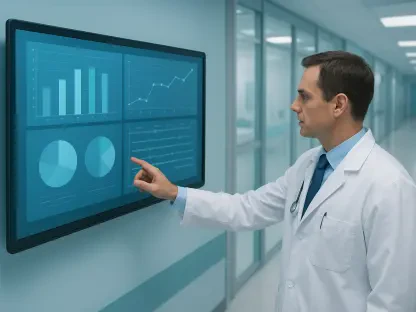
Beyond the technical architecture, these models facilitate a deeper understanding of the tumor microenvironment by analyzing spatial relationships that humans cannot manually quantify. By automating the identification of specific genetic mutations directly from digitized tissue samples, the workflow reduces the turnaround time from biopsy to treatment plan from weeks to just a few days. This speed is critical in aggressive cancer cases where every hour counts, ensuring that patients receive the most effective therapies as soon as possible. These systems represent a shift toward real-time molecular profiling that scales across entire hospital systems.
Validating Intelligence within Active Medical Environments
The effectiveness of these AI models relies heavily on real-world validation within active medical environments like the I-NEXT innovation hub, which serves as a testing ground for emerging health tech. This specialized center allows researchers to test emerging technologies within actual clinical workflows, ensuring that models remain accurate despite the inherent noise and complexity of hospital data. By grounding development in a high-quality clinical setting, the partnership ensures that AI tools are not just theoretical concepts but reliable assets that clinicians can trust to guide life-saving decisions for their patients.
Furthermore, the I-NEXT environment bridges the gap between data scientists and practicing oncologists by fostering a collaborative space where feedback is instantaneous and technically actionable. When models are exposed to the variability of real-world imaging equipment and staining techniques, they become more robust and less prone to the algorithmic bias that often plagues lab-only developments. This iterative process of refinement ensures that the technology remains relevant to the diverse patient populations treated at major medical centers. Consequently, the resulting tools are better equipped to handle the nuances of clinical pathology.
Transforming Patient Care and Pharmaceutical R&D
Advancing Patient Outcomes through Targeted Strategies
Precision oncology is fundamentally redefined by the ability to stratify patients with unprecedented accuracy, ensuring that individuals receive therapies tailored to their specific genetic and pathological profiles. This infrastructure empowers caregivers to detect conditions that were previously hidden, moving healthcare toward a more proactive and personalized model. Rather than replacing medical professionals, these AI tools provide enhanced diagnostic resolution, allowing doctors to select targeted interventions that offer the highest probability of success for each unique case.
Moreover, this infrastructure serves as a vital gateway for the pharmaceutical industry by streamlining the research and development of new drugs and therapeutic interventions. By providing biopharma partners with a platform to inform biomarker-driven clinical trials, the collaboration helps identify the most suitable patient cohorts, thereby reducing the time and cost associated with bringing new therapies to market. This synergy between hospital-based innovation and pharmaceutical discovery creates a continuous feedback loop that accelerates the delivery of next-generation cancer treatments, benefiting the entire healthcare ecosystem.
Scaling Solutions for Global Healthcare Impact
To maximize the impact of these breakthroughs, institutions prioritized the standardization of digital imaging formats and ensured that AI-driven diagnostic tools were seamlessly integrated into existing electronic health records. They established training programs that equipped pathologists with the skills needed to interpret AI-generated insights, transforming the workforce into a hybrid of biological expertise and computational literacy. By streamlining the path from discovery to clinical application, the partnership successfully reduced the cost of multi-gene testing, making precision oncology accessible to a broader demographic.
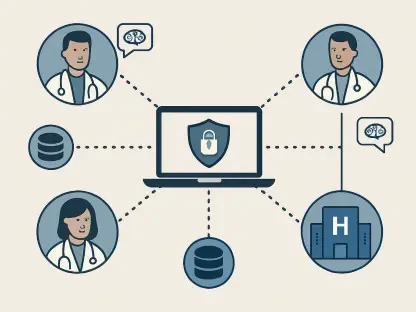
Stakeholders invested in decentralized data processing to maintain patient privacy while allowing for the global scalability of diagnostic models across different continents and health systems. They leveraged the vast dataset of nearly two million annual patient visits at Ichilov to refine the accuracy of predictive algorithms, ensuring that the results were representative of complex, real-world cases. This proactive approach turned the infrastructure into a global benchmark, encouraging other medical centers to adopt similar collaborative frameworks that fused clinical excellence with advanced algorithmic science. Between 2026 and 2028, these efforts solidified the role of AI in routine oncology.