
A quiet revolution is currently sweeping through the operating theaters of the United Kingdom as the National Health Service integrates cutting-edge robotic systems to address unprecedented surgical backlogs and improve patient outcomes. At the forefront of this movement is Barts Health NHS Trust, where clinical leads like Dr. Sasha Stamenkovic are leveraging the latest technological breakthroughs to merge the tactile precision of traditional open surgery with the minimal invasiveness of modern keyhole techniques. This shift is not merely a cosmetic upgrade to hospital equipment but a comprehensive reimagining of how the public healthcare system functions under extreme pressure. By adopting these high-tech tools, the NHS aims to reduce the physical trauma experienced by patients, thereby shortening recovery times and freeing up critical bed space that has been at a premium for years. The objective is to create a more resilient healthcare infrastructure capable of delivering world-class results while maximizing efficiency across various medical disciplines. Through this massive investment, the service is transforming the nature of surgical intervention, ensuring that the highest standards of safety and care are maintained in an increasingly digital environment.
Advanced Engineering: The Mechanics of the da Vinci 5 System
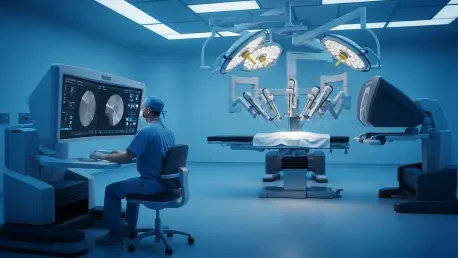
The centerpiece of this technological leap is the da Vinci 5, a robotic platform that transforms the way surgeons interact with the human body during complex procedures. In a departure from conventional surgery where the practitioner stands directly over the patient, this system utilizes a sophisticated remote console where the surgeon sits and views a high-definition, three-dimensional representation of the internal surgical site. This immersive headset provides a degree of magnification and clarity that far surpasses the natural capabilities of the human eye, enabling clinicians to identify and preserve microscopic blood vessels and delicate nerve structures that might otherwise be obscured. Such visual depth is essential when operating in high-stakes areas like the chest or abdomen, where even a millimeter of deviation can have significant consequences. By placing the surgeon in a virtual environment, the system provides a stable and focused perspective that reduces the cognitive load associated with lengthy and grueling operations.
Beyond the visual interface, the mechanical prowess of the system is anchored by four specialized robotic arms that translate the surgeon’s hand gestures into incredibly precise movements within the patient’s body. These articulated instruments offer a range of motion and dexterity that exceeds what is possible with human hands alone, as they are capable of rotating and maneuvering in tight spaces that would be inaccessible to traditional surgical tools. One of the most significant advantages of this mechanical setup is its ability to filter out the natural tremors that can affect even the most experienced surgeons, ensuring that every cut and stitch is executed with absolute stability. This level of control is particularly vital for intricate tasks such as suturing internal organs or removing cancerous tissue from around major arteries. As these robotic tools become more ubiquitous, they allow for a standard of care that is consistently high, regardless of the physical fatigue the surgical team might be experiencing during a long shift.
Professional Evolution: Redefining the Surgical Craft and Training
Adopting robotic platforms requires more than just technical proficiency; it necessitates a fundamental shift in how surgeons perceive their professional craft as it transitions into a form of high-precision digital art. While traditional keyhole surgery often relies on rigid instruments that can feel clumsy and restrictive, the robotic arms of the da Vinci 5 move with a fluidity that mimics the natural rotation of the human wrist. This returned sense of tactile control and intuitive movement allows practitioners to perform complex maneuvers that were previously difficult to execute without opening the patient’s body entirely. Many surgeons report that the technology enables them to regain a level of creativity and finesse that was partially lost during the initial move toward standard laparoscopic procedures. Consequently, the surgical experience becomes more intuitive, allowing the doctor to focus entirely on the nuances of the pathology rather than fighting against the limitations of the tools, which results in a more thorough and effective operation.
The integration of these systems also brings unique psychological and educational challenges, as the medical community must prepare a new generation of surgeons to operate while physically detached from the patient. To address this, specialized training programs are being implemented to help digital native doctors adapt to a console-based environment that feels more like a flight simulator than a traditional operating room. These curriculums focus not only on the mechanical operation of the robot but also on the specialized communication skills required to lead a surgical team when the primary operator is positioned away from the table. The emphasis is on building a cohesive workflow where the bedside assistants and the console surgeon act in perfect synchronization. By prioritizing both technical mastery and team dynamics, the NHS is ensuring that the transition to a high-tech surgical environment does not compromise the essential human elements of patient care. This evolution in training ensures that the workforce remains versatile and capable of maximizing the potential of the machines.
Patient Outcomes: Transforming Recovery and Hospital Capacity
The most profound impact of this robotic expansion is reflected in the accelerated recovery rates of patients who undergo major surgeries with these advanced systems. Because the robotic tools allow for extremely targeted interventions, there is significantly less damage to the surrounding healthy tissues and muscular structures compared to traditional open surgery. This reduction in physical trauma directly translates to fewer postoperative complications, such as internal bleeding or leaks, which are often the primary drivers of extended hospital stays. Patients who would have previously faced weeks of bed rest and intensive monitoring are now finding that their bodies can heal much faster due to the smaller incisions and greater surgical accuracy. This shift toward low-impact major surgery is fundamentally changing the expectations for patient care, moving away from prolonged periods of recovery toward a model where individuals can return to their daily routines with minimal interruption. It represents a significant leap forward in reducing the overall burden of surgery on the human body.
Real-world evidence of this recovery revolution is found in patients like Ian Macleod, who underwent a complex lung operation and was able to walk within hours and drive within a week. For a healthcare system like the NHS, these rapid discharge times are a critical tool for managing resources and addressing the massive waiting lists for elective procedures. When a patient can go home several days earlier than expected, it opens up a bed for the next person in line, effectively increasing the capacity of the hospital without requiring the construction of new physical facilities. This streamlined throughput is essential for maintaining the viability of public healthcare in an era of rising demand and aging populations. By reducing the time each patient spends in the hospital, the system can treat a larger volume of people more effectively, ensuring that life-saving interventions are available to a broader segment of the population. This operational efficiency is one of the primary motivations behind the government’s heavy investment in robotic infrastructure across the nation.
National Strategy: Strategic Goals and the Challenge of Access
Looking toward the coming decade, the UK government has placed robotic assistance at the core of its long-term healthcare strategy with the ambitious target of using these systems in 90 percent of all keyhole surgeries by 2035. This strategic goal is designed to standardize a top-tier level of care across the entire National Health Service, ensuring that every citizen has access to the most advanced medical technology regardless of where they live. By making a big bet on robotics, the government aims to modernize the aging infrastructure of the NHS and position it as one of the most technologically advanced and efficient healthcare providers on the global stage. This widespread adoption is expected to create a more resilient system where surgical outcomes are predictable and high-quality across all regional trusts. The commitment to this target reflects a belief that robotics is not just a luxury for specialized centers but an essential component of a modern, functioning public health system that prioritizes precision and patient safety above all else.
Despite these high-level objectives, significant hurdles remain regarding the equitable distribution of technology and the funding required to sustain such a massive rollout. Currently, a substantial number of hospitals rely on charitable donations to purchase these multi-million dollar robotic platforms, which has inadvertently created a postcode lottery where a patient’s access to advanced care depends on their local hospital’s fundraising success. To fulfill the mission of providing equitable healthcare, the NHS must move away from this fragmented approach and establish a consistent, national funding model that eliminates geographic disparities. Ensuring that the benefits of the robotic revolution are available to everyone requires a centralized effort to procure and maintain equipment while training staff in underserved areas. Without a unified financial strategy, the gap between well-funded metropolitan centers and smaller regional hospitals could widen, undermining the very principles of fairness that the NHS was built upon. Addressing these financial challenges is as important as the technological innovation itself.
Future Considerations: The Path Forward for Surgical Innovation
The integration of robotic-assisted systems into the National Health Service marked a pivotal moment where technological potential met the urgent needs of a public healthcare system in transition. Healthcare leaders recognized that the path forward required a dual focus on both the acquisition of hardware and the comprehensive restructuring of surgical training to support a digital-first workforce. This period of expansion demonstrated that the successful implementation of such complex technology depended on creating a national framework that prioritized equitable access and long-term financial sustainability. By moving beyond a reliance on local fundraising, the system began to bridge the gap between regional hospitals and major urban centers, ensuring that the benefits of high-precision surgery were not limited by geography. The focus then shifted toward gathering large-scale data to further refine surgical techniques and optimize hospital throughput, creating a feedback loop that benefited both practitioners and the patients they served during recovery.
The long-term success of this initiative hinged on the ability of the medical community to maintain a human-centric approach while embracing the efficiencies offered by automated and assisted technologies. Stakeholders established clear protocols for the continuous evaluation of patient outcomes, which allowed for the rapid identification of best practices in robotic-assisted thoracic and abdominal procedures. This systematic approach ensured that every hospital within the network could replicate the high success rates seen in the nation’s top teaching trusts. Furthermore, the development of a unified procurement strategy helped to drive down costs, making the technology more sustainable for the public purse over the coming decades. As the system matured, it provided a robust model for other international healthcare providers seeking to modernize their operations without sacrificing the quality of individual care. This transition ultimately proved that strategic investment in high-tech tools could solve some of the most persistent challenges in modern medicine.