
The Department of Veterans Affairs currently faces a significant demographic shift that demands a fundamental reimagining of how long-term care and acute medical services are delivered to millions of retired service members across the country. As the median age of the veteran population continues to rise, the traditional healthcare infrastructure struggles to maintain pace with the increasing prevalence of chronic conditions and mobility limitations that require constant attention. This pressure is compounded by a persistent shortage of nursing staff and specialized clinicians, particularly in rural regions where access to top-tier medical centers remains a significant geographical hurdle for many aging individuals. Consequently, the integration of robotics is no longer viewed as a futuristic luxury but as a necessary operational upgrade to ensure the dignity and health of those who served. By deploying sophisticated mechanical systems and artificial intelligence, the medical community aims to bridge the gap between human capacity and patient demand, fostering a more resilient healthcare ecosystem. These technological advancements provide a critical buffer for an overstretched workforce while simultaneously offering veterans more personalized and immediate interventions in various clinical settings.
Integrating Advanced Automation Into Medical Facilities
Precision Surgery: Bridging the Gap With Remote Interventions
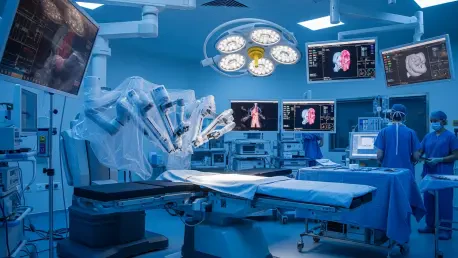
Robotic-assisted surgery has transitioned from a specialized niche into a cornerstone of standard operating procedures within major VA medical centers. Systems like the Da Vinci surgical platform allow surgeons to perform complex procedures with a level of precision that significantly reduces patient recovery times and the risk of post-operative complications. For veterans, many of whom may have underlying health issues that make traditional open surgery riskier, these minimally invasive techniques are transformative. Furthermore, the expansion of high-speed connectivity in 2026 has enabled the feasibility of tele-surgery, where a specialist in a metropolitan hub can operate on a patient at a rural clinic. This capability is essential for ensuring that specialized care is not dictated by geography, allowing a veteran in a remote area to receive the same level of surgical expertise as someone living near an urban hospital. The reduction in trauma also translates to shorter hospital stays, which improves overall patient turnover and facility efficiency.
Autonomous Logistics: Enhancing Hospital Operational Efficiency
Beyond the operating room, autonomous mobile robots are revolutionizing the internal logistics of veteran hospitals by handling the repetitive and time-consuming tasks that often detract from direct patient care. Devices such as the TUG and Relay robots now navigate hospital corridors with ease, delivering medications, laboratory samples, and surgical supplies between departments without human intervention. By automating these logistical chains, clinical staff can dedicate more of their time to bedside interaction and complex decision-making rather than manual transport duties. These autonomous units are equipped with sophisticated sensors and mapping software that allow them to safely maneuver around staff, patients, and equipment in high-traffic environments. This integration not only boosts operational efficiency but also reduces the potential for human error in the delivery of critical supplies. The implementation of such systems has shown a measurable decrease in the burnout rates of hospital support staff, creating a more stable and focused environment.
Enhancing Quality of Life Through Personal Robotics
Smart Prosthetics: Restoring Physical Independence and Mobility
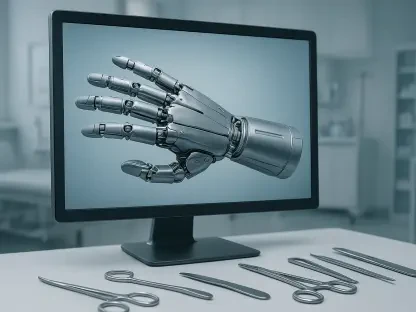
For veterans living with spinal cord injuries or limb loss, the evolution of robotic exoskeletons and neural-linked prosthetics represents a significant leap toward restored independence. Wearable robotic suits, such as those developed by Ekso Bionics, provide powered assistance that enables individuals with lower-limb paralysis to stand and walk again. These devices are increasingly being integrated into VA rehabilitation programs as standard equipment, moving beyond experimental phases to become daily tools for physical therapy and household mobility. Simultaneously, advanced prosthetic limbs now utilize bionic sensors that interpret electrical signals from the user’s remaining muscles to provide more natural movement and even sensory feedback. This level of sophistication allows veterans to perform complex tasks that were previously impossible with traditional mechanical prosthetics, such as grasping delicate objects or navigating uneven terrain. The physiological benefits of this regained mobility are profound, fostering a greater sense of autonomy and social engagement.
Strategic Implementation: Advancing Long-Term Mental Health Care
The successful deployment of robotic companions like Paro and Moxi in 2026 addressed the acute mental health and cognitive needs of veterans living with PTSD and dementia. These socially assistive robots were programmed to interact with patients in ways that reduced anxiety and provided companionship, which was difficult to maintain in institutional settings. By identifying shifts in mood and behavior, these systems alerted clinical staff to potential issues before they escalated into severe crises. Moving forward, the VA prioritized the establishment of standardized data security protocols to protect sensitive veteran information collected by these autonomous devices. Stakeholders also focused on creating comprehensive insurance frameworks that subsidized home-based robotic systems, ensuring equitable access regardless of financial status. These strategic measures allowed the medical community to transform the care landscape into a more proactive and decentralized model. Ultimately, the integration of these technologies ensured that the promise of personalized, high-quality care became a reality.