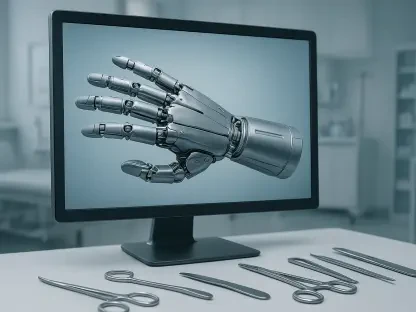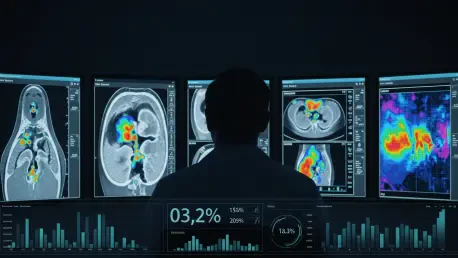

The widespread anxiety that once gripped the medical community regarding the total displacement of radiologists by autonomous algorithms has largely dissipated as the reality of clinical practice in 2026 reveals a synergistic partnership rather than a hostile takeover. For nearly a decade, the field of medical imaging has occupied the center of an intense debate about whether digital machines would eventually render human physicians obsolete. This concern was fueled by bold predictions that suggested the profession would disappear within a few short years, yet the opposite has occurred. Instead of witnessing the decline of the specialty, the industry has seen a significant increase in the demand for skilled radiologists who can navigate the complexities of modern diagnostic technology. The focus has fundamentally shifted from the fear of being replaced to a more nuanced exploration of how doctors can harness these advanced tools to deliver more accurate and timely care. This evolution demonstrates that while technology can execute specific patterns with incredible speed, it still lacks the comprehensive clinical judgment required to manage the multifaceted nature of human health and disease.
Clinical Precision: Addressing Human Error With Advanced Tools
Radiology has emerged as the primary laboratory for the integration of artificial intelligence within the healthcare sector, accounting for the vast majority of recently approved medical imaging devices. These sophisticated tools have been meticulously designed to assist with a wide range of tasks, from the initial triaging of urgent cases to the automated drafting of preliminary medical reports. By streamlining these administrative and repetitive diagnostic functions, the technology allows radiologists to dedicate their mental energy to the most intellectually demanding aspects of their work. This shift is particularly important given the persistent challenges of burnout and high workloads that have historically plagued the profession. The automation of routine findings does not merely save time; it creates a safety net that captures subtle details that might be overlooked during a long and exhausting shift, ensuring that every patient receives a high-quality review regardless of the time of day or the physician’s current workload.
The adoption of these computational tools is driven largely by a desire to mitigate the high rate of human error that inherently exists in diagnostic imaging worldwide. In clinical environments where radiologists may review hundreds of images per day, the potential for oversight due to fatigue or distraction is a significant concern that affects millions of patients globally. Unlike a human observer, an algorithmic system does not suffer from decreased attention or external stressors; it maintains a perfect level of consistency while analyzing every individual pixel of a complex scan. Comprehensive clinical trials have demonstrated that when a practitioner uses these systems, the detection rates for critical issues such as colonic polyps or early-stage malignancies increase significantly. This high-resolution analysis provides a level of scrutiny that serves as a powerful second opinion, allowing the medical team to identify life-threatening conditions much earlier in the disease process than was previously possible with traditional manual methods alone.
The Hybrid Model: Blending Human Context With Machine Logic
The most effective modern healthcare systems rely on a strategic combination of human intuition and machine logic because these two forms of intelligence possess fundamentally different strengths. Mathematical models are exceptionally proficient at processing massive datasets and identifying microscopic patterns that remain completely invisible to the human eye. However, these systems often operate in a vacuum, lacking the ability to understand the broader context of a patient’s unique clinical history or the subtle nuances of rare and atypical diseases. A machine might identify an anomaly based on statistical probability, but it cannot engage in a conversation with a patient or consult with a primary care physician to understand how a specific symptom fits into a larger lifestyle or genetic profile. This inherent limitation ensures that the human element remains the cornerstone of diagnostic medicine, providing the necessary perspective to interpret digital findings correctly.
Human radiologists are indispensable because they provide the critical clinical context that a standalone algorithm simply cannot replicate in its current form. While a computer might correctly identify the vast majority of common pathologies, the human doctor is frequently the one who interprets the complex five percent of cases where the machine encounters uncertainty or provides a false positive. The ultimate goal of this partnership is to create a robust workflow where the human expert serves as the final evaluator, providing a crucial check against the rare instances where an algorithm might fail due to unexpected variables or image artifacts. This collaborative approach maximizes the benefits of high-speed data processing while maintaining a high level of accountability and empathetic care. By integrating the objective precision of the machine with the subjective expertise of the physician, the medical community has developed a more reliable and comprehensive method for diagnosing complex conditions.
Transparent Systems: Navigating the Psychological Hurdles of AI
One of the most persistent challenges in this new era of medical collaboration is the opaque nature of modern neural networks, often referred to as the “black box” problem. Unlike traditional software that operates on a clear set of human-defined rules, advanced diagnostic systems often arrive at a conclusion without providing a transparent explanation of the underlying logic used to reach that result. This lack of interpretability can create a significant trust gap for physicians who are trained to rely on evidence-based reasoning and physiological principles. When a doctor is presented with a high-confidence finding from a machine that contradicts their own clinical observation, the resulting cognitive dissonance can be difficult to manage. Navigating this tension requires a new kind of professional maturity, where practitioners must learn to weigh their own experience against the statistical reliability of a system that they may not fully understand on a technical level.
This absence of transparency can also lead to complex psychological phenomena such as automation bias, where a practitioner might become overly reliant on the machine’s output and ignore their own better judgment. Conversely, some clinicians may experience a total loss of trust in the technology if they observe the machine making a rudimentary mistake that even a first-year medical student would avoid. Finding the right balance between skepticism and reliance is a critical skill that modern radiologists must master to ensure patient safety. The objective is not to follow the machine blindly, but to use its output as one of many data points in a comprehensive diagnostic strategy. As the industry continues to refine these systems, the focus remains on developing “explainable” models that can highlight the specific areas of an image that triggered an alert, thereby helping the human doctor understand the rationale behind the machine’s suggestion and fostering a more productive working relationship.
Future Pedagogy: Bridging the Educational Gap for Practitioners
Despite the rapid integration of these technologies into hospital workflows, many medical schools and residency programs have struggled to update their curricula to reflect this new reality. Surveys among medical professionals indicate that a significant portion of the workforce feels inadequately prepared to manage the specific challenges associated with algorithmic diagnostics. To address this discrepancy, there is an urgent need to move beyond traditional image interpretation and incorporate technical literacy into the core of medical training. Future practitioners must be educated not only on how to use these tools but also on how to identify the specific failure modes of various algorithms. This includes understanding how different demographic data or imaging equipment might influence the accuracy of a particular tool, ensuring that the technology is applied equitably and effectively across diverse patient populations.
The fundamental role of the radiologist is shifting away from being a primary image reader and toward becoming a high-level clinical evaluator who orchestrates a complex array of technological inputs. Professional success in the coming years will depend heavily on a physician’s ability to interpret machine-generated data and apply it to real-world patient scenarios where empathy and ethical considerations are paramount. The medical community has reached a general consensus that while the technology itself will not replace the need for human doctors, the practitioners who embrace these digital collaborators will inevitably replace those who resist the change. This transition requires a commitment to lifelong learning and a willingness to adapt to a landscape where the definition of medical expertise is constantly evolving. By prioritizing education and technical proficiency, the field of radiology is securing its place as a vital and innovative component of the modern healthcare ecosystem.
Actionable Implementation: Establishing a New Standard for Diagnostic Excellence
The evolution of clinical practice necessitated a comprehensive overhaul of how medical professionals interacted with digital diagnostics within the hospital environment. Stakeholders recognized that the mere introduction of algorithms was insufficient without a structured framework to govern their daily application and long-term oversight. Consequently, health systems prioritized the development of standardized auditing procedures that allowed for the retrospective analysis of machine-driven decisions to ensure they aligned with the highest standards of patient care. This historical shift ensured that the technology remained a tool for human empowerment rather than a source of professional attrition or clinical complacency. By focusing on the integration of these tools into a broader clinical context, the medical community successfully navigated the initial disruption and established a more resilient and responsive healthcare infrastructure.
The transition moved beyond simple implementation toward a deep-seated cultural change within hospital systems, where the value of a radiologist was measured by the quality of the insights derived from human-machine collaboration. New protocols were established to facilitate communication between software developers and clinical staff, ensuring that the tools remained relevant to the actual needs of the patients and the physicians. This proactive approach helped to eliminate the silos that often existed between technical engineering and medical practice, creating a more cohesive environment for innovation. Moving forward, the industry must continue to focus on the ethical implications of data privacy and the elimination of algorithmic bias to ensure that these advancements benefit all members of society equally. By maintaining this focus on transparency and accountability, the medical field set a precedent for how other industries might successfully integrate advanced automation while preserving the essential value of human expertise.