
The rapid evolution of precision medicine has fundamentally transformed the standard of care for lung cancer, moving the focus of molecular profiling from metastatic cases to early-stage diagnoses. While the discovery of genetic mutations was once reserved for patients with limited options, it is now a critical component for determining the necessity of adjuvant targeted therapies after surgical intervention. However, the translation of this scientific progress into daily clinical practice remains surprisingly inconsistent across many health systems. Despite the proven benefits of identifying biomarkers like EGFR or ALK early in the treatment journey, a significant portion of patients never receives the necessary testing during the critical window following their diagnosis. This gap is rarely the result of a lack of medical knowledge but stems from the fragmented nature of modern healthcare workflows. Transitioning from surgery to recovery often creates a period where long-term planning is sidelined by immediate concerns.
Overcoming Barriers in Early-Stage Diagnostics
Identifying the Systems Problem: Clinical Care Realities
The EMBER-Lung trial has shed light on what researchers describe as a profound systems problem rather than a deficiency in individual clinician expertise. Doctors generally understand that genomic data is the backbone of modern oncology, yet the reality of a fast-paced hospital environment means that ordering these tests is often buried under more immediate tasks. In a typical diagnostic pathway, several different specialists—surgeons, pathologists, and oncologists—must coordinate, which increases the likelihood that specific testing requests will fall through the cracks. Establishing a comprehensive genetic profile at the outset of treatment is not just about the current surgical outcome; it is a strategic move to prepare the entire care team for the possibility of recurrence. When these genetic profiles are missing, patients may lose access to life-saving clinical trials or specialized medications that are designed specifically for their tumor’s unique biological makeup and growth patterns.
Implementing Strategic Interventions: The Power of the Nudge
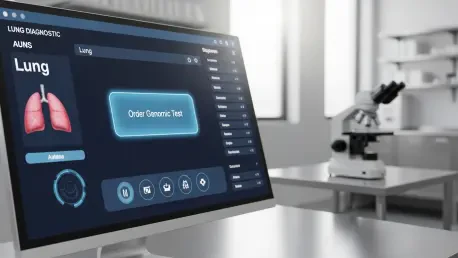
To fix these procedural inefficiencies, researchers used a simple nudge built into the electronic medical record system to ensure that testing becomes an automated priority. When the software identifies a specific lung cancer diagnosis within a pathology report, it provides the attending physician with a rapid prompt to order the necessary molecular tests with a single click. This intervention removes the cognitive load required to remember testing protocols during a busy clinical shift, making the correct medical choice the easiest path to take. Once the results are processed, an automated alert notifies the entire multidisciplinary team about any specific mutations and the corresponding targeted therapies that are available. By transforming the electronic record from a passive storage bin into an active clinical assistant, health systems can bridge the gap between diagnostic potential and actual patient outcomes without adding significant administrative overhead for the medical staff.
Evaluating the Impact of Automation on Patient Outcomes
Measuring Clinical Success: Data and Mutation Discovery
The results of this study found that this simple change nearly doubled the number of patients getting tested, jumping from roughly 37 percent to over 81 percent. This improvement occurred across all stages of the disease and helped physicians find many more actionable mutations, such as EGFR or KRAS, which might have otherwise remained hidden. These outcomes demonstrate that many patients possess genetic markers that could fundamentally change their treatment trajectory, but these opportunities stay buried if the initial test is never ordered. By standardizing the testing process through digital automation, the healthcare system can ensure that every patient receives a personalized evaluation regardless of which specialist they see or which hospital they visit. This level of consistency is vital for achieving equity in cancer care, as it removes the variability associated with manual ordering and fragmented communication. The data clearly shows that technology can play a major role in optimizing patient survival.
Driving Healthcare Transformation: Future Clinical Potential
The success of the trial proved that modern cancer care was as much about fixing logistical hurdles as it was about advancing the underlying biological science. By prioritizing the user experience of the clinician and simplifying the diagnostic workflow, health systems successfully ensured that every patient received the most advanced care possible. Medical leaders recognized that integrating these nudges even earlier in the diagnostic process helped doctors plan comprehensive treatment strategies before a patient even entered the operating room. It was also essential to establish robust data pipelines that handled the increasing volume of genomic information without overwhelming the clinical staff. Efforts were eventually directed toward scaling these digital solutions across various oncology departments to ensure that the insights gained from molecular testing were translated into actionable bedside decisions. The integration of automated prompts effectively moved the needle on patient care by making precision medicine a default standard.