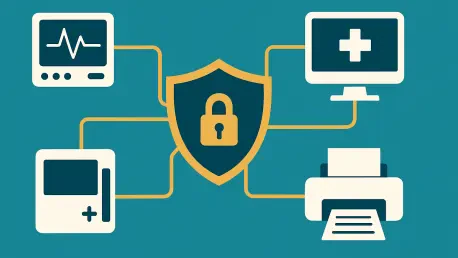

The overlooked risk of the networked printer is a symptom of a legacy mindset that fails to recognize hardware as an active participant in data processing. As Egypt accelerates its transition toward a fully digital medical infrastructure, the office printer has quietly emerged as a critical vulnerability within the network. Driven by the National Digital Health Strategy 2025–2029, the country is currently digitizing millions of medical records to enhance clinical efficiency and patient outcomes. However, this rapid expansion of the digital footprint often overlooks multifunction devices, which act as sophisticated network nodes capable of storing, processing, and transmitting vast amounts of sensitive information. Without integrating these peripherals into the broader cybersecurity framework, healthcare facilities risk leaving a backdoor open to sensitive patient data. The current scale of this shift is unprecedented, with the Universal Health Insurance System already processing 6.7 million records across hundreds of facilities.
Identifying Vulnerabilities in Medical Printing Workflows
Physical and Digital Risks: Unsecured Peripherals
The most immediate threat to patient confidentiality in Egyptian clinics and hospitals is often the most visible: sensitive reports and prescriptions left unclaimed in public-facing output trays. In a busy clinical environment where medical professionals move rapidly between wards, documents containing full names, diagnostic results, and treatment plans frequently sit unattended for hours. This physical vulnerability allows unauthorized individuals, from visitors to non-medical staff, to gain access to private health information without needing technical hacking skills. The consequences of such exposure are profound, potentially leading to identity theft or a fundamental breach of the doctor-patient relationship. Furthermore, the lack of secure disposal protocols for misprinted or discarded documents exacerbates this risk. To mitigate these threats, healthcare administrators must recognize that the journey of data protection does not end at the screen but extends to every physical page generated.
Beyond these physical risks, modern multifunction devices pose a significant digital danger because they store and process data on internal hard drives just like any server or workstation. Every scanned lab result and printed patient history leaves a digital footprint on the device’s local storage, often in an unencrypted format if proper security features are not enabled. If these devices are decommissioned, returned at the end of a lease, or reassigned within a hospital without rigorous data sanitization protocols, they can serve as goldmines for data theft. This persistent storage means that a single printer can hold years of archived medical history long after the original digital files have been moved or deleted from the main database. Ensuring that hardware lifecycle management includes the physical destruction or secure wiping of internal drives has become a non-negotiable requirement for maintaining the integrity of Egypt’s digital healthcare infrastructure in the current landscape.
Network Entry Points: Persistent Threats
Outdated firmware and weak administrative credentials turn network-connected printers into ideal entry points for sophisticated cyberattacks targeting Egyptian medical facilities. Many healthcare IT departments prioritize the patching of servers and laptops while neglecting the peripheral devices that share the same network environment. This oversight allows attackers to exploit known vulnerabilities in printer operating systems to establish a persistent presence within the hospital’s digital ecosystem. Because these devices often run on legacy protocols and lack the advanced endpoint detection systems found on modern workstations, they provide a stealthy vantage point for malicious actors. Once a printer is compromised, it can be used to scan the internal network for more valuable assets, such as electronic health record systems or financial databases. Closing this gap requires a fundamental shift in technical strategy, where every imaging device is treated with the same level of scrutiny as a core server.
A major challenge in the current year is that these devices are frequently excluded from standard IT monitoring, allowing a breach originating from a printer to remain undetected for months. Traditional security operations often lack visibility into the traffic patterns and behavioral anomalies of printing hardware, creating a blind spot that hackers are eager to exploit. When a printer is used as a bridge for lateral movement, the lack of logging and auditing capabilities on the device makes forensic investigations nearly impossible after a data breach has occurred. This technical isolation means that even the most robust firewall or antivirus software on a workstation cannot protect the network if the printer serves as an unmonitored gateway. To defend against these persistent threats, it is essential for healthcare organizations to implement centralized management tools that provide real-time alerts for unauthorized configuration changes or suspicious network activity originating from any imaging peripheral across the entire facility.
Aligning Technical Security with Egyptian Law
Regulatory Mandates: Data Protection
The urgency of print security is reinforced by Egypt’s evolving legal landscape, specifically the Personal Data Protection Law No. 151 of 2020 and its implementation through 2026. This legislation makes no distinction between the types of hardware used to process data; any device that handles personal information falls under its strict jurisdiction. Healthcare providers are legally obligated to implement technical and organizational measures to prevent the unauthorized disclosure of patient information, a mandate that explicitly covers the printing and scanning of medical records. Non-compliance can result in significant financial penalties and criminal liability for hospital administrators, making endpoint security a matter of legal necessity rather than just an IT preference. As the government increases its oversight of digital transformation projects, the ability to demonstrate comprehensive data protection across all hardware has become a primary benchmark for corporate governance in the medical sector.
Furthermore, current standards from the General Authority for Healthcare Accreditation and Regulation (GAHAR) emphasize that information integrity and confidentiality are now mandatory requirements for hospital accreditation. Specifically, standard IMT.05 requires facilities to ensure that health information is protected against loss, destruction, tampering, and unauthorized access or use. In the context of Egypt’s Universal Health Insurance System, achieving this accreditation is vital for any facility wishing to participate in the national program. If a hospital cannot prove that its printing workflows are secure, it risks failing the rigorous audit process required for operational licensing. This regulatory pressure is driving a new wave of investment in secure imaging solutions, as clinical leaders recognize that print security is a fundamental pillar of patient safety. The intersection of legal mandates and accreditation standards has effectively closed the loop, leaving no room for the technical neglect of networked peripherals.
Implementation Strategies: Unified Endpoints
To achieve digital resilience, healthcare IT leaders must adopt a unified management strategy that includes total visibility of all connected assets and strict access controls. One of the most effective solutions currently being deployed is identity-based pull printing, which ensures that documents only print when an authorized professional is physically present at the device. This system requires a clinician to authenticate their identity using a secure badge or biometric scan before the device releases the physical copy, effectively eliminating the risk of documents being left in output trays. Moreover, this approach allows for detailed auditing, as every print job can be tracked back to a specific user and timestamp. By centralizing the management of print queues and user permissions, hospitals can significantly reduce their attack surface while also optimizing paper usage and operational costs. This transformation represents a move away from passive utility management toward an active, identity-centric security model.
In conclusion, the integration of print environments into Security Operations Centers (SOC) provided the final piece of the puzzle for Egyptian healthcare providers. IT departments moved beyond isolated hardware management to implement end-to-end lifecycle protocols that included data-at-rest encryption and automated firmware updates. By treating every printer as a high-priority endpoint, clinical leaders successfully safeguarded the trust of millions of citizens during the nation’s digital transition. Moving forward, the most effective strategy involved the adoption of “secure by design” hardware that featured self-healing capabilities and real-time threat detection. This proactive stance ensured that the medical infrastructure remained resilient against evolving cyber threats while maintaining the highest standards of patient confidentiality. Ultimately, the industry shifted toward a model where hardware and software security were treated as a single, cohesive discipline, effectively closing the gap that once existed in the country’s digital medical ecosystem.