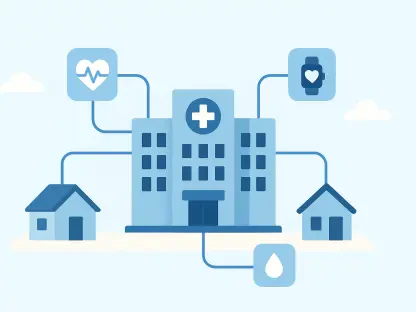

Navigating the complexities of modern healthcare often requires a level of personal oversight that transcends the automated capabilities of digital patient portals. While institutional systems provide a convenient baseline for lab results and appointment schedules, they frequently fail to capture the nuanced day-to-day fluctuations of chronic illness. Patients managing long-term conditions, such as pulmonary hypertension, often discover that the most valuable clinical insights reside within their own observations rather than in fragmented hospital databases. This realization typically follows a period of administrative chaos, where a lack of centralized, personal documentation leads to significant gaps in a medical history that is otherwise scattered across various states and software platforms. By maintaining an independent record, an individual moves from being a mere subject of medical observation to becoming a primary coordinator of their own clinical journey.
Fragmentation: The Gap Between Digital Systems and Patient Reality
The history of health record keeping reveals a significant shift in how personal data is prioritized during the transition from pediatric to adult care. In the early stages of medical management, caregivers often rely on physical journals to track medication changes and symptom progression with meticulous detail. However, as individuals reach clinical stability or enter adulthood, this rigor often fades in favor of the convenience offered by electronic patient portals. The danger arises when complex interventions, such as organ transplants or chronic disease management, necessitate transfers between multiple, unconnected healthcare networks. In these instances, the interoperability of electronic health records frequently proves insufficient, leaving critical gaps that only a pre-existing personal archive can fill. Relying solely on an institutional interface ignores the reality that these systems are often designed for administrative ease rather than for providing a comprehensive narrative of a life.
During periods of relative health or clinical limbo, the motivation to document every medical detail tends to diminish, yet this is precisely when the foundation for future health management is laid. When patients stop tracking their baseline metrics, they lose the ability to provide context for sudden deviations that may occur years later. This lack of documentation becomes particularly glaring during recovery phases from major surgeries or during chronic disease flares when cognitive energy is limited. A dedicated notebook or a personal digital repository acts as a reliable backup for memory, ensuring that medication dosages and surgical histories are accurately conveyed to new providers across different systems. Without this independent source of truth, medical professionals are forced to reconstruct a patient’s history from incomplete digital snippets, which can lead to delayed diagnoses or redundant testing. Maintaining a personal record ensures that the narrative of care remains continuous.
Empowerment: Synthesizing Clinical Data With Lived Experience
Effective health management requires a sophisticated synthesis of objective data and subjective lifestyle factors that standard digital portals simply cannot capture. While a portal shows a blood pressure reading or a lab result, it does not record the specific environmental exposures or emotional states that coincided with those metrics. A private health record allows a patient to document energy levels, mood shifts, and environmental stressors, such as being in crowded spaces or experiencing extreme weather. These contextual details often provide the necessary explanation for clinical fluctuations, enabling a more productive dialogue between the patient and their medical team. By tracking these variables, an individual can identify patterns that might otherwise be dismissed as irrelevant noise in a standard clinical setting. This proactive synthesis transforms a raw list of data points into a meaningful roadmap for specialized care, ultimately leading to more personalized treatment strategies and better outcomes.
The adoption of a personal health tracking system emerged as a critical strategy for bridging the communication gap between patients and specialized medical teams. By choosing to document subjective experiences alongside clinical metrics, individuals secured a sense of agency that was often lost within the sterile environment of large-scale hospital networks. This practice moved beyond simple administrative organization and functioned as a therapeutic method for grounding a person amidst the uncertainty of chronic illness. Future health management strategies benefited from the inclusion of specific questions formulated from these personal journals, ensuring that consultations remained focused on the most pressing concerns. Implementing a hybridized approach—using digital portals for raw data while maintaining a separate narrative log—offered a robust defense against the fragmentation of modern medicine. Ultimately, the decision to maintain a private health record proved to be a fundamental requirement for anyone seeking long-term well-being.