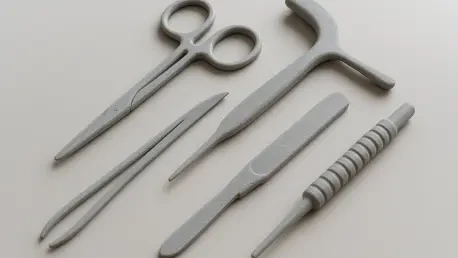

Recent cadaver trials have demonstrated that 3D-printed forceps often lack the necessary grip strength to securely hold surgical needles during complex procedures. This discovery highlights a significant technical gap in the quest to utilize additive manufacturing for life-saving interventions in austere environments. Currently, the global surgical landscape is grappling with a severe shortage of equipment and infrastructure, particularly in regions where traditional supply chains are severed by conflict, geographic isolation, or economic collapse. In these resource-constrained settings, healthcare providers are frequently forced to operate without the basic tools required for standard procedures. To combat this crisis, clinicians and researchers are increasingly exploring thermoplastic 3D printing as a viable alternative for on-demand instrument production. However, as the field moves away from simple prototypes toward functional clinical tools, the absence of a standardized methodology for safety and efficacy has become a glaring vulnerability that could jeopardize patient outcomes. Establishing a bridge between rapid engineering and the stringent regulations of global healthcare is no longer a luxury but a necessity for innovation to persist safely.
Evolution of 3D Printing in Surgical Settings
Historically, 3D printing in the medical field was a luxury reserved for high-resource hospitals with substantial capital for experimental technology. It was primarily used for creating patient-specific anatomical models for complex surgical planning or for manufacturing custom metal implants that required expensive machinery and specialized staff. These high-end applications were often inaccessible for remote or resource-poor settings due to the significant post-processing and power requirements involved. Over the last few years, however, the landscape has shifted toward the democratization of additive manufacturing. The cost of desktop 3D printers has plummeted while their technical precision, specifically regarding layer height and accuracy, has improved significantly. This shift has made it possible to deploy ruggedized printers in military field hospitals, disaster relief zones, and remote research stations, where they are used to produce everything from spare parts to basic surgical retractors on demand.
The focus has increasingly narrowed toward thermoplastic printing, such as Fused Deposition Modeling (FDM), because it is significantly more portable and affordable than its metal-based counterparts. These systems require less power and can operate with minimal specialized infrastructure, making them ideal for use in austere environments where utility reliability is often compromised. The primary objective for researchers today is to move beyond the production of “plastic toys” or visual models and instead produce instruments that are mechanically sound and capable of being sterilized for actual use in a sterile surgical field. Achieving this requires a deep understanding of material properties and manufacturing variables that were previously overlooked in proof-of-concept designs. As these machines become more common in the field, the need for rigorous quality control becomes paramount to ensure that every printed tool functions with the same reliability as a traditional stainless steel instrument.
The transition to point-of-need manufacturing represents a fundamental change in how medical logistics are managed during crises. Rather than waiting weeks for a specialized shipment to arrive at a remote clinic, a technician can theoretically download a digital blueprint and print a specific tool within hours. This capability is particularly vital in active conflict zones or during large-scale natural disasters where traditional infrastructure has been obliterated. However, the portability of the technology does not automatically equate to the safety of the output. The mechanical properties of a printed tool are heavily dependent on the environment in which it is produced, creating a challenge for consistency across different geographic locations. For 3D printing to become a staple of global surgery, it must transcend its current status as an emergency workaround and prove that its outputs can consistently meet the high bars set by traditional manufacturing standards.
Analyzing Current Research and Methodology
To understand the current state of 3D-printed surgical tools, researchers have conducted systematic reviews following established protocols like the PRISMA guidelines to filter through thousands of engineering and medical studies. By searching a vast array of databases, including MEDLINE and IEEE Xplore, analysts have identified both the most promising developments and the most concerning gaps in the existing body of literature. The inclusion criteria for these evaluations are necessarily strict; studies must describe the design or production of a novel surgical device intended for direct contact with sterile tissue or the vascular system. Furthermore, the devices must be produced using thermoplastic 3D printing specifically for use in resource-limited settings. This focus ensures that the research remains relevant to the specific challenges of medicine in environments where high-end metal printing is simply not an option.
Because most current studies are still in their early engineering phases, traditional clinical risk-of-bias tools are often unsuitable for a full assessment of these technologies. Instead, experts have been forced to develop specialized appraisal frameworks based on the European Union Medical Device Regulation (EU MDR) and FDA standards to evaluate the feasibility of these tools. These frameworks typically evaluate five critical domains: manufacturing specifications, mechanical performance, sterilization protocols, biocompatibility, and usability in a clinical environment. Most research currently excels in the design and manufacturing domains but falls short when it comes to the rigorous biological and mechanical testing required for regulatory approval. This imbalance suggests that while the engineering community is capable of creating the shapes of surgical tools, the medical community still lacks the data to prove these shapes can perform safely under the stresses of surgery.
The methodology used in these reviews also highlights a significant lack of longitudinal data regarding the performance of 3D-printed instruments. Many studies focus on the immediate “out-of-the-printer” performance without considering how the material might degrade over time or after multiple sterilization cycles. This is a critical oversight, as surgical tools in austere environments are often reused out of necessity. Without long-term data, it is impossible to determine the safe lifespan of a thermoplastic forceps or retractor. Current research efforts are now pivoting toward establishing more robust datasets that account for the entire lifecycle of the device. By standardizing how these studies are conducted and reported, the global research community can begin to build a more reliable foundation of evidence that supports the eventual integration of additive manufacturing into standard clinical practice.
Geographical Trends in Surgical Innovation
Research into 3D-printed surgical tools is currently highly clustered among a few specialized teams primarily located in the United States, Canada, and the United Kingdom. These teams often focus on specific high-stakes environments where traditional supply chains are naturally limited by geography or extreme physical conditions. In Canada, research teams have focused heavily on the implications for space exploration, where weight and volume constraints make carrying a full surgical suite impossible. For future manned missions, the ability to print instruments in a microgravity environment is not just a convenience but a necessity for survival. These studies emphasize on-demand production and the development of multi-functional tools that can be recycled and reprinted as different needs arise during long-duration spaceflights, pushing the boundaries of material science and precision engineering.
In the United States, much of the research is driven by military and tactical needs, exploring point-of-need manufacturing for forward-deployed units such as naval ships or mobile desert field hospitals. These teams are investigating how to maintain printer calibration and material integrity in harsh environments characterized by extreme heat, humidity, and vibration. Meanwhile, other global efforts are directed toward low-and-middle-income countries where the primary goal is to create low-cost alternatives for orthopedic stabilization, such as external fixators. In these regions, the high cost of imported medical hardware often prevents patients from receiving the care they need, leading to long-term disability. By leveraging local 3D printing capabilities, healthcare providers can produce customized, affordable solutions that are tailored to the specific anatomical needs of their patients, effectively bypassing the economic barriers of international medical trade.
Despite these localized successes, the geographical concentration of research means that the standards being developed may not always reflect the realities of the environments where the tools are most needed. There is a growing push for more collaborative research that involves clinicians and engineers from the regions where these tools will be deployed. This collaboration is essential for understanding the specific local constraints, such as the availability of reliable electricity or the specific types of trauma most commonly encountered. By diversifying the geographical footprint of surgical innovation, the medical community can ensure that the tools being developed are not just technically impressive but also culturally and logistically appropriate for the target environment. This global perspective is vital for creating a truly universal set of safety and performance standards for 3D-printed medical devices.
Materials and Manufacturing Techniques
Fused Deposition Modeling (FDM) has emerged as the dominant technology in recent studies, appearing in the vast majority of documented research for austere surgical applications. Its popularity stems from its low power requirements, relative ease of use, and the portability of the equipment compared to resin-based or powder-bed systems. The choice of material is equally critical, as different plastics offer varying levels of strength, heat resistance, and durability under mechanical load. Polylactic Acid (PLA) is frequently used due to its ease of printing and low cost, but it is notably heat-sensitive, which complicates traditional sterilization methods. This makes PLA a difficult choice for tools that must undergo high-pressure steam autoclaving, as the material can easily warp or lose its structural integrity at temperatures exceeding 60 degrees Celsius.
Acrylonitrile Butadiene Styrene (ABS) offers better durability and higher heat resistance than PLA, but it presents its own set of challenges during the manufacturing process. ABS requires a heated print bed and a controlled environment to prevent warping, and it can emit harmful fumes that require specialized ventilation—a luxury not always available in confined or poorly ventilated field hospitals. For higher-strength requirements, such as those needed for orthopedic fixators or retractors, researchers are increasingly utilizing nylon and various reinforced composites. These materials can withstand higher stresses and are less prone to the brittle failure seen in simpler thermoplastics. Some experimental studies are even exploring specialty materials, such as polyamide polyolefin infused with cellulose fibers or silver-loaded resins, which are designed to provide antimicrobial properties and add a layer of safety to the instruments.
The manufacturing process itself introduces variables that can significantly affect the final product’s safety. Factors such as print orientation, infill density, and nozzle temperature all play a role in the mechanical behavior of the tool. For instance, a tool printed with a horizontal orientation may have better tensile strength in one direction but be prone to delamination under shear stress. This anisotropy is a major hurdle for standardization, as a minor change in the digital “slicing” parameters can lead to a device that fails prematurely. Engineers are now working on automated software solutions that optimize these parameters for specific surgical tasks, ensuring that every printed tool meets a minimum threshold of mechanical reliability regardless of the operator’s experience level. Understanding these technical nuances is the first step toward creating a manufacturing protocol that can be replicated globally.
Addressing Inconsistencies in Mechanical Performance
One of the most significant challenges identified in current research is the lack of standardized mechanical testing for 3D-printed surgical instruments. While many studies perform “tests to failure” to determine the ultimate strength of their devices, they rarely use comparable parameters or testing environments. This lack of uniformity makes it nearly impossible for clinicians to compare the safety or stability of different designs produced by different research groups. For example, when testing external fixators, different teams may use the same ASTM standards but apply them differently, such as varying the distance between the bone surrogate and the clamp. Such inconsistencies lead to data that cannot be validated or aggregated, leaving the medical community without a clear consensus on which designs are truly safe for clinical use.
Furthermore, many research teams resort to building their own bespoke testing jigs rather than using international regulatory benchmarks or expensive industrial testing equipment. While these custom tools are useful for internal design iterations and rapid prototyping, they do not provide the level of evidence required for global regulatory approval or peer-reviewed validation. Aligning these tests with established ISO and ASTM standards is essential for the future of the field, as it allows for a direct comparison between 3D-printed tools and their traditional stainless steel counterparts. Without a common benchmark, a device that appears safe and effective in a controlled laboratory setting might fail catastrophically when subjected to the unpredictable forces encountered during a real-world surgical procedure.
To address these inconsistencies, there is a growing movement toward the creation of open-source mechanical testing protocols specifically for 3D-printed medical devices. These protocols would define exactly how a tool should be loaded, what the acceptable failure modes are, and how the data should be reported to ensure transparency. By adopting a “common language” of mechanical performance, researchers can more effectively share their findings and accelerate the development of reliable tools. This level of standardization is particularly important for high-stress instruments like bone clamps and retractors, where a mechanical failure could lead to significant patient injury. The goal is to move the field toward a state where every 3D-printed tool comes with a “performance certificate” that guarantees it can withstand the specific forces required for its intended surgical task.
The Challenges of Sterilizing Thermoplastics
Sterilization remains the significant “Achilles’ heel” of thermoplastic 3D printing in a medical context. Surgical devices must be completely sterile to prevent life-threatening post-operative infections, yet most common 3D-printing plastics melt or deform at the high temperatures used in standard steam autoclaves. This limitation creates a significant barrier to the reuse of these instruments, which is often a requirement in resource-poor settings where waste management and supply replenishment are difficult. Research has shown that only a small fraction of current studies conduct rigorous sterilization testing, often relying instead on the assumption that chemical cleaners will be sufficient. However, the porous nature of 3D-printed structures, characterized by microscopic gaps between layers, makes it incredibly difficult to ensure total sterility within the internal architecture of the device.
Chemical sterilization methods, such as the use of glutaraldehyde or ethylene oxide, are effective at the surface level, but they may not penetrate the internal voids of a printed part. This porosity can harbor bacteria or bio-burden that survives the cleaning process, posing a hidden risk to the patient. Moreover, even when instruments survive the heat of an autoclave or the chemical exposure of a cold soak, they often undergo dimensional changes that are not visible to the naked eye. Shrinkage or warping of just a few percent can render a precision instrument, like a needle holder or a specialized guide, completely non-functional or even dangerous. Ensuring that a device remains both biologically sterile and mechanically functional after processing is a major hurdle that researchers must overcome before these tools can be used with confidence.
The quest for a “sterilizable plastic” has led to the exploration of high-performance polymers like PEEK or PEI, which can withstand traditional autoclaving temperatures. However, these materials require specialized high-temperature printers that are more expensive and difficult to maintain in austere settings, somewhat defeating the purpose of low-cost, portable manufacturing. Alternative sterilization methods, such as ultraviolet (UV) radiation or ozone sterilization, are also being investigated for their compatibility with standard thermoplastics. These methods offer the potential to achieve high levels of disinfection without the damaging heat of steam. However, their efficacy on complex, layered geometries still needs to be validated through extensive microbiological testing. Solving the sterilization puzzle is perhaps the most critical step in making 3D printing a viable part of the surgical workflow.
The Critical Need for Biocompatibility Testing
Perhaps the most alarming finding in recent literature reviews is the widespread absence of formal biocompatibility testing for 3D-printed surgical tools. According to ISO 10993 standards, any medical device that comes into contact with internal human tissue or the vascular system must be rigorously tested for toxicity, irritation, and immune response. However, many current studies omit this step entirely, focusing almost exclusively on the mechanical shape and functional capability of the tool. 3D-printed parts are inherently porous and may contain chemical residues, dyes, or stabilizers from the raw filament. Furthermore, the high heat of the printing process can alter the chemical properties of the material, meaning that even a “medical-grade” filament might become unsafe once it has passed through a heated printer nozzle and been deposited in a layered structure.
This “biological gap” represents a major safety concern for patient care, as the leaching of chemicals or the presence of microscopic plastic particles could cause adverse reactions or systemic toxicity. To move toward legitimate clinical use, researchers must categorize their devices based on the nature and duration of contact with the body. Whether a device touches only the skin for a few minutes or is used for prolonged contact with bone and blood, it must undergo a standardized evaluation to ensure it does not harm the patient. Without these tests, the risk of causing inflammation or infection remains unacceptably high, regardless of how well the tool performs mechanically. The medical community must insist that biocompatibility is treated as a primary design requirement rather than an afterthought in the engineering process.
To address these concerns, some researchers are advocating for the use of “certified” filaments that have been pre-tested for biocompatibility after being processed through specific printer models. However, this approach is difficult to scale, as the number of printer and filament combinations is nearly infinite. A more sustainable solution involves the development of low-cost, rapid biocompatibility screening tests that can be performed in the field. These tests would allow clinicians to verify that a printed tool is safe for use before it ever enters the operating room. By making biocompatibility testing a standard part of the manufacturing workflow, the field can ensure that innovation does not come at the cost of patient safety. This focus on biological integrity is what will ultimately separate medical-grade manufacturing from general-purpose 3D printing.
Bridging the Gap Between Simulation and Reality
Usability testing is common in current research, but it varies wildly in quality and realism across different studies. To evaluate how 3D-printed tools perform in the hands of a surgeon, researchers use various surrogates, including chicken skin, synthetic bone, wearable simulation suits, and human cadavers. While these tests provide some immediate insight into the tool’s ergonomics, they often reveal the stark limitations of plastic instruments compared to metal ones. Cadaver trials, in particular, have highlighted significant functional failures that are not apparent during digital simulation or benchtop testing. Researchers found that many 3D-printed instruments tend to absorb blood and other fluids due to their surface porosity, which not only increases the risk of infection but also makes the tools difficult to clean and handle during a procedure.
Additionally, plastic forceps and needle holders often lack the necessary grip strength required to hold surgical needles securely, causing the tips to “cross over” or slip during delicate maneuvers. This lack of rigidity can lead to increased operative time and a higher risk of needle sticks for the surgical team. These findings emphasize the “Validation Gap”—the space between engineering a tool that looks like a surgical instrument and one that actually functions like one in a high-pressure clinical environment. Effective usability engineering requires moving beyond subjective “feel” and adopting objective, task-based metrics that measure performance in real-time. This ensures that the tool not only exists in the physical world but is actually capable of performing the complex mechanical tasks for which it was designed without failing at a critical moment.
Moving forward, usability testing must involve a wider range of clinicians with varying levels of experience to ensure that the tools are intuitive and safe for everyone to use. For example, a tool designed by an expert surgeon might be difficult for a general practitioner to use in an emergency. By incorporating human factors engineering into the design process, researchers can create instruments that are more ergonomic and less prone to user error. This approach also includes the use of standardized questionnaires, such as the System Usability Scale (SUS), to provide a quantitative measure of user satisfaction and fatigue. By bridging the gap between engineering simulations and the messy reality of the operating room, the medical community can develop 3D-printed tools that are truly fit for purpose in the world’s most challenging environments.
A Proposed Framework for Clinical Safety
To solve the issues of fragmentation and safety in the field, experts are calling for the implementation of a structured evaluation framework for all 3D-printed surgical devices. This framework is designed to move these tools toward regulatory compliance by ensuring that “minimum safe standards” are maintained even in the most resource-constrained environments. The first pillar of this framework involves mandatory manufacturing reporting guidelines. To ensure that a device can be reproduced accurately, every study must report exact printer models, nozzle sizes, and firmware versions used. Slicing parameters, such as layer height, infill percentage, and print orientation, are also vital pieces of information, as they directly dictate the structural grain and mechanical strength of the final part. Without this level of detail, a tool that works in one lab might fail when printed in another.
Environmental factors must also be meticulously documented as part of this proposed framework. Factors like ambient temperature and humidity can significantly affect the integrity of the plastic during the printing process, leading to issues like poor layer adhesion or internal warping. By standardizing the reporting of these variables, researchers can ensure that a device printed in a humid tropical climate can be reliably reproduced in a dry desert environment. This level of transparency is essential for the global dissemination of 3D printing technology, as it allows for the creation of “digital recipes” that include all the necessary environmental adjustments. This structured approach to manufacturing data will provide the backbone for a global database of validated surgical designs that can be accessed by healthcare providers anywhere in the world.
The second pillar of the framework focuses on the lifecycle of the device, from the moment the print starts to the moment the tool is discarded. This includes a clear protocol for post-processing, such as the removal of supports and the smoothing of surfaces to reduce the risk of tissue trauma. It also mandates a “chain of custody” for the digital files to ensure that only authorized and validated designs are used in clinical settings. By treating the digital file as a “prescription,” the medical community can maintain control over the quality of the instruments being produced. This framework is not intended to stifle innovation but rather to provide a safe and predictable pathway for the integration of additive manufacturing into the complex world of modern surgery, ensuring that the technology is used responsibly and effectively.
Standardizing Mechanical and Sterilization Protocols
The proposed safety framework advocates for a “Risk-Based Approach” to mechanical testing that is closely aligned with ISO 14971 standards. Researchers are encouraged to use category-specific standards for different types of tools, such as ISO 7153-1 for general surgical instruments. This allows for a direct comparison between 3D-printed tools and the gold-standard stainless steel versions that surgeons are already familiar with. Comparative benchmarking is essential for building trust; by testing 3D-printed devices against their traditional counterparts using the same metrics, researchers can provide clear evidence of where plastic tools succeed and, more importantly, where they fall short. This level of transparency is necessary for convincing regulatory bodies and the wider medical community that these tools are a viable alternative during an equipment shortage.
Sterilization compatibility must also be validated through rigorous, standardized protocols within this framework. The framework requires a clear justification for the chosen sterilization method and mandates post-sterilization functional testing to ensure the device has not degraded. This ensures that the tool has not become brittle or deformed after being cleaned, maintaining its safety and efficacy for the duration of the surgical procedure. For instance, if a tool is intended for single-use, it must be clearly labeled and validated as such. If it is intended for reuse, the researcher must demonstrate that it can withstand a specific number of sterilization cycles without losing its mechanical properties. This focus on “validated reuse” is particularly important for sustainability in resource-limited settings where waste reduction is a high priority.
Furthermore, the standardization of these protocols allows for the creation of a “certification mark” for 3D-printed surgical tools. Such a mark would indicate that a specific design and material combination has passed a battery of standardized mechanical and sterilization tests. This would provide clinicians with the confidence they need to use these tools in high-stakes environments. The framework also encourages the use of non-destructive testing methods, such as visual inspections and weight measurements, to verify the quality of every individual print before it is used. By building a comprehensive system of checks and balances, the global research community can ensure that 3D printing becomes a reliable and safe component of the modern surgical toolkit, capable of meeting the same high standards as traditional manufacturing.
Implementing Biocompatibility and Usability Standards
The proposed framework insists on strict adherence to ISO 10993 for biocompatibility, which is non-negotiable for any device entering a human body. Researchers must categorize their devices by the nature of their contact with the patient—whether it is limited, prolonged, or permanent contact. This categorization dictates the specific level of testing required to ensure the material does not leach harmful substances or cause an inflammatory immune response. For many 3D-printed tools, this might involve “cytotoxicity” testing to see if the plastic kills human cells in a lab environment. By standardizing these biological requirements, the framework ensures that no patient is exposed to unnecessary chemical risks, regardless of where they are being treated. This commitment to biological safety is essential for the ethical deployment of 3D printing in global health.
Usability engineering should follow IEC 62366-2 guidelines, moving toward objective, timed tasks that simulate the pressures of a real operation. For example, a study might measure the time it takes to tie five surgical knots or navigate a complex vascular model using a 3D-printed needle holder compared to a metal one. This data provides a concrete, quantitative measure of a tool’s performance and its ergonomic viability. If a tool significantly slows down a surgeon or increases their hand fatigue, it may not be suitable for use despite being mechanically sound. Usability testing also helps identify “failure modes” that are unique to plastic tools, such as the way they might flex under load, allowing engineers to refine the designs for better tactile feedback and control.
Finally, the use of standardized questionnaires, such as the System Usability Scale (SUS), is recommended to gather qualitative feedback from the users themselves. These tools allow for cross-study comparisons of user satisfaction and help identify common complaints across different types of 3D-printed instruments. By adopting these standardized measures, the global research community can work toward a cohesive and safe ecosystem for point-of-need surgical manufacturing. The ultimate goal is to create a library of “clinically validated” designs that have been vetted for both their biological safety and their practical usability. This multi-layered approach ensures that the transition from a digital file to a surgical instrument is managed with the same level of care and oversight as any other medical product development process.
The Multidisciplinary Triad of Device Development
Successful development of 3D-printed surgical tools requires what experts call a “clinical-engineering-scrub” triad. This multidisciplinary approach ensures that all aspects of a tool’s design—from its microscopic mechanical properties to its practical use in the fast-paced environment of an operating room—are thoroughly considered. Many of the early failures in the field occurred because engineers worked in isolation, focusing on the technical feasibility of a print without understanding the ergonomic and functional requirements of the surgeon. Conversely, clinicians often proposed designs that were anatomically perfect but physically impossible to print with standard thermoplastic filaments. By bringing these groups together, along with the nursing and sterilization staff who handle the tools, the development process becomes more holistic and grounded in reality.
Engineers provide the technical knowledge needed to optimize print settings for maximum strength and precision, ensuring the tool does not fail during use. Clinicians, on the other hand, offer the practical insight necessary to ensure the tool is ergonomically sound and effectively performs its intended task. Scrub technicians and nursing staff contribute a unique and often overlooked perspective on sterilization, instrument handling, and the maintenance of the sterile field. For example, a scrub nurse might point out that a certain design has too many “nooks and crannies” that are impossible to clean, leading to a redesign that is smoother and more hygienic. This collaboration is essential for overcoming the functional failures often seen in early prototypes and ensures that the final product is accepted by the entire surgical team.
When these three groups collaborate effectively, the result is a tool that is not only technically impressive but also clinically usable and logistically viable. This multidisciplinary model also helps in the development of training programs for the technicians who will be operating the 3D printers in remote areas. By teaching these technicians the “why” behind specific design choices, they are better equipped to troubleshoot problems and ensure the quality of the tools they produce. The “triad” approach represents a shift away from top-down engineering toward a more integrated, user-centered design philosophy. This shift is vital for building a sustainable infrastructure for 3D printing in medicine, where the focus is on providing the best possible care for the patient through collaborative innovation and rigorous attention to detail.
Ethics and the Standard of Care in Austere Settings
A critical discussion point in the field involves the ethical implications of using 3D-printed tools in resource-poor areas versus high-resource hospitals. There is a persistent and dangerous risk that “austere” could become synonymous with “dangerous” or “substandard” care. Researchers argue strongly that patients in low-and-middle-income countries or active conflict zones deserve the same level of basic safety and efficacy as those in high-resource settings. The goal of establishing global standards is to ensure that a 3D-printed tool is not just a desperate last resort, but a reliable and safe alternative that has been thoroughly vetted. Standardized testing prevents the deployment of experimental or unsafe devices on vulnerable populations who may not have the ability to seek alternative care.
Upholding the ethical principle of “do no harm” requires that the innovation of 3D printing is balanced with a commitment to clinical reliability. This means that if a 3D-printed tool cannot meet the minimum safety standards for a specific procedure, it should not be used, even if no other tool is available. This hard line is necessary to protect patient safety and to maintain the integrity of the medical profession. However, by providing a clear pathway for these tools to meet those standards, the global community can actually expand access to safe surgery. Ethical 3D printing involves transparency, informed consent, and a rigorous adherence to the best available evidence. It is about elevating the standard of care in austere settings, not lowering it to accommodate the limitations of the technology.
By adopting the proposed evaluation frameworks, the medical community can ensure that 3D printing is used responsibly as part of a broader strategy for health equity. It transforms the technology from an unproven curiosity into a regulated, safe, and effective component of modern global surgery. This shift is vital for the long-term acceptance of additive manufacturing in medicine and for building trust with international regulatory bodies. Ultimately, the ethics of 3D printing in surgery are about ensuring that every patient, regardless of their location or economic status, has access to tools that are safe, functional, and reliable. This commitment to universal standards is the foundation upon which the future of global surgical innovation must be built, ensuring that technology serves the needs of humanity without compromise.
Overcoming the Consensus on Functional Failure
While there is a general consensus that 3D printing is a current reality for medicine in austere environments, there is also a recognized and troubling trend of “functional failure” in the field. Devices that look perfect on a high-resolution computer screen or in a static display case often fail catastrophically when subjected to the dynamic rigors of real-world surgery. Common examples include forceps that snap under tension, scissors that fail to cut through tough tissue, or retractors that deform under the heat of a surgical light. This phenomenon highlights the critical importance of the “Validation Gap”—the difference between engineering a shape and engineering a functional medical instrument. Addressing this gap requires a fundamental shift in the research community from focusing on aesthetics and “printability” to focusing on performance and reliability.
Engineering a shape is relatively simple with modern CAD software, but engineering a tool that can withstand the complex stresses of human surgery is a highly sophisticated task. A surgical needle holder, for example, must maintain its grip while being twisted and pulled, all while being covered in slippery biological fluids. To overcome these failures, researchers are now looking more closely at the microscopic structural integrity of the printed layers. By understanding how the “grain” of the print affects its strength, they can design more resilient instruments that are less prone to snapping. This requires a move toward more “science-heavy” engineering that incorporates finite element analysis and advanced material testing into the early stages of the design process.
The path forward involves more than just buying better printers; it requires a more disciplined approach to the science of additive manufacturing. By focusing on the specific stresses a tool will face—such as the torque on a bone screw or the tension on a retractor blade—researchers can design tools that are optimized for performance rather than just ease of printing. The consensus among experts is clear: the potential for 3D printing to revolutionize surgical care is vast, but the execution must be grounded in rigorous engineering and clinical validation. By acknowledging and addressing the high rate of functional failure in early prototypes, the field can move toward a more mature and reliable stage of development where “3D-printed” is synonymous with “high performance.”
Strategic Pathways for Global Implementation
The recent systematic reviews of 3D printing in surgery concluded that while the technology was a promising solution for global equipment shortages, the existing body of work remained highly fragmented and lacked the necessary rigor for widespread clinical adoption. To address these findings, the research community established several key areas for immediate improvement, including full transparency in manufacturing reporting and the consistent use of international mechanical standards. It was recognized that the total absence of biocompatibility testing in most studies was a major barrier that had to be cleared before these tools could be safely deployed. These findings paved the way for the development of more cohesive, regulated ecosystems where point-of-need manufacturing was treated with the same level of oversight as traditional factory production.
Building on these insights, the field moved toward a more integrated approach where digital designs were treated as medical products subject to strict version control and validation. This allowed for the creation of standardized “print packages” that included everything from the STL file to the specific material and printer settings required for a safe output. Experts recommended that future efforts focus on the development of high-temperature materials and alternative sterilization methods that did not compromise the structural integrity of the tools. These strategic shifts ensured that the focus remained on patient safety while still supporting the rapid innovation that 3D printing allows. The global community also began to invest in training programs that taught local healthcare providers not just how to print, but how to validate the safety of their own instruments.
Ultimately, the responsible advancement of 3D printing in the world’s most challenging environments depended on a collective commitment to maintaining high standards of safety and efficacy. By standardizing the specifications and performance metrics across different countries and research groups, the global community protected patient safety while fostering a culture of innovation. This structured approach proved to be the only way to ensure that 3D-printed surgical tools could truly meet global safety standards and save lives where they were needed most. These efforts transformed 3D printing from an experimental concept into a vital, regulated part of the global medical infrastructure, providing a blueprint for how other emerging technologies could be safely integrated into the high-stakes world of modern healthcare.