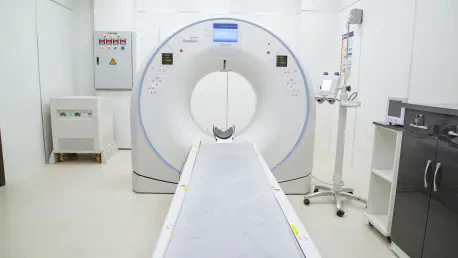

In a rapidly evolving medical landscape where every second counts during a critical health crisis, the precision of diagnostic imaging often dictates the difference between a routine recovery and a permanent disability for patients in rural communities. The recent installation of the Siemens SOMATOM go.Top CT scanner at Concord Hospital Franklin marks a pivotal shift in how local residents access high-tier medical interventions without the necessity of traveling to major metropolitan hubs. This transition from an aging 16-slice system to a sophisticated 128-slice platform represents a significant technological leap that enhances the facility’s ability to provide immediate answers for complex medical conditions. By integrating this advanced hardware, the hospital ensures that the Franklin community benefits from the same caliber of diagnostic power found in specialized urban centers. This expansion of advanced medical testing underscores a commitment to decentralized healthcare, allowing patients to remain close to home while undergoing critical screenings and emergency evaluations.
Advanced Imaging Mechanics: Precision Through 128-Slice Technology
The transition to a 128-slice CT scanner fundamentally alters the diagnostic capabilities of the imaging department by allowing for the capture of a much higher volume of detailed cross-sectional images in a single rotation. This increased density of data provides medical professionals with superior image resolution and precision, which is particularly vital during the initial evaluation of stroke or trauma patients. In these emergency scenarios, rapid image acquisition is not merely a convenience but an essential component of life-saving treatment decisions that must be made within minutes of a patient’s arrival. Furthermore, the sophisticated software integrated into the 128-slice platform significantly reduces motion artifacts, which are errors in imaging caused by involuntary patient movement or physiological processes like breathing. By minimizing these distortions, the health system enhances the overall reliability of every scan, providing radiologists with clearer insights into the structural integrity of internal organs and vascular systems.
Beyond the raw power of image resolution, the operational efficiency of the 128-slice platform results in tangible benefits that directly affect the daily workflow and patient throughput within the imaging suite. Shorter scan times mean that individuals spend less time positioned inside the gantry, which significantly improves patient comfort, especially for those experiencing acute pain or claustrophobia. This speed also translates to lower radiation exposure in many protocols, as the machine can gather the necessary diagnostic information more quickly than previous generations of equipment. To complement the installation of this high-tech hardware, the hospital also completed a comprehensive renovation of the CT suite and its surrounding control areas. These environmental improvements create a modern, streamlined space designed to optimize staff efficiency while providing a more calming atmosphere for patients. This synergy between advanced engineering and thoughtful facility design reflects a holistic approach to medical modernization.
Strategic Modernization: Implementing Regional Standards for Patient Care
This upgrade in Franklin served as a critical component of a broader initiative to modernize the entire Concord Hospital Health System, establishing a new baseline for diagnostic excellence across the region. By selecting Franklin as the inaugural site for this specific technological rollout, the health system demonstrated a proactive strategy to ensure its community-based hospitals were equipped with standardized, top-tier tools. Highly trained CT technologists managed the implementation of these new protocols, ensuring that the transition from older systems did not disrupt the continuity of care. The move toward a uniform imaging platform across the network allowed for more seamless consultation between specialists at different locations, as every facility eventually produced data of comparable quality and format. This regional standardization ensured that a patient’s geographic location did not limit the quality of the diagnostic evidence available to their healthcare team, thereby closing the gap between community medicine and specialized care.
Looking ahead to the sustained integration of these advancements, healthcare providers prioritized the continuous training of staff to maximize the specific diagnostic features unique to the 128-slice environment. The long-term partnership with technology leaders like Siemens ensured that the health system remained at the forefront of medical imaging by providing regular software updates and technical support that evolved alongside clinical needs. Future considerations for the facility involved expanding the application of this scanner into preventative screenings and more complex vascular studies that were previously referred to larger centers. Hospital administrators successfully utilized this installation to prove that high-complexity medical infrastructure could be effectively maintained in smaller community settings when supported by a robust network. By focusing on actionable data and improved patient outcomes, the facility established a sustainable model for rural healthcare modernization that emphasized accessibility without compromising on the depth of investigation.