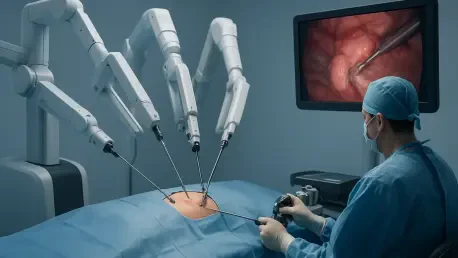

James Maitland is a pioneer at the intersection of medical robotics and the Internet of Things, dedicating his career to bridging the gap between cutting-edge technology and patient accessibility. With the successful execution of the world’s first telerobotic neurosurgery and the increasing global footprint of remote surgical platforms, Maitland offers a unique perspective on how these innovations are dismantling geographical barriers to life-saving care. In this conversation, we explore the clinical triumphs in remote stroke treatment, the evolving regulatory landscape in 2026, and the critical role of network infrastructure in making telesurgery a safe, mainstream reality.
The case of Felipe Rios Mendoza in Panama highlights a massive shift in how we treat emergency strokes. How does this successful telerobotic thrombectomy change the landscape for patients who traditionally fall outside the “golden hour” for intervention?
The success we saw with Felipe Rios Mendoza is truly a watershed moment for the medical community because it addresses the most critical factor in stroke recovery: time. Imagine the scene where a 68-year-old man feels his right arm go limp and watches his phone slip to the floor, knowing that every second that passes is costing him millions of neurons. By performing a mechanical thrombectomy from 150 miles away, the surgical team proved that physical distance no longer has to be a death sentence or a precursor to permanent disability. This patient went from being on the extreme end of clinical risk to talking and moving again just two hours after the procedure, which is the absolute best-case scenario we strive for. It’s a powerful validation for the roughly two-thirds of the global population who currently lack any access to neurosurgical care, offering a future where a specialist in a major city can reach a patient in a remote clinic before the window of opportunity slams shut.
While we see significant strides in China, India, and Latin America, the U.S. has been more cautious with adoption. What specific regulatory and infrastructural milestones are we currently navigating in 2026 to bring these systems into American hospitals?
The U.S. is currently in a very focused phase of validation, particularly with the FDA’s recent inclusion of robotically assisted surgical devices on their “Under Construction” list for new guidance. While we have seen over 5,000 remote surgeries performed globally, American adoption relies on meeting rigorous safety standards for long-distance procedures. A major milestone was the $175.3 million award from ARPA-H to a consortium including heavyweights like Siemens Healthineers and Philips, specifically to develop robots for long-distance thrombectomies. This level of federal investment shows that the government recognizes the crisis where over half of Americans live more than an hour away from a capable stroke center. We are also seeing “breakthrough status” designations, like the one granted to the Iris robot, which helps expedite the review process so these technologies can move from experimental trials to standard bedside practice.
Telesurgery isn’t just about the procedure; it’s about the transfer of knowledge. How is the integration of teleproctoring and telepresence through modern platforms changing the way surgeons are trained and mentored?
We are moving toward a connected surgical ecosystem where the walls of the operating room are effectively becoming transparent. Platforms like Medtronic’s Hugo now allow a lead surgeon to invite any expert in the world to join a case with just two taps on a screen, which is revolutionary for real-time mentorship. This means a trainee in a rural hospital doesn’t have to wait weeks for a visiting professor; they can have a world-class specialist “scrub in” virtually to provide guidance during the most complex parts of a surgery. Companies like Intuitive, which have supported over 20 million surgeries, are now leveraging their dual-console systems and telepresence capabilities to reduce the variability of care. This borderless collaboration ensures that a patient in a small community hospital receives the same level of expertise as someone at a major academic medical center, fundamentally changing the culture of surgical education.
A common concern for remote surgery is the “dropped signal” or lag. How have advancements in fiber optics and 5G redundancy addressed the technical fears of surgeons and patients alike?
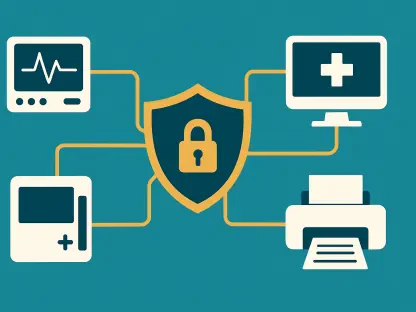
The technical anxiety surrounding latency is one of the biggest hurdles to trust, but the infrastructure we have in 2026 has reached a level of extraordinary reliability. When you look at the transatlantic prostatectomy performed between Florida and Angola, the data had to travel 10,000 miles through direct fiber optic cables, yet the precision remained intact. We are now implementing a “fail-safe” approach where high-speed fiber is backed up by 5G wireless networks, providing a redundant link that ensures the robot stays responsive even if one connection fails. There will always be a tiny fraction of delay due to digital processing, but we’ve optimized the hand-signal and video processing to the point where it is imperceptible to the human operator. This technological safety net is exactly what the FDA requires to ensure that a remote operation never becomes life-threatening due to a technical glitch.
Beyond the hardware, there are significant logistical barriers like state-side licensing and insurance reimbursement. How do we resolve these non-technical challenges to ensure equitable access?
The “soft” infrastructure of medicine—credentialing, licensing, and payment—is actually more complex than the robotics themselves. Currently, a surgeon might be licensed in one state but not the neighboring one where the patient is located, which creates a legal stalemate for telesurgery. To solve this, we need a national framework for medical licensure that recognizes the borderless nature of digital health, similar to how tele-health expanded during previous years. Reimbursement models also need to be redesigned so that hospitals are incentivized to host remote procedures rather than being penalized for the lack of a physically present lead surgeon. As experts like Binita Ashar have pointed out, we have to be confident in how every member of the remote and bedside team functions together. Only by aligning these administrative and economic conditions can we reduce the trauma and expense that patients face when they are forced to travel hundreds of miles for specialized care.
What is your forecast for the adoption of telerobotic surgery?
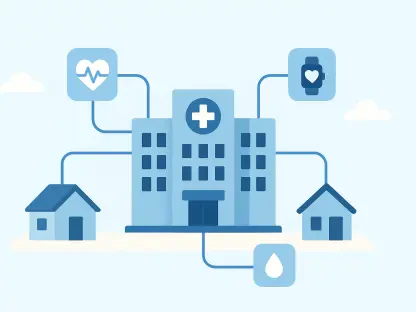
I forecast that by the end of this decade, telesurgery will shift from a series of “world-first” headlines to a standard component of emergency regional trauma networks. We will see specialized “hub-and-spoke” models where a single expert hub can provide 24-hour stroke and cardiac coverage for dozens of rural spoke hospitals, drastically reducing the “zip code” disparity in healthcare outcomes. While the psychological barrier of not having a surgeon in the room will take time to fade, the sheer weight of successful outcomes—like those we’ve seen in the 185 cases using the SSi Mantra system—will build the necessary public trust. Ultimately, the transition will be driven by necessity; as surgeon shortages worsen, the ability to project surgical expertise across oceans and state lines will become an essential utility rather than a luxury.