
The traditional landscape of medical education is currently undergoing a radical transformation as the University of Miami integrates the fine arts with immersive technology to address critical gaps in clinical performance. Through the Visual Thinking and Learning Strategies (VITaLs) project, students from diverse disciplines, including medicine, nursing, and physical therapy, are virtually transported into digital art galleries to engage with historical masterpieces. This initiative operates on the foundational belief that the ability to meticulously observe, clearly communicate, and respect divergent perspectives is just as vital to patient survival as the mastery of surgical techniques or pharmaceutical knowledge. By stepping away from the sterile environment of the hospital and into a curated virtual space, future healthcare providers are forced to confront the complexities of human perception. This immersive approach aims to sharpen diagnostic skills by teaching students how to look at a subject with fresh eyes, ensuring they do not overlook subtle cues that could lead to life-saving interventions.
This innovative curriculum was designed to confront a sobering reality within the American healthcare system, where communication breakdowns are linked to approximately 440,000 preventable deaths annually. These tragic outcomes frequently arise from a lack of coordination between specialized medical teams or a fundamental failure to accurately perceive and relay critical patient data during high-stakes transitions. By fostering “soft skills” such as empathy, active listening, and a tolerance for ambiguity, the University of Miami seeks to bridge the systemic gaps that high-pressure, technical-heavy medical training programs often neglect. The program recognizes that the modern clinician must be more than a repository of facts; they must be a collaborative communicator capable of navigating the nuanced social and emotional dynamics of a healthcare environment. By utilizing virtual reality as a neutral training ground, the university provides a safe space for students to practice these essential human interactions before they encounter the life-and-death consequences of a real-world clinical setting.
Bridging Disciplinary Gaps Through Virtual Reality
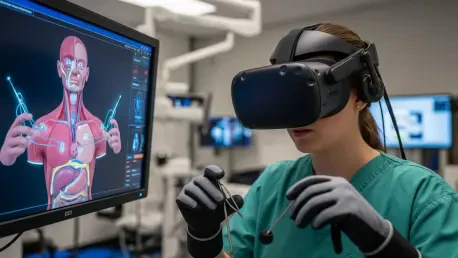
The logistics of modern medical education often result in professional silos, where nursing students and medical students rarely interact until they are already on the hospital floor. To overcome the geographic and scheduling barriers that prevent collaborative learning, the VITaLs project utilizes a sophisticated virtual reality platform developed in partnership with the creative technology studio MediaCombo. This digital environment allows students located on entirely different campuses to gather simultaneously around high-resolution, digitized versions of historical artworks, such as Rocco Marconi’s 16th-century painting “Christ and the Adulteress.” By removing physical boundaries, the VR platform facilitates a unique brand of interprofessional education that encourages students to see their colleagues in other disciplines as vital partners in the diagnostic process. This technological shift is not merely about convenience; it is a strategic effort to dismantle the rigid hierarchies that often stifle open communication and lead to catastrophic errors in patient care.
In these virtual sessions, the methodology of Visual Thinking Strategies is employed to stimulate deep inquiry through a series of open-ended, targeted questions. Led by experienced educators, students are asked to describe what they see in an image, provide evidence for their claims, and look deeper for missed details. This process forces participants to defend their interpretations using objective visual evidence while simultaneously requiring them to listen to the often-conflicting viewpoints of their peers. Such exercises are instrumental in teaching future clinicians that two individuals can observe the exact same data point—whether it is a complex brushstroke or a patient’s presenting symptoms—and arrive at different yet equally valid conclusions. By practicing this collective observation in a low-stakes digital gallery, students develop the intellectual humility required to value the input of every member of a healthcare team, ultimately leading to a more comprehensive and accurate understanding of a patient’s condition.
Developing Perspective and Enhancing Patient Care
The overarching objective of this art-based training is to encourage future clinicians to intentionally slow down their cognitive processes and observe with heightened awareness. In the fast-paced world of emergency rooms and clinics, there is a natural tendency to rush toward a diagnosis based on initial impressions, a habit that can lead to dangerous cognitive biases. Dr. Gauri Agarwal, a senior member of the VITaLs project, suggests that engaging with art “shakes the cognitive world” of students by forcing them to acknowledge that their personal worldview is not universal. This realization is critical when treating a diverse patient population, as it prepares medical professionals to better understand and respect the varied cultural backgrounds and personal needs of the people they serve. By learning to navigate the ambiguity inherent in a 500-year-old painting, students build the analytical muscles necessary to manage the uncertainty of complex clinical cases where the “correct” answer is rarely immediately obvious.
Beyond the technical benefits of improved observation, the VITaLs project is driven by a deeply personal mission to ensure that doctors remain fully present and emotionally engaged with their patients. This focus on human connection was inspired by the real-world experiences of patient advocates who witnessed firsthand how miscommunication and a lack of empathy can derail even the most advanced medical treatments. As the project successfully completes its initial phases, the University of Miami is preparing to scale the VR-based program to other institutions, aiming to establish a new national standard for medical training. By weaving the study of humanities into the fabric of clinical education, the university is championing a future where professional excellence is defined by the ability to see the human being behind the symptoms. Educators and administrators are encouraged to adopt these immersive technologies not just as a novelty, but as a fundamental tool for cultivating the empathy and collaborative spirit necessary to reduce preventable medical errors.
The successful implementation of the VITaLs project demonstrates that the future of healthcare excellence lies in a multidisciplinary approach that values human perception as much as technical proficiency. Medical institutions should look toward expanding these virtual reality programs into their core curricula to ensure that every student has the opportunity to develop high-level observational skills in a collaborative environment. Moving forward, the focus must shift toward quantifying the long-term impact of such training on actual patient outcomes, providing the data needed to make art-based clinical education a mandatory component of medical certification. By prioritizing the development of emotional intelligence and perspective-taking, the healthcare industry can foster a new generation of providers who are equipped to handle the complexities of modern medicine with both precision and compassion. These efforts will eventually transform the standard of care from a purely transactional experience into a deeply human one, ensuring that the patient’s story is never lost in the search for a diagnosis.