
The seamless integration of digital technologies into clinical workflows has transformed patient care, yet it has simultaneously created a landscape where a single software vulnerability can jeopardize the safety of thousands of individuals. In 2026, the intersection of healthcare and cybersecurity has moved far beyond simple data privacy concerns to become a fundamental pillar of patient safety and operational resilience. For modern health systems, including specialty clinics and pharmaceutical labs, managing digital risk is now a matter of life and death rather than just a technical hurdle. The healthcare environment has become an intricate web of interconnected technologies, ranging from Electronic Health Records to cloud-native applications and the Internet of Medical Things. This complex infrastructure creates a vast attack surface that requires specialized oversight to protect sensitive patient data and maintain system integrity across a distributed workforce. Managed Detection and Response (MDR) is no longer a luxury reserved for the largest hospital networks; it is a basic utility for organizations of all sizes. The primary objective for industry leaders has shifted from meeting basic compliance checkboxes to ensuring the continuous availability of clinical services in the face of sophisticated threats. Selecting the right MDR provider now involves evaluating their deep understanding of clinical workflows and the fragility of legacy medical systems. Organizations demand partners that can offer 24/7 vigilance and rapid response, ensuring that doctors and nurses can rely on their digital tools without fear of sudden disruption or data compromise.
The Strategic Imperatives of Healthcare MDR
Maintaining Clinical Uptime: The Primary Security Objective
In the healthcare sector, clinical availability serves as the ultimate North Star for security teams because the stakes are higher than in almost any other industry. Unlike other sectors where downtime mainly impacts productivity or revenue, a cyberattack in a hospital can stop emergency care, block access to vital medication history, or delay life-saving surgeries. This realization has forced a shift in how MDR services are evaluated, with a heavy emphasis on minimizing the time between detection and remediation. Security leaders are prioritizing providers that demonstrate an understanding of the critical path in patient care, ensuring that security protocols do not inadvertently create barriers to treatment. The focus is no longer just on blocking a threat but on doing so in a way that preserves the integrity of the medical mission. Consequently, MDR services are being integrated directly into emergency preparedness and disaster recovery plans to ensure that the digital backbone of the hospital remains functional even under heavy duress.
The proliferation of connected medical devices, such as infusion pumps, MRI machines, and wearable monitors, has expanded the attack surface to include hardware that is often difficult to patch or update. These devices frequently run on legacy operating systems that were never designed to withstand modern malware or sophisticated intrusion techniques. Security teams must now account for a diverse ecosystem where a vulnerability in a bedside monitor could potentially provide a gateway into the broader hospital network. This requires a specialized form of monitoring that can distinguish between normal medical device telemetry and malicious lateral movement. Leading MDR providers are addressing this by deploying specialized sensors and utilizing behavior-based analytics that can identify anomalies at the device level. By focusing on the specific signatures of medical protocols, these services provide a layer of protection that traditional, generic security tools often miss, thereby securing the most vulnerable points of the clinical infrastructure.
Securing the Modern Attack Surface: Connected Care and Identity
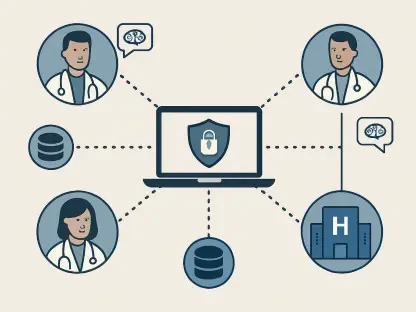
As healthcare providers adopt more flexible working arrangements and telehealth becomes a permanent fixture of care delivery, identity has emerged as the primary perimeter that attackers target. Phishing campaigns and compromised credentials remain the most common entry points for ransomware and data exfiltration, making identity and access management a critical component of any MDR strategy. With staff accessing sensitive patient records from various locations and devices, the traditional idea of a secure internal network has effectively disappeared. This shift requires a continuous verification approach where every access request is scrutinized in real time. Modern MDR providers are responding by integrating identity telemetry into their monitoring platforms, allowing them to spot suspicious login patterns or unauthorized access attempts before they escalate into full-scale breaches. This level of oversight is essential for protecting the high-value data contained within electronic health systems while maintaining the accessibility required for fast-paced medical environments.
The transition to cloud-native applications and decentralized data storage has further complicated the security landscape for healthcare organizations. While the cloud offers improved scalability and collaboration, it also introduces new risks related to misconfigurations and unauthorized data exposure. Security professionals are increasingly looking for MDR partners that can provide seamless visibility across hybrid environments, ensuring that data is protected whether it resides on-premises or in a multi-cloud architecture. This comprehensive view is necessary to track the movement of sensitive information and ensure that all points of interaction are monitored for potential threats. Furthermore, the use of automated response playbooks in these environments allows for the immediate isolation of compromised accounts or workloads, drastically reducing the window of opportunity for attackers. By prioritizing visibility and rapid response in the cloud, healthcare organizations can continue to innovate their digital services without compromising the security of the patients they serve.
Leading MDR Providers for the 2026 Landscape
Holistic Defense: Strategic Advisory and Managed Support
DeepSeas stands out as a leader by offering a holistic defense strategy that integrates MDR with threat intelligence and strategic advisory services. Their approach helps healthcare executives bridge the gap between technical operations and business risk, moving beyond reactive measures toward long-term maturity in a high-stakes environment. By providing a dedicated advisor who understands the specific regulatory and operational challenges of the medical field, they ensure that security investments are aligned with the organization’s overall goals. This strategic partnership is particularly beneficial for hospitals that are undergoing digital transformations, as it allows them to build security into their new processes from the ground up. The combination of 24/7 monitoring and high-level consulting enables healthcare leaders to make informed decisions about their risk posture and prioritize the most critical vulnerabilities. This comprehensive model fosters a culture of continuous improvement, where security is seen as an enabler of better patient outcomes rather than a burden on the staff.
Lumifi addresses the pervasive issue of tool fatigue by acting as a force multiplier for existing security investments within a healthcare network. This provider is particularly valuable for mid-sized care networks that need a 24/7 Security Operations Center (SOC) presence without the massive overhead of building and maintaining a fully staffed internal department. By leveraging the tools that an organization already has in place, they provide a streamlined and cost-effective way to achieve high-level security coverage. Their platform is designed to ingest data from a wide variety of sources, providing a unified view of the entire security stack and reducing the complexity of managing multiple disconnected systems. This efficiency is crucial for healthcare IT teams that are often stretched thin and need to focus on supporting clinical applications. With a focus on optimizing existing resources, this approach allows organizations to achieve a higher level of protection while maximizing the value of their previous technology purchases.
Human Expertise: Analyst-Centric Relationships and Incident Precision
Binary Defense focuses on the human element of security, prioritizing analyst-centric relationships and deep situational awareness for their healthcare clients. Their experts understand the operational nuances of a hospital environment, ensuring that incident response actions do not accidentally shut down critical systems like pharmacy databases or surgical workstations. This level of precision is vital in a medical context where an overzealous security response could be just as damaging as the initial attack. The analysts at the core of their service act as an extension of the hospital’s own team, providing a high degree of transparency and communication during critical events. This relationship-based model allows for a more nuanced understanding of the organization’s unique risks and priorities, leading to more effective and targeted defense strategies. By combining technical expertise with a deep empathy for the clinical mission, they provide a level of security that is both robust and sensitive to the needs of the healthcare providers.
The value of human-led detection is especially apparent during complex ransomware negotiations or when investigating subtle, long-term threats that may evade automated systems. In these scenarios, the ability of a skilled analyst to interpret context and make informed decisions is irreplaceable. For healthcare organizations, this means having a partner that can distinguish between a legitimate but unusual administrative task and a malicious attempt to escalate privileges. This focus on human intelligence ensures that the most sophisticated attacks are identified and neutralized before they can cause significant harm. Moreover, the collaborative nature of this service model means that healthcare IT staff can learn from the expertise of the MDR analysts, improving their own internal capabilities over time. This dual focus on immediate protection and long-term skill development creates a more resilient security posture that is better equipped to handle the evolving threats of the current digital landscape.
Artificial Intelligence: Scaling Protection through Automation
AirMDR utilizes artificial intelligence to provide efficient coverage for leaner security teams that might otherwise struggle to maintain 24/7 oversight. By using AI-powered virtual analysts for initial triage and investigation, they allow human experts to focus on complex decision-making and high-level strategy. This automation makes high-quality protection accessible for smaller clinics and fast-growing digital health startups that may not have the budget for a massive internal security team. The virtual analysts are capable of processing vast amounts of data at speeds that would be impossible for humans, identifying potential threats and gathering the necessary context for further investigation. This rapid processing ensures that alerts are addressed in real time, preventing small issues from spiraling into major incidents. For organizations that need to scale their security quickly, this AI-driven approach provides a flexible and powerful solution that grows alongside their operations.
Critical Start helps healthcare organizations manage the overwhelming volume of daily notifications through their Zero-Trust Analytics methodology. Their focus on noise reduction ensures that when an alert is escalated to a security leader, it represents a legitimate and verified threat, preventing the dangerous phenomenon of alert fatigue. In a hospital setting, where IT staff are already dealing with numerous clinical alerts, the last thing they need is a flood of false-positive security notifications. By resolving every alert that comes through the system, this provider ensures that nothing is left to chance, providing a high level of confidence in the organization’s security posture. This methodology not only improves the efficiency of the security team but also reduces the risk of a major threat being overlooked in a sea of irrelevant data. The result is a more focused and effective defense that allows healthcare professionals to concentrate on their primary goal of providing excellent patient care.
Engineering Excellence: Transparency and Compliance Alignment
Red Canary excels at spotting subtle behavioral patterns across cloud and SaaS environments, which is essential for modern healthcare systems that rely heavily on distributed software. Their detection engineering is built on a deep understanding of attacker techniques, allowing them to identify malicious activity even when it attempts to blend in with normal system operations. This proactive approach to threat hunting is a key differentiator for organizations that face targeted attacks or corporate espionage in the pharmaceutical sector. By focusing on behavior rather than just known signatures, they can provide protection against zero-day vulnerabilities and other advanced threats. The transparency provided through their platform allows healthcare IT teams to see exactly how threats are detected and what steps are being taken to mitigate them. This level of insight is crucial for building trust and ensuring that security operations are fully integrated with the broader business objectives.
Deepwatch provides the clear insights and high-maturity operations needed for rigorous regulatory oversight and insurance requirements in the medical field. Their focus on operational transparency ensures that healthcare organizations can easily demonstrate compliance with HIPAA and other data protection standards. By providing detailed reporting and analytics, they help security leaders communicate the effectiveness of their program to the board of directors and other stakeholders. This is increasingly important as insurance providers demand more evidence of robust security measures before granting coverage. The ability to show a clear history of threat detection and response actions provides a strong foundation for both legal and financial protection. For large healthcare networks, this level of maturity and accountability is essential for managing the complex risks associated with large-scale data management and clinical operations.
Emerging Trends and Partnership Requirements
Outcome-Driven Security: Moving Beyond Simple Alerting
There has been a notable shift in the industry toward demanding specific outcomes from MDR providers rather than just passing along technical alerts to the customer. Modern healthcare organizations expected their partners to not only identify threats but also take decisive action or provide clear instructions to remediate issues before they impacted patient care. The relationship between the healthcare provider and the security partner became much more integrated, with a shared responsibility for the ultimate safety of the systems. This led to the development of more sophisticated response playbooks that were tailored to the specific needs of different clinical departments. For example, the response to a threat in the administrative wing would be handled differently than one identified in the intensive care unit. This nuanced approach ensured that security measures were always proportional to the risk and sensitive to the clinical context, ultimately leading to a more resilient and effective defense.
Successful partnerships in 2026 required round-the-clock operational continuity and the ability to report risk at the board level in a language that non-technical leaders could understand. Providers had to offer a proactive defense that included regular tabletop exercises and continuous threat hunting to ensure that the healthcare mission remained uninterrupted. These exercises allowed clinical and IT staff to practice their response to various cyber scenarios, building the muscle memory needed to handle a real crisis. The focus was on building a sustainable security culture where every member of the organization understood their role in protecting patient data and system integrity. By moving beyond a purely technical focus, MDR providers became strategic partners in the overall resilience of the healthcare system. This evolution reflected a broader understanding that cybersecurity was no longer an isolated IT issue but a core component of high-quality medical service delivery and patient safety.
Building Sustainable Resilience: Future Strategic Planning
The landscape of healthcare security underwent a fundamental transformation as organizations realized that traditional defense models were no longer sufficient for the complexities of modern medicine. IT leaders adopted more rigorous standards for selecting MDR partners, looking for those who could demonstrate a long-term commitment to the healthcare industry. This resulted in the widespread adoption of zero-trust architectures and the integration of security telemetry directly into patient care devices. Healthcare systems that successfully navigated this transition were able to maintain higher levels of uptime and protect their reputations in an increasingly digital world. The focus moved toward building modular, adaptable security frameworks that could evolve as quickly as the threats themselves. This strategic flexibility became a key competitive advantage for organizations that wanted to attract top medical talent and provide the best possible care to their patients.
Looking forward, the lessons learned from the challenges of the past few years have highlighted the importance of a unified approach to digital and physical safety. Healthcare providers must continue to invest in automated response capabilities while maintaining a strong core of human expertise to handle the most complex and unpredictable threats. Collaboration between different healthcare organizations and their security partners will be essential for sharing threat intelligence and developing collective defense strategies. By fostering an environment of transparency and continuous learning, the industry can stay ahead of the attackers and ensure that technology remains a powerful tool for healing. The path to resilience involves a combination of advanced technology, strategic partnership, and a relentless focus on the clinical mission, ensuring that the healthcare systems of tomorrow are as secure as they are innovative. This ongoing commitment to defense will remain the cornerstone of patient trust and operational excellence for years to come.