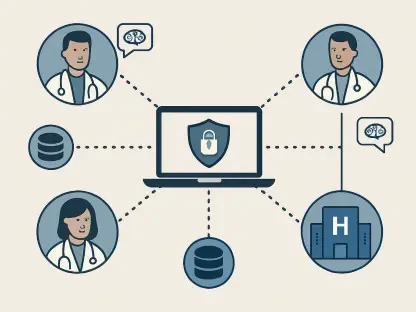

Every time a Texan logs symptoms into a fertility tracker or discusses mental health via a telehealth app, they are likely participating in a shadow economy where their most intimate biological details are bought and sold without their explicit knowledge or meaningful consent. While the average consumer operates under the comforting assumption that federal laws provide a comprehensive shield for all medical information, the reality of the 2026 digital landscape is that this protection is remarkably fragile and entity-dependent. Recent investigations into the data brokerage industry reveal a systemic pattern where sensitive details regarding chronic conditions, reproductive cycles, and prescription histories are extracted from mobile platforms and sold to global advertising firms. This transformation of the patient experience into a mere data point for algorithmic marketing highlights a massive failure in the current regulatory environment. As digital wellness platforms become increasingly essential for managing daily well-being, the line between legitimate healthcare and aggressive data harvesting continues to blur, leaving individuals vulnerable to corporate exploitation.
The Structural Flaws: Understanding the HIPAA Handoff
A significant portion of this vulnerability stems from what legal experts often describe as the HIPAA handoff, a critical regulatory failure where health information loses its legal protection the moment it leaves a clinical setting. Enacted in 1996, the Health Insurance Portability and Accountability Act was designed for a pre-smartphone era and primarily applies to specific covered institutions such as hospitals, doctor offices, and insurance providers. This creates a massive structural loophole where privacy protection is tied to the specific entity holding the data rather than the sensitive nature of the information itself. Consequently, commercial apps, wearable devices, and discount prescription sites can collect and sell detailed medical histories without the same stringent oversight required of a family physician. This outdated framework fails to account for the billions of health-related data points generated outside the traditional medical system, leaving a vast regulatory void that commercial entities are eager to fill for financial gain.
Empirical evidence from recent enforcement actions by the Federal Trade Commission highlights how common this misuse has become among prominent digital services that consumers trust with their private lives. Major platforms dedicated to mental health support and pharmaceutical discounts have been caught transmitting treatment histories and medication lists to social media giants for the purpose of highly targeted advertising. Furthermore, geolocation data is being harvested by various brokers to identify individuals visiting specialized clinics, such as addiction recovery centers or oncology departments, demonstrating that the current federal framework is wholly insufficient for the complexities of the modern digital health ecosystem. These practices go beyond simple marketing, as they create permanent digital records of an individual’s health struggles that can be accessed by third parties without the user ever realizing their privacy was breached. The lack of a universal standard for health data means that once information is categorized as commercial rather than clinical, the protections evaporate.
Reconciling State Statutes: The Texas Legislative Paradox
Texas currently finds itself in a unique legislative paradox, possessing two powerful laws that unfortunately fail to work in harmony to protect the privacy of its citizens in the digital age. The Texas Medical Records Privacy Act of 2001 has a surprisingly broad reach that includes app developers and data brokers, yet it lacks the modern enforcement mechanisms necessary to tackle modern tech giants. In contrast, the 2023 Texas Data Privacy and Security Act offers robust consumer rights, such as the ability to request data deletion and correction, but it specifically excludes information already covered by federal standards. Because the newer law assumed that health data was already sufficiently protected by federal mandates, a legal no-man’s land has formed where medical information actually has fewer protections than basic online shopping history. This misalignment means that while a resident can easily delete their retail preferences, they may struggle to remove a decade of sensitive health logs from a third-party server.
This gap in the legal landscape has direct and lasting consequences for the data sovereignty of Texas residents who rely on digital tools for their healthcare needs. Once an individual’s genetic profile or mental health history is sold to a third-party aggregator, they often lose all visibility and control over how that information is utilized or who ultimately owns it. By failing to link the broad reach of older statutes with the modern consumer rights provided by newer legislation, the state leaves its citizens without a clear or accessible path to manage their most sensitive digital footprints. This legislative friction prevents the effective prosecution of bad actors and allows companies to hide behind complex terms of service that exploit the confusing overlap of state and federal rules. Without a unified approach that clarifies these definitions, the privacy of millions remains a secondary concern to the technological efficiency of data collection, leaving consumers to navigate a treacherous digital environment alone.
Safeguarding Vulnerable Populations: Family Rights and Digital Health
The lack of integrated data laws also creates significant hurdles for families and younger generations who are growing up in an environment where their health metrics are tracked from birth. Under current state standards, child privacy protections frequently expire at age 13, which means that 14-year-olds are often treated as adult consumers with minimal safeguards during a highly vulnerable stage of their physical and psychological development. Furthermore, inconsistent software defaults and restrictive corporate policies frequently prevent parents from accessing their children’s legitimate health records through hospital portals or wellness apps. This shift places arbitrary corporate settings above the uniform application of state family law, creating a situation where a parent might be legally responsible for a child’s medical care but digitally locked out of their treatment history. This disconnect not only complicates the management of chronic conditions but also exposes minors to the same predatory data practices as adults.
State leaders recognized that the most effective way to restore digital privacy involved synchronizing existing tools to extend the principles of consent, portability, and deletion to all entities handling health data. It was determined that ensuring legal protections followed the information itself, rather than staying confined to a doctor’s office, became the essential strategy for bridging the HIPAA handoff gap. By standardizing parental access and mandating transparency regarding every entity that accessed medical records, Texas established a path toward securing the data sovereignty of its people. These legislative adjustments functioned as a necessary corrective measure that prioritized the rights of the individual over the commercial interests of the platform. The resulting framework provided a clearer set of expectations for developers and a stronger shield for consumers, ensuring that the intimate details of a person’s life remained private. This transition moved the state toward a model where technology served the patient without compromising their fundamental right to confidentiality.