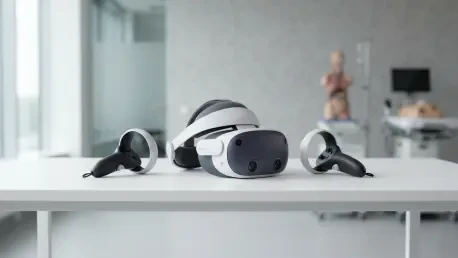

Traditional residency programs frequently struggle to provide trainees with consistent exposure to rare pediatric emergencies and complex clinical scenarios. This long-standing educational gap has prompted a major shift toward immersive virtual reality (IVR) as a means of ensuring that medical graduates possess the necessary hands-on skills before entering professional practice. In 2026, the integration of these digital tools has moved beyond experimental pilots into a core component of competency-based medical education. By simulating high-stakes encounters in a controlled environment, IVR provides a bridge between theoretical knowledge and the high-pressure reality of hospital wards. Educators are increasingly utilizing these systems to track entrustable professional activities, allowing for a more objective assessment of a learner’s readiness. This technological evolution ensures that every trainee encounters the same standardized challenges, creating a more equitable and rigorous pathway toward medical certification.
Methodology of the Qualitative Investigation
A significant qualitative study was launched to evaluate how medical faculty perceive the utility of these immersive systems in modern healthcare curricula. Conducted from late 2025 through May 2026, the investigation involved eighteen participants, primarily comprised of experienced medical faculty and a senior subspecialty resident, to gauge the practical impact of virtual simulations. These experts engaged directly with hands-on scenarios that focused on specific medical competencies, allowing them to provide feedback based on immediate interaction rather than abstract concepts. Following these sessions, researchers conducted semi-structured interviews to capture the professional perspectives and lived experiences of the educators. The primary goal was to determine if IVR could effectively support the acquisition of skills mandated by current residency programs. This direct engagement ensured that the findings reflected the realistic needs of modern medical schools and the high standards of clinical oversight.
The research utilized reflexive thematic analysis to process the transcribed audio recordings from the interview sessions, ensuring that the findings were grounded in rigorous analytical standards. Data collection continued until thematic sufficiency was achieved, meaning that the researchers had reached a point where no new insights or categories were emerging from the participant pool. This systematic approach addressed two critical questions: how faculty view virtual reality as a tool for formal assessments and what operational hurdles institutions face during integration. By focusing on these areas, the study aimed to identify the specific conditions under which digital simulations provide the most value to both instructors and learners. The results highlighted a clear path forward for institutions looking to modernize their simulation centers and align their training programs with the evolving requirements of professional certification, particularly as decentralized training models became more common throughout 2026.
Realism and Structural Flow in Simulations
One of the primary themes identified during the thematic analysis was the perception of the virtual environment as a realistic yet idealized setting for training. Faculty noted that while the digital spaces accurately mimicked the layout and equipment of a clinical ward, they often removed the ambient noise and unpredictability typically found in actual hospital environments. This reduction in environmental friction creates a highly focused atmosphere where trainees can concentrate on the specific procedural steps of their assigned clinical tasks without the distractions of a chaotic ward. In this sense, the virtual world provides an excellent space for deliberate practice, where learners can perfect their technique in a calm, controlled setting. However, this idealization also raises questions about the eventual transition to real-world clinical practice, where the ability to manage distractions and multitask is just as important as technical proficiency, suggesting that simulations may need to evolve to include more complexity.
The structural flow of these virtual simulations was often described by participants as algorithmic and prescriptive, which offers a unique set of advantages and limitations. For foundational learners who are just beginning to master standard protocols, this rigid, step-by-step nature is highly beneficial because it reinforces a logical progression of care and ensures that no critical steps are missed. It helps junior residents internalize basic clinical algorithms until they become second nature. However, for more advanced trainees, such as senior residents, this linear sequence might hinder the development of sophisticated clinical reasoning. Educators expressed concern that an inability to deviate from a preset script could limit the technology’s effectiveness in preparing high-level learners for the nuanced, nonlinear cases they will face in their independent practice. As the software matures, finding a balance between guided instruction and open-ended decision-making will be essential to accommodate the needs of diverse learner levels.
Assessment Roles and Scalability Factors
A critical consensus emerged among the participants regarding the role of virtual reality in assessment, specifically highlighting its suitability for formative evaluation. Faculty viewed IVR as a powerful coaching tool that allows trainees to receive ongoing feedback and make mistakes in a safe, consequence-free digital environment. This formative approach fosters a culture of self-reflection and continuous improvement, as residents can identify their own strengths and weaknesses early in their training journey. By removing the fear of harming a patient, the technology encourages learners to explore different approaches and learn from their errors in real-time. This longitudinal tracking of progress allows educators to provide more personalized guidance, ensuring that each student reaches the required competency benchmarks. While high-stakes summative testing remains a future goal, the immediate value of these systems lies in their ability to support the day-to-day development of clinical skills and professional judgment.
Beyond its pedagogical value, virtual reality offers substantial operational and logistical benefits that make it an attractive alternative to traditional simulation methods. Physical simulation centers often require expensive high-fidelity mannequins and dedicated laboratory space that can be difficult to schedule and maintain. In contrast, modern VR headsets are portable and scalable, allowing for decentralized training that can occur at various locations within a hospital system or even remotely. This flexibility is particularly useful for providing repeated exposure to rare clinical scenarios, such as pediatric cardiac arrests or complex trauma cases, which a resident might seldom encounter during their time on a physical ward. By allowing students to run these high-stakes simulations dozens of times, institutions can ensure that procedural steps are deeply ingrained without the need for expensive consumables or fixed infrastructure, ultimately reducing the long-term costs of providing a high-quality medical education.
Overcoming Barriers: Future Implementation Strategies
Despite the many advantages, the successful adoption of virtual reality is not without practical barriers, including physiological challenges like cybersickness. This form of motion sickness can affect a significant percentage of users, causing discomfort that disrupts the learning process and limits the duration of training sessions. Additionally, the technical learning curve for faculty and students who are not digital natives requires dedicated orientation time, which can put pressure on already busy clinical schedules. To mitigate these issues, institutions must adopt a strategic roadmap that includes targeted orientation and robust technical support systems. Ensuring that every trainee has equal access to high-end hardware is also a mandatory prerequisite for creating a fair and standardized assessment environment. By addressing these access inequities and focusing on ergonomic improvements, schools can minimize the friction associated with new technology and focus on enhancing professional development.
The study ultimately demonstrated that virtual reality served as a vital educational adjunct that filled critical gaps in traditional medical training. By providing a portable and scalable platform for formative assessment, these digital tools helped residency programs meet the evolving mandates of competency-based education. Educational leaders concluded that the most effective implementation strategies involved matching simulation complexity to the learner’s specific experience level, ensuring that interns and senior residents received tailored challenges. Moving forward, institutions focused on integrating these tools more deeply into their core curricula rather than treating them as optional supplements. The transition required a shift in mindset, where educators prioritized the pedagogical alignment of virtual scenarios with specific professional activities. By investing in adaptive software and addressing technical barriers, the medical community established a sustainable framework that ensured the next generation of physicians performed their duties with greater precision.