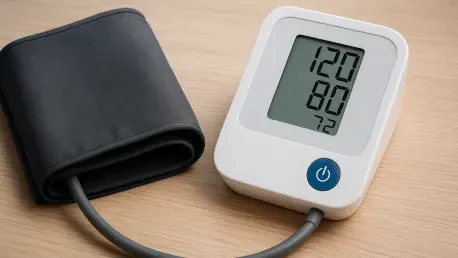

Medical professionals have long sought a passive monitoring solution that can identify nocturnal hypertension and the cardiovascular stress caused by sleep apnea. For decades, the standard for tracking cardiovascular health has relied on the intermittent use of inflatable arm cuffs. While these devices provide a useful snapshot, they often fail to capture the full picture of a patient’s health due to factors like white coat syndrome or natural fluctuations throughout the day. Happy Health, a digital health innovator based in Austin, Texas, is challenging this static approach with the Happy Ring. This wearable device has secured FDA clearance to provide continuous, cuffless blood pressure monitoring, representing a massive shift from manual checks to passive, real-time data collection. Unlike other wearable health trackers that require users to periodically calibrate their sensors against a traditional cuff, the Happy Ring is the first of its kind to eliminate this requirement. By removing the need for external benchmarks, the device offers a truly standalone solution for chronic disease management.
Engineering a New Standard in Medical Wearables
Innovative Sensor Integration: The Dual-Sensing Approach
The technical foundation of the Happy Ring lies in the sophisticated combination of photoplethysmography and bioimpedance. The PPG sensor uses light to detect changes in blood volume as the heart beats, while bioimpedance sends low-level electrical signals through the tissue to measure blood density. By merging these two data streams, the ring employs physics-based models to simulate how blood vessels expand and contract, allowing it to translate raw sensor input into accurate blood pressure measurements in millimeters of mercury. This dual-sensor approach addresses the limitations of optical-only systems, which often struggle with movement or changes in peripheral blood flow. By assessing the actual impedance of the tissue, the device gains a more nuanced understanding of the vascular environment, providing a level of precision previously unseen in consumer-grade jewelry. This sophisticated architecture allows for a seamless transition between casual health tracking and clinical-grade diagnostic monitoring.
Advanced Data Filtering: Ensuring Signal Integrity
To ensure the highest data integrity, the ring features an intelligent filtering system that accounts for environmental and physiological variables. The device constantly assesses factors such as temperature, hydration levels, and vascular tone before reporting a reading. If the conditions are deemed unstable or fall outside of validated ranges, the ring withholds the measurement. This ensures that the information shared with both the user and their healthcare provider is reliable and reflects true physiological states rather than temporary environmental interference. Moreover, this autonomous filtering mechanism reduces the noise typically associated with wearable devices, which can often be skewed by rapid movement or changes in the ambient environment. By prioritizing accuracy over the sheer volume of data points, the system builds trust with medical professionals who require dependable metrics for titration of medication or lifestyle interventions. This focus on signal quality over quantity marks a significant departure from earlier iterations of wearable health technology.
Clinical Validation and the Future of Heart Health
Rigorous Testing: Achieving Medical-Grade Accuracy
To achieve its FDA-cleared status, the Happy Ring underwent clinical validation against invasive arterial line measurements, which are considered the gold standard used in intensive care settings. This rigorous testing demonstrated a high degree of precision, with a mean difference of less than one millimeter of mercury for both systolic and diastolic readings. Furthermore, the testing included a diverse group of participants with varying skin tones and body mass indexes, ensuring the optical sensors perform accurately across all demographics. This is a critical milestone, as it addresses a common challenge in the wearable technology industry where optical sensors have historically underperformed on darker skin tones or higher-BMI individuals. By validating against the most accurate invasive methods rather than just traditional arm cuffs, Happy Health has established a new benchmark for what is possible in non-invasive monitoring. This level of validation provides clinicians with the confidence necessary to integrate wearable data into formal treatment plans.
The Paradigm Shift: Transforming Preventative Care
Industry experts describe this breakthrough as blood pressure’s CGM moment, drawing a parallel to how Continuous Glucose Monitors revolutionized diabetes care. By moving away from painful or burdensome manual tests, the Happy Ring allows for the detection of critical issues like nocturnal hypertension. Supported by a seventy-five million dollar funding round from major venture capital firms, this device is positioned as a bridge between consumer wellness and clinical diagnostics. Moving forward, the focus shifted toward establishing new clinical protocols that could interpret this constant stream of information effectively. Healthcare systems began integrating these metrics into remote patient monitoring programs, allowing for proactive adjustments to therapy before cardiovascular events occurred. Patients were encouraged to share their long-term trends with specialists to identify patterns that remained hidden during standard office visits. Ultimately, this technology provided a roadmap for making preventative cardiovascular care an invisible and effortless part of daily life.