
The contemporary landscape of American healthcare is currently defined by a relentless struggle to balance high-quality patient care with the suffocating weight of administrative requirements and financial instability. Hospital systems are navigating a period of unprecedented operational pressure, where the scarcity of skilled labor coincides with shrinking reimbursement rates and a rise in clinician burnout. In response to these complex dynamics, leaders are increasingly looking toward artificial intelligence and clinical workflow automation as essential tools for organizational survival and growth. This technological shift is designed to dismantle the barriers that prevent doctors and nurses from spending meaningful time at the bedside by automating the tedious behind-the-scenes processes that clutter the medical workday. As these sophisticated systems move from experimental stages to standard operational procedures, they are fundamentally altering the way medical institutions function, ensuring that human expertise is reserved for the most critical patient needs rather than lost in paperwork. By focusing on smart technology, these organizations are making it easier for their staff to manage the heavy demands of modern medicine without sacrificing the quality of care or their personal well-being.
Efficiency Optimization: Enhancing Medical Domains
Administrative Relief: Streamlining the Clinician Workload
One of the most immediate benefits of integrating artificial intelligence into the healthcare ecosystem is the radical simplification of the prior authorization process, which has historically been a significant bottleneck in patient care. In the current environment, sophisticated AI tools are capable of scanning a patient’s medical history and automatically extracting the specific data points required by insurance providers to approve a procedure. This automation eliminates the need for nursing staff to spend hours on the phone or manually filling out digital forms, thereby accelerating the timeline for critical treatments and improving patient outcomes. This automated intervention does not merely expedite the approval cycle but also creates a more predictable revenue stream by lowering the probability of insurance claim rejections. By integrating these systems into health records, facilities have found that they can maintain compliance with standards without additional training. The result is a more resilient financial foundation that allows the institution to reinvest savings into staff.
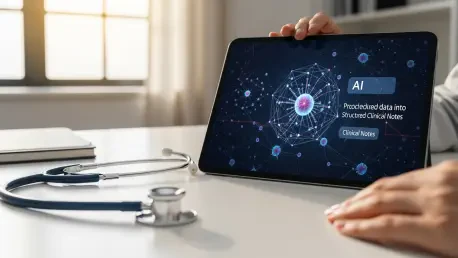
Beyond the administrative office, artificial intelligence is making profound inroads directly into the examination room through the deployment of ambient listening technologies. These AI-powered scribes function as non-intrusive assistants that capture the nuances of patient-provider conversations and automatically generate structured clinical notes in real-time. This eliminates the need for doctors to spend their evenings engaged in ‘pajama time,’ a term used to describe the hours spent after work finishing electronic health record entries. By relieving this documentation burden, organizations are seeing a visible improvement in clinician morale and a reduction in the symptoms of professional exhaustion. Furthermore, the accuracy of these notes often surpasses manual entry because the system captures specific details that might be forgotten in the rush of a busy clinic day. Consequently, clinicians are able to maintain better engagement with their patients, which reinforces the therapeutic alliance and improves the diagnostic experience for everyone involved in the care journey.
Data Synthesis: Improving Diagnostics and Patient Communication
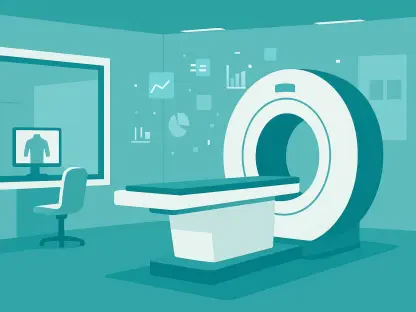
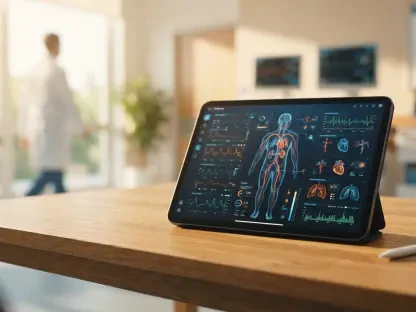
In the high-stakes environments of the intensive care unit and radiology departments, the ability of AI to synthesize vast datasets into actionable insights is becoming a critical asset. These systems are capable of monitoring continuous streams of biometric data, identifying subtle physiological changes that may precede a major medical event, such as sepsis or cardiac distress. By providing medical teams with advanced warnings, automation allows for earlier interventions that can significantly improve survival rates and reduce the length of hospital stays. Similarly, in diagnostic imaging, AI algorithms act as a second set of eyes that can highlight potential anomalies in X-rays or MRI scans, ensuring that radiologists focus their attention on the most concerning findings first. This prioritized triaging is especially valuable in facilities facing a backlog of cases, as it ensures that the most urgent patient needs are addressed without delay. The resulting efficiency gain allows specialists to handle higher volumes of complex cases while maintaining a high standard of accuracy.
The scope of automation also extends to the way patients interact with the healthcare ecosystem after they leave the clinic or hospital. Modern digital platforms now incorporate AI-driven tools that provide patients with immediate clarity regarding their treatment plans and medication costs. For instance, integrated pharmacy modules can automatically compare prescription prices across various providers and highlight lower-cost alternatives, directly addressing the financial barriers to medication adherence. Additionally, automated messaging systems and intelligent chatbots are now capable of handling routine post-operative queries or scheduling follow-up appointments without requiring manual intervention from nursing staff. These tools keep patients consistently engaged in their own recovery process while filtering out non-urgent inquiries that would otherwise overwhelm phone lines and administrative desks. By streamlining these outward-facing communications, healthcare organizations can foster a more transparent relationship with the community, leading to better long-term health outcomes.
Operational Excellence: Strategic Frameworks for Success
Technical Foundations: Establishing Reliability and Standards
Successfully integrating artificial intelligence into a clinical environment requires a robust technical framework that prioritizes system interoperability and data integrity. It is not enough for a tool to function in isolation; it must communicate seamlessly with existing electronic health record systems and other legacy software used by the hospital. This necessitates the adoption of standardized data protocols, such as HL7 FHIR, which allow different platforms to exchange information accurately and securely. Furthermore, the security of patient data remains a paramount concern, requiring automation tools to be designed with advanced encryption and strict access controls to remain compliant with privacy regulations. Continuous monitoring of these systems is also essential to detect and correct any algorithmic drift that could occur as clinical guidelines or patient demographics shift over time. By establishing these rigorous technical standards, organizations can ensure that their digital tools remain reliable and safe, providing a stable foundation for the broader digital transformation of the enterprise.
The evaluation of AI automation effectiveness is often measured through a multi-faceted approach that balances financial performance with the human experience of providing care. Hospital administrators typically track metrics such as the reduction in insurance claim denial rates and the acceleration of the billing cycle, both of which provide a clear indication of the return on investment for administrative tools. However, the qualitative impact on the workforce is equally important, as indicated by improvements in staff retention rates and the overall reduction in time spent on non-clinical tasks. High adoption rates among frontline providers serve as the ultimate validation of a tool’s utility, suggesting that the technology is genuinely solving practical problems rather than adding new layers of complexity. When clinicians find that a tool simplifies their workflow and allows them to return to the core aspects of their profession, the likelihood of long-term success increases dramatically. Consequently, the most prosperous organizations are those that treat these metrics as a feedback loop.
Inclusive Development: Prioritizing Clinician-Centric Design
The most frequent cause of failure for digital initiatives in healthcare is the implementation of technology that does not align with the practical realities of a clinical setting. To avoid these pitfalls, forward-thinking organizations are now ensuring that doctors, nurses, and technicians are deeply involved in the selection and design of AI tools from the very beginning. This collaborative approach ensures that the software addresses the specific friction points that clinicians encounter during their shifts, such as cumbersome data entry fields or inefficient communication loops. When the end-users have a voice in the development process, they are more likely to embrace the new technology as an empowering resource rather than a burden imposed by management. This partnership between the IT department and the clinical staff fosters a culture of innovation where technology is viewed as a supportive infrastructure that enhances the team’s collective ability to deliver exceptional care. Ultimately, the successful deployment of AI is as much a cultural challenge as a technical one.
Maintaining the human element of medicine is a critical priority as healthcare becomes increasingly digitized and automated. The primary goal of AI in this context is not to replace the intuition and empathy of a skilled clinician but to provide the operational space necessary for these human qualities to flourish. By automating the cognitive load of data sorting and administrative tracking, these systems allow medical professionals to focus on the complex, nuanced interactions that define the patient experience. This preservation of the ‘human touch’ is essential for building trust and ensuring that patients feel heard and valued during their most vulnerable moments. As the technology matures, the synergy between machine efficiency and human compassion will become the new standard for clinical excellence. This approach recognizes that while an algorithm can analyze a dataset with incredible speed, only a human provider can offer the holistic support and personalized care that lead to true healing. By positioning AI as a supportive partner, the industry is creating a more sustainable model.
Future-Proofing Healthcare: Sustaining Growth Through Automation
The integration of automated systems into the clinical environment became a defining strategy for healthcare leaders looking to solve the persistent challenges of the modern era. Strategic planning committees that prioritized the stabilization of workflows through artificial intelligence observed a marked decrease in employee turnover and a significant improvement in the accuracy of patient data processing. By the time these technologies reached full maturity, the primary focus transitioned from simple task automation to the cultivation of a symbiotic relationship between machine logic and human intuition. It was discovered that the most successful implementations occurred when organizations viewed technology not as a static purchase but as an evolving asset that required constant refinement based on real-world feedback. Future initiatives for the period between 2026 and 2028 were subsequently modeled after these early successes, emphasizing a more integrated approach to digital health that prioritized the well-being of both the patient and the provider through scalable infrastructure and intuitive design.