
The increasing complexity of modern diagnostic imaging demands a level of coordination that traditional on-site hardware infrastructures often struggle to support in a fast-paced clinical environment. As medical facilities transition toward integrated digital ecosystems, the necessity for seamless data accessibility across various departments has become a primary hurdle for clinicians and IT administrators. GE HealthCare recently introduced MIM Anyware to address these persistent bottlenecks, offering a specialized remote viewing solution designed to streamline imaging collaboration. This platform serves as a pivotal bridge, allowing healthcare professionals to access sophisticated diagnostic tools from virtually any location without compromising high-fidelity visualization. By prioritizing flexibility and interoperability, the technology aims to reduce delays inherent in legacy systems, where physical proximity to a specific workstation often dictated the speed of patient care.
Specialized Solutions for Complex Data
Strategic Integration: The Role of Vendor-Neutral Systems
Achieving interoperability in a landscape filled with proprietary software and disparate hardware remains a significant challenge for contemporary hospitals and research institutions. The introduction of MIM Anyware represents a strategic shift toward vendor-neutral environments, which prioritize the fluidity of information over closed-loop ecosystems. This system allows for the consolidation of various imaging modalities, including PET, CT, and MRI, into a singular, cohesive viewing experience that does not require the user to navigate multiple disconnected interfaces. For clinicians specializing in fields like oncology, this means that complex datasets from different sources can be overlayed and analyzed with greater efficiency. The architecture behind this advancement focuses on reducing the latency typically associated with high-resolution image rendering, ensuring that the diagnostic quality remains consistent regardless of the terminal used. This transition is essential for maintaining the momentum of clinical discovery.
Clinical Synergy: Enhancing Remote Collaborative Analysis
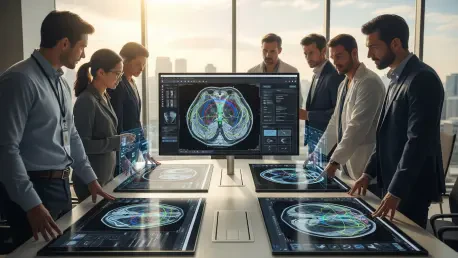
Beyond the basic viewing capabilities, this specialized platform integrates advanced toolsets for contouring and quantitative analysis that were previously restricted to high-end, stationary workstations. By migrating these capabilities to a flexible remote environment, the software empowers multidisciplinary teams to collaborate in real-time, even when team members are spread across different campuses. This is particularly relevant for tumor board meetings and surgical planning sessions, where various specialists must weigh in on a single patient case simultaneously. The platform facilitates this by providing a unified version of the truth, where every annotation and measurement is synchronized instantly across the cloud. This approach eliminates the redundant task of exporting and re-importing large DICOM files, which often leads to version control issues and data fragmentation. By centralizing these functions, the medical community can better leverage collective expertise for refined treatment strategies.
Future-Proofing Healthcare Infrastructure
Operational Efficiency: Reducing Physical Barriers to Care
Operational efficiency within a hospital system often hinges on how quickly information can move from the laboratory to the bedside without encountering technological roadblocks. The deployment of MIM Anyware addresses the logistical constraints of modern medicine by decoupling high-performance computing from the physical office space, thereby democratizing access to critical clinical insights. IT departments benefit from this centralized model because it simplifies the maintenance and patching of software, reducing the need to individually update dozens of local machines. Furthermore, the security protocols embedded in the platform ensure that patient privacy remains a top priority, utilizing encrypted pathways that meet the requirements of current healthcare regulations. As healthcare networks continue to expand, the ability to scale imaging resources without a proportional increase in physical hardware costs provides a sustainable path for growth and narrows the gap in care standards across diverse populations.
Institutional Evolution: Strategies for Long-Term Implementation
The move toward decentralized imaging collaboration proved to be a necessary evolution for healthcare providers seeking to optimize their clinical outcomes and operational resilience. By implementing MIM Anyware, organizations established a framework where diagnostic speed and accuracy were no longer limited by the physical location of the specialist or the age of local hardware. Medical directors focused on maximizing the utility of their personnel by removing friction points that historically slowed down the decision-making process in radiation oncology and radiology. These leadership teams prioritized the adoption of cloud-based pathways that facilitated immediate peer review and remote consultations, which eventually set a new benchmark for institutional efficiency. Looking forward, the focus shifted toward integrating these collaborative tools with broader health informatics platforms to create a truly unified patient record. Facilities that embraced this transition found themselves prepared for high-volume care demands.