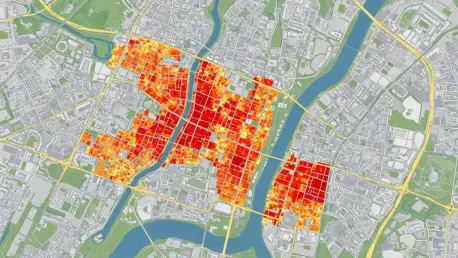

Rapidly identifying a localized outbreak of measles or strep throat can mean the difference between a minor cluster and a full-blown public health crisis that overwhelms local emergency departments. Epic, a dominant force in electronic health record management, is leveraging its vast digital infrastructure to transform how the medical community identifies these sudden surges in illness. By launching a sophisticated surveillance tool known as Health Alerts, the company utilizes real-time data to pinpoint exactly where and when disease rates are climbing beyond historical norms. This initiative draws upon the Cosmos platform, an immense repository containing the health records of roughly 300 million patients across more than 49,000 unique healthcare sites. This scale allows for a level of granular analysis previously unattainable, as the software monitors specific diagnosis codes to catch anomalies that might otherwise go unnoticed during the busy day-to-day operations of a clinic. By prioritizing acute and communicable conditions such as bronchiolitis and strep throat, the system shifts the focus toward proactive intervention rather than retrospective reporting.
Algorithmic Precision and Clinical Oversight
The underlying mechanism for detecting these spikes is not merely a simple count of patient visits but a multi-layered analytical process designed to eliminate statistical noise. It begins with the continuous monitoring of ICD-10-CM diagnosis codes, looking for year-over-year increases that significantly exceed the expected seasonal fluctuations. To ensure accuracy, the platform employs the Farrington improved algorithm, which is a standard methodology in public health for evaluating historical data trends. This specific algorithm compares current health data against a baseline of the previous three years, ensuring that a rise in cases is a genuine statistical anomaly rather than a predictable pattern. Furthermore, the technology avoids the pitfalls of automated false alarms by incorporating a mandatory manual review phase. Every flagged alert must pass through a multidisciplinary team consisting of experienced clinicians and data scientists. This human-in-the-loop approach guarantees that any notification published to the public dashboard is clinically relevant and grounded in rigorous scientific validation, providing a reliable source of truth for providers and health agencies alike.
Bridging the Gap in Public Health Awareness
Early implementations of the tool successfully identified elevated disease activity in states like Illinois, Missouri, and South Carolina, offering a new barometer for regional population health. These alerts were not intended to serve as exhaustive case counts but functioned as early warning signs for emerging threats that required immediate attention from local authorities. By focusing on rapid acceleration rather than chronic conditions, the system provided a clear picture of how acute illnesses moved through specific communities. Medical professionals utilized these insights to adjust staffing levels, prepare diagnostic supplies, and issue targeted communications to vulnerable populations. Future considerations for this technology involved expanding the dataset to include more diverse demographics and integrating predictive modeling to anticipate where a spike might travel next. The integration of such real-time data into the broader healthcare landscape addressed long-standing delays in traditional reporting. Ultimately, the transition to this proactive model empowered healthcare leaders to move beyond reactive measures, ensuring that local health systems stayed ahead of the curve in an increasingly interconnected and fast-moving biological environment.