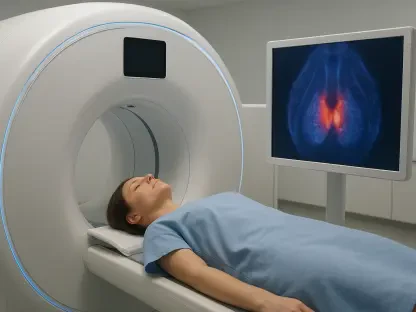

The healthcare infrastructure in the United States currently faces a silent but critical vulnerability as tens of thousands of diagnostic procedures rely on a fragile international supply chain for medical isotopes. Every single day, approximately 40,000 medical procedures across the country utilize technetium-99m, a short-lived radioactive tracer derived from molybdenum-99 (Mo-99), to diagnose everything from late-stage cancers to cardiovascular diseases. To address this persistent reliance on aging foreign reactors and complex logistics, the U.S. Department of Energy (DOE), through its Office of Energy Dominance Financing, has finalized a conditional commitment for a $263 million loan to SHINE Chrysalis, LLC. This substantial investment aims to finalize the construction of a state-of-the-art production facility in Janesville, Wisconsin, marking a decisive shift toward establishing the nation’s first domestic commercial source of Mo-99. By localizing this production, the project intends to insulate American patients from the sudden global shortages and shipping delays that have historically plagued the nuclear medicine sector, ensuring that life-saving diagnostics remain available when they are needed most.
Technological Innovation and Strategic Infrastructure
The technological framework behind the Janesville facility represents a sophisticated departure from traditional nuclear reactor methods, utilizing a hybrid approach that combines subcritical fusion and fission processes. Unlike older facilities that generate high levels of radioactive waste, this innovative methodology incorporates advanced uranium recycling techniques designed to maximize efficiency while significantly reducing the environmental footprint of isotope production. This specialized process ensures a steady output of high-purity molybdenum-99 without the volatility associated with high-power research reactors typically used overseas. Furthermore, the integration of these dual processes reflects over a decade of rigorous research and development conducted in partnership with the National Nuclear Security Administration and various national laboratories. By moving toward this decentralized, low-waste model, the facility provides a scalable solution to the global isotope crisis. This approach not only enhances the precision of the manufacturing process but also guarantees a level of purity that meets the stringent requirements for modern radiopharmaceuticals used in oncology centers.
This investment arrives as part of a broader federal initiative to revitalize domestic nuclear capabilities and secure critical fuel supply chains across the United States. The project aligns seamlessly with an executive order issued in May 2025, which prioritized the expansion of nuclear energy production and the acceleration of a specialized workforce capable of managing next-generation nuclear facilities. By fostering a domestic environment for nuclear medicine, the government is effectively modernizing outdated infrastructure that had fallen behind global standards in recent decades. The conditional nature of the $263 million loan ensures that the recipient meets rigorous technical, financial, and environmental benchmarks before the full release of funds, maintaining a high standard of accountability. This policy shift is intended to create a self-sustaining ecosystem where American innovation drives healthcare security, reducing the geopolitical risks associated with sourcing isotopes from distant and often unpredictable international markets. As the facility prepares for operational status, it serves as a blueprint for how public financing can catalyze private sector advancements in the highly specialized field of radiochemical production.
Regional Resilience and Long-Term Sustainability
Beyond its implications for national healthcare, the SHINE facility in Janesville acts as a powerful economic catalyst for the Midwest, supporting hundreds of high-skilled jobs in both construction and long-term operations. The local community has become a hub for specialized training, as the project necessitates a workforce proficient in the handling of nuclear materials and complex chemical processing. This influx of capital and talent into the Wisconsin region demonstrates the dual-purpose nature of federal energy financing, which aims to strengthen the national economy while solving specific industrial challenges. The facility is expected to generate significant tax revenue and stimulate peripheral industries, from high-tech maintenance services to advanced logistics providers specializing in the transport of radioactive materials. Moreover, the project creates a stable environment for local educational institutions to develop new curricula centered on nuclear engineering and radiochemistry. By grounding such a critical industry in the American heartland, the initiative fosters a sense of regional pride and economic stability that is insulated from the fluctuations of global trade, providing a reliable backbone for the city’s growth over the next several years.
The successful establishment of the Janesville facility necessitated a proactive integration of private innovation and public oversight to permanently solve the isotope shortage. Stakeholders recognized that relying on a single domestic site required the implementation of redundant safety systems and robust logistical networks to ensure that no single point of failure could disrupt the supply chain. Authorities emphasized the importance of maintaining an ongoing dialogue between healthcare providers and isotope producers to align production schedules with clinical demand. This forward-looking strategy involved the creation of a national isotope reserve, which functioned as a buffer during maintenance periods or unforeseen operational pauses. Furthermore, the transition toward domestic production encouraged hospitals to invest in newer imaging technologies that maximized the efficacy of technetium-99m. The path forward was defined by a commitment to continuous technological upgrades and the expansion of recycling programs to further minimize waste. Ultimately, the $263 million investment proved that a strategic, localized approach to nuclear medicine was the only viable method for securing the health of the American public. Industry leaders then turned their attention toward expanding this model to other essential medical isotopes, ensuring that the United States remained a global leader in medical diagnostic technology.