
The vast majority of sophisticated artificial intelligence models currently circulating within academic research environments never successfully transition into daily medical practice despite their high accuracy. While laboratory settings provide a controlled environment where algorithms can flourish on curated datasets, the actual halls of a modern hospital present a chaotic landscape of fragmented data and legacy hardware. This discrepancy, often referred to as the translational gap, represents a significant hurdle for healthcare providers who seek to harness the power of machine learning for patient care. It is no longer enough to develop a model that achieves high area-under-the-curve scores in a vacuum; the industry now faces the urgent requirement of applying rigorous software engineering principles to ensure these tools are safe and effective. Moving from a model-centric to a system-centric philosophy is essential for the sustainable integration of digital health innovations into the clinical workflow.
Transitioning from Models to Systems
Engineering Reliable and Scalable Architectures
Designing a clinical decision support system requires more than just a functional algorithm because the underlying infrastructure must withstand the immense pressure of live clinical operations. For an AI tool to be effective in 2026, it must exhibit high levels of fault tolerance, meaning it can continue to provide critical insights even when data streams from specific sensors or departments become intermittent or corrupted. Engineers are increasingly moving away from monolithic designs in favor of microservices architectures that allow different components of the AI system to scale independently across a hospital network. This approach ensures that a sudden surge in demand within the emergency department does not compromise the performance of predictive models used in the intensive care unit. By prioritizing architectural robustness, developers can create tools that maintain their reliability across diverse settings, from urban medical centers to remote rural clinics.
The scalability of healthcare AI is frequently hindered by the heterogeneous nature of existing Electronic Health Record systems which often lack standardized data protocols. Successful implementation depends on the creation of sophisticated data pipelines that can normalize disparate information types in real-time, allowing the AI to function seamlessly regardless of the local software environment. Beyond simple data ingestion, these architectures must include comprehensive monitoring frameworks that track the health of the model itself, flagging instances where performance begins to degrade due to shifts in patient demographics or clinical practices. By treating the AI model as just one component of a larger, living software ecosystem, engineers can ensure that the technology remains stable and maintainable over several years of operation. This shift toward a system-level focus helps mitigate the risks associated with technical debt and ensures that the financial investment translates into lasting improvements.
Enhancing Trust Through Explainability and Interaction
High-stakes medical decision-making leaves little room for black-box algorithms that provide recommendations without offering a clear rationale for how those conclusions were reached. Clinicians are rightfully hesitant to rely on automated suggestions when they cannot verify the underlying logic, especially in situations where a patient’s life may be at risk. Integrating Explainable AI techniques directly into the operational software allows medical professionals to see which specific biomarkers or historical trends influenced a particular prediction or alert. This transparency is not just a technical requirement but a fundamental component of building professional trust between the practitioner and the digital tool. When a system can articulate its reasoning, it acts as a collaborative partner rather than a replacement for human judgment, fostering an environment where AI-assisted insights are integrated into the diagnostic process. This transition helps bridge the gap between potential and acceptance.
Seamless interaction between the medical professional and the artificial intelligence system is essential because even the most accurate model will be ignored if it disrupts the established clinical workflow. Modern design strategies prioritize human-centered interfaces that deliver insights at the point of care without overwhelming the user with excessive notifications or complex data visualizations. By conducting extensive usability testing within actual hospital settings, developers can identify the precise moments where AI intervention is most valuable and least intrusive. For instance, an alert regarding potential sepsis is far more effective when it is embedded directly into the nursing dashboard rather than requiring a separate login or device. This focus on the human element ensures that the technology supports the medical team’s cognitive load rather than adding to it. A well-designed interaction layer allows for a feedback loop where clinicians can provide ground-truth data for future refinements.
Ensuring Long-Term Viability and Compliance
Adaptive Learning and Data Privacy
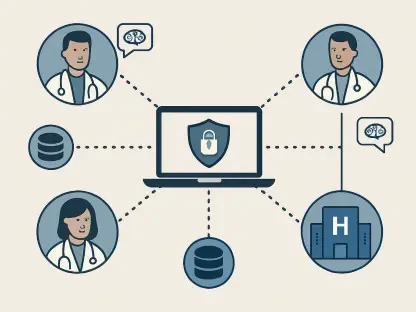
Medical knowledge evolves at a rapid pace, meaning that an AI model trained on data from several months ago may no longer reflect the current best practices or the shifting patterns of modern disease. To remain relevant, clinical decision support systems must incorporate adaptive learning mechanisms that allow the software to update its parameters as new evidence and patient outcomes become available. This process must be handled with extreme care to avoid catastrophic forgetting, a phenomenon where a model loses previously acquired knowledge while trying to integrate new information. Techniques like federated learning have become increasingly prominent in 2026, enabling models to learn from decentralized data sources across multiple institutions without ever requiring the sensitive patient information to leave the local server. This decentralized approach protects patient privacy while still allowing the global model to benefit from a diverse range of clinical scenarios across different regions.
Maintaining compliance with strict data privacy regulations is a non-negotiable aspect of deploying AI in healthcare, requiring developers to build security directly into the software’s DNA. As systems become more adaptive and integrated, the complexity of managing consent and data access increases, necessitating automated governance frameworks that can audit data usage in real-time. These frameworks ensure that every piece of information used to refine the AI model is handled according to the latest legal and ethical standards, providing a clear trail of accountability for regulators and hospital administrators. Moreover, the use of differential privacy and other cryptographic methods allows researchers to extract valuable insights from patient data while ensuring that no individual record can be re-identified. By balancing the need for continuous improvement with a rigorous commitment to data security, the healthcare industry can foster a sustainable ecosystem where digital tools evolve alongside medical science.
Establishing Standards for Practical Impact
The research community is beginning to move away from reporting simple mathematical accuracy as the sole measure of an AI system’s success, focusing instead on real-world clinical impact. It is becoming standard practice to document the engineering trade-offs made during deployment, such as the balance between model complexity and the latency required for emergency room applications. By sharing detailed case studies that highlight both the triumphs and the failures of specific implementations, the industry builds a collective knowledge base that prevents other organizations from repeating the same mistakes. This shift toward documenting the operational lifecycle of AI tools encourages a culture of transparency and methodological rigor that has been lacking in earlier experimental phases. When engineers provide reproducible frameworks and artifacts, they allow other developers to validate and build upon their work, accelerating the pace of innovation for global health infrastructure.
Establishing clear benchmarks for success that go beyond algorithmic performance is necessary to convince hospital boards and insurance providers of the value of these sophisticated digital systems. These standards often include metrics related to patient length of stay, the reduction of preventable medical errors, and the overall efficiency of the clinical staff when supported by automated tools. By grounding the evaluation of AI in concrete clinical outcomes, the industry can provide the empirical evidence required to justify the significant costs of implementation and maintenance. This results-oriented approach also helps identify which specific applications of AI offer the greatest return on investment, allowing healthcare organizations to prioritize the deployment of tools that address the most pressing clinical needs. As these standards become more widely accepted, they will serve as a roadmap for future development, ensuring that the next generation of clinical systems is designed with utility in mind.
The journey toward integrating artificial intelligence into high-stakes clinical environments reached a pivotal moment as the focus shifted from pure algorithmic design toward comprehensive system engineering. Stakeholders recognized that the translational gap could only be bridged by prioritizing the reliability, scalability, and explainability of these digital tools within actual hospital workflows. Successful implementations demonstrated that the most effective systems were those capable of adapting to evolving medical data while maintaining the highest standards of patient privacy and security. By establishing rigorous benchmarks for clinical impact, the industry moved past the era of isolated pilot programs and began building a foundation for sustainable, technology-enhanced medicine. Moving forward, organizations must invest in the long-term maintenance of these infrastructures and continue to refine the interaction between clinicians and automated systems to ensure safety. The lessons learned from these deployments provided a roadmap for future innovations that prioritized patient outcomes over theoretical accuracy.