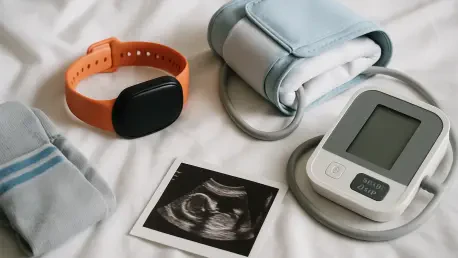

The transition to a hypercoagulable state during pregnancy is an evolutionary mechanism that unfortunately increases the vulnerability to lethal vascular issues. In Nigeria, where maternal healthcare outcomes often lag behind global benchmarks, this biological predisposition toward blood clotting frequently results in life-threatening complications like venous thromboembolism. Recent clinical evaluations conducted at the Enugu State University Teaching Hospital highlight a critical opportunity to intervene through the use of modern technology. By examining how fitness trackers and smartwatches can be deployed within the maternal health framework, researchers are uncovering a path to more proactive care. This approach focuses on empowering women with real-time data to manage their physical activity, which is essential for reducing the risk of deep vein thrombosis and pulmonary embolism during and after pregnancy. As the healthcare sector in Nigeria continues to modernize, the integration of these wearables could prove to be a pivotal factor in saving lives of mothers across the region.
The Medical Necessity for Prevention
Understanding the Risks: VTE in Pregnancy
The physiological landscape of pregnancy is one of profound transformation, yet many of these adaptations carry inherent dangers that must be managed with clinical precision. During the gestational period, the female body naturally increases the production of clotting factors while decreasing anticoagulant activity to minimize blood loss during delivery. However, this hypercoagulable state, combined with the mechanical pressure of the growing uterus on pelvic veins, significantly elevates the likelihood of venous thromboembolism compared to non-pregnant populations. In Enugu State, VTE accounts for approximately 10 percent of all pregnancy-related deaths, illustrating a localized crisis that requires immediate attention. The danger does not dissipate immediately following childbirth; the postpartum phase remains a period of high vulnerability where anatomical changes and potential immobility continue to promote the formation of dangerous blood clots in the deep veins of the lower limbs.
For women in high-risk categories, the necessity of targeted preventive strategies is not merely a clinical recommendation but a life-saving imperative. Statistics indicate that the risk of vascular complications rises sharply for expectant mothers over the age of 35, those struggling with obesity, or individuals carrying multiple gestations. Furthermore, the increasing prevalence of cesarean deliveries in urban Nigerian hospitals adds another layer of risk, as the recovery period often involves reduced mobility and surgical trauma. These factors create a perfect storm for venous stasis, where blood pools in the extremities and forms clots that can eventually travel to the lungs. Without a structured way to monitor movement and encourage circulation, healthcare providers face an uphill battle in reducing these preventable fatalities. Digital tools offer a way to bridge the gap between clinical observation and the daily reality of high-risk patients.
Physical Activity: A Primary Safeguard
Maintaining consistent physical activity serves as a cornerstone of non-pharmacological prevention for venous thromboembolism during the maternal journey. Regular movement enhances venous blood flow and stimulates fibrinolytic activity, which is the body’s natural process for breaking down small clots before they become life-threatening. Clinical evidence suggests that adherence to a moderate exercise regimen can reduce the overall risk of vascular issues by nearly 30 to 50 percent. For many pregnant women, however, the theoretical knowledge of these benefits does not always translate into action. The physiological demands of pregnancy, including exhaustion and physical discomfort, often lead to sedentary behavior that exacerbates the risk of clotting. By utilizing wearable technology, patients can receive the necessary nudges to remain active, transforming a passive medical recommendation into a dynamic and interactive daily habit that prioritizes their long-term health.
Despite the clear medical guidelines provided by the American College of Obstetricians and Gynecologists, which suggest at least 150 minutes of moderate activity per week, achieving these targets remains a significant challenge for many women in Nigeria. Barriers such as the lack of safe urban walking spaces, social perceptions of pregnancy, and the sheer fatigue of balancing household duties often push physical activity to the bottom of the priority list. Wearable devices, such as smartwatches with sedentary reminders, can provide a functional solution by alerting the user when they have been stationary for too long. These devices do more than just count steps; they act as a constant, low-impact health coach that validates the user’s efforts and provides tangible goals. Integrating these digital companions into maternal care plans allows for a more personalized approach to prevention, ensuring that physical movement becomes a manageable and monitored part of the pregnancy experience.
Feasibility and Adoption of Digital Tools
Awareness and Functional Knowledge: Current Perspectives
The feasibility of introducing wearable technology into the Nigerian maternal health system depends largely on the current levels of awareness and digital literacy among the target population. Research conducted in Enugu revealed that approximately 78 percent of pregnant and postpartum women were already familiar with the existence of wearable fitness trackers. This high level of general awareness is a promising indicator for future adoption, suggesting that the concept of “health tech” is not foreign to the local community. However, the depth of this knowledge remains somewhat superficial, with most participants viewing the devices primarily as luxury gadgets rather than essential medical tools. Many women identified step counting as the primary function, while significantly fewer understood the utility of features like heart rate variability monitoring or sleep tracking, which are critical for a comprehensive understanding of maternal wellness and cardiovascular health.
This fragmented knowledge base is largely attributed to the influence of social media, which served as a primary information source for a third of the study participants. While platforms like Instagram and TikTok have helped popularize the aesthetic of smartwatches, they often fail to educate users on the sophisticated health-monitoring capabilities of these devices. For instance, the “stand” reminder, which is specifically useful for preventing venous stasis, was a feature that many women were unaware of until it was explained by clinical staff. To move forward, the Nigerian healthcare system must transition from passive awareness to active education. Healthcare providers need to take the lead in explaining how specific wearable features can be used to monitor for signs of distress or to ensure that movement goals are met. By aligning technical capability with clinical necessity, the medical community can ensure that these devices are utilized to their full potential.
Strategic Implementation: Overcoming Practical Obstacles
While the enthusiasm for wearable technology is high among Nigerian mothers, several structural and economic barriers must be dismantled to achieve widespread clinical integration. The recent study highlighted that while 87 percent of women were eager to use these devices to monitor their health, nearly half identified the cost of high-quality trackers as a prohibitive factor. In a region where healthcare spending is often a burden on the family unit, a device priced above 20,000 naira may be viewed as an unattainable luxury. Furthermore, technical challenges such as the instability of the local power grid present a unique obstacle for devices that require frequent charging. If a fitness tracker cannot be reliably powered, its utility in a continuous monitoring program is lost. These issues suggested that a successful rollout would require a combination of subsidized hardware and the selection of devices with extended battery lives to suit the local environment.
The research eventually concluded that the path forward required a collaborative effort between the government, technology providers, and medical professionals to create a sustainable digital health ecosystem. It was observed that pregnant women were highly willing to share their health data with their doctors, with over 53 percent expressing a desire for weekly feedback based on their recorded metrics. This level of trust indicated that privacy concerns were not a major deterrent, provided that the data led to improved clinical outcomes. Policymakers noted that implementing training sessions to improve digital literacy among patients would be essential for ensuring that the hardware was used correctly. By addressing these practical hurdles, Nigeria prepared to leverage the power of wearable technology to reduce the incidence of maternal VTE. The ultimate goal was to transition these devices from optional accessories into standard components of the maternal health toolkit, ensuring a safer journey for every mother in the nation.