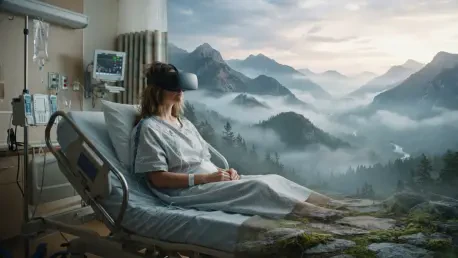

The clinical sterility of a modern hospital ward often acts as a double-edged sword, providing life-saving technology while simultaneously stripping away the natural sensory inputs essential for human psychological well-being. For decades, medical practitioners have prioritized the physical mechanics of healing—surgery, medication, and monitoring—often at the expense of the patient’s emotional and cognitive state. However, as we evaluate the landscape of healthcare in 2026, a significant shift is occurring toward recognizing environmental impact on patient outcomes. Long-term hospitalization can lead to “hospital-acquired distress,” where a lack of natural light and varied scenery contributes to slower recovery and increased pain sensitivity. To combat this, researchers at University of Utah Health are turning to immersive technologies to recreate the healing power of the outdoors within sterile rooms. This research aims to prove that environmental enrichment is a clinical necessity rather than a luxury.
By utilizing high-resolution virtual reality, scientists are attempting to bridge the gap between the isolated patient and the outside world. This initiative focuses on the neurobiological responses to simulated nature, seeking to determine if a digital forest can trigger the same restorative processes as a physical one. If successful, this approach could redefine the standard of care for millions of patients who are physically unable to leave their hospital beds, offering a vital lifeline to the world beyond the clinic.
High-Tech Healing in the Epilepsy Monitoring Unit
Exploring the Psychological Strain: Clinical Isolation
The environment within an epilepsy monitoring unit represents one of the most restrictive settings in modern medicine, as patients must remain tethered to recording equipment 24 hours a day. This state of constant observation and physical confinement often induces a unique form of “clinical burnout” that can complicate the diagnostic process. Because these individuals are waiting for a seizure to occur, they exist in a state of high-alert anxiety, exacerbated by the windowless, monotonous nature of their rooms. The lack of environmental variety leads to cognitive fatigue, making it difficult for patients to engage with their care teams or maintain a positive outlook during their stay.
Researchers identified this specific population as the ideal demographic for testing immersive nature interventions due to their extreme level of nature deprivation. By providing a digital escape through VR headsets, the study sought to alleviate the sensory boredom that often leads to depression in long-term patients. Initial observations suggested that even brief periods of immersion helped to break the cycle of rumination and stress, providing a much-needed psychological reset. This shift in the patient’s mental state is not merely anecdotal; it serves as the foundation for a deeper investigation into how the brain reacts when the walls of the hospital effectively disappear.
Utilizing Direct Intracranial Monitoring: Precision Data
What sets the research at the University of Utah apart is the unprecedented access to the human brain provided by clinical monitoring. Unlike previous studies that relied on external sensors or subjective self-reporting, this project utilized electrodes already implanted deep within the brain for seizure tracking. This allowed the research team to observe real-time neural activity in regions like the anterior cingulate cortex, which is closely associated with emotional regulation and the severity of depressive symptoms. By recording these deep-brain signals during VR sessions, the team could precisely measure how the brain responds to different environments at a granular level.
This methodology provided a level of scientific accuracy that was previously unattainable in environmental psychology. It moved the conversation beyond “feeling better” to “neural restoration,” showing exactly how environmental stimuli can alter brain chemistry and electrical patterns. The data collected from these intracranial recordings offered a clear picture of how specific circuits either fired in response to stress or calmed in response to natural beauty. This evidence is critical for validating virtual reality as a legitimate medical intervention, proving that the brain perceives these virtual landscapes as restorative realities rather than just digital illusions.
The Science of “Soft Fascination” and Restorative Environments
Comparing Landscapes: Nature vs. Urban Environments
To determine what makes an environment truly restorative, the research team employed a crossover design that exposed patients to both natural and urban virtual settings. These environments, created by the production company HabitatXR, included high-resolution 3D footage of lush forests with rushing waterfalls and busy city streetscapes filled with pedestrian traffic. By comparing the neural responses to these two distinct stimuli, researchers could isolate the variables that contribute to mental recovery. While the urban setting provided a distraction from the hospital room, it did not produce the same calming effect as the natural environment.
The findings indicated that the brain’s response to nature was qualitatively different from its response to man-made environments. While urban scenes required “directed attention” to process movement and noise, natural scenes captured the patient’s interest in a non-taxing way. This distinction is vital because directed attention is a finite resource that is easily depleted in a high-stress clinical setting. The virtual forest allowed the brain to engage in “effortless looking,” which is the hallmark of a restorative experience. This comparative data suggests that for a digital intervention to be truly therapeutic, it must prioritize the specific visual and auditory patterns found in the natural world.
Understanding Attention Restoration: The Reset Mechanism
The theoretical framework for this study was built upon Attention Restoration Theory, which posits that nature allows the brain’s executive functions to rest and recover. In a hospital setting, patients often suffer from “brain fog” caused by the constant need to process medical information and manage pain. The virtual nature sessions provided a “reset mechanism” that cleared this cognitive clutter, leading to measurable improvements in attention and mood. Preliminary data showed an increase in alpha brain wave activity during forest sequences, which is a neurological signature associated with relaxed alertness and a reduction in negative emotions.
Following the virtual nature experiences, patients performed significantly better on cognitive tasks that required focus and memory. This demonstrated that the restorative effects of the virtual forest were not just temporary moods but functional improvements in brain health. The research concluded that virtual reality nature experiences were more than just a distraction; they were a measurable neurological intervention that improved the patient’s ability to handle the rigors of clinical treatment. By validating these effects, the study provided a scientific foundation for the restorative power of the outdoors within clinical environments, suggesting a future where nature is a standard part of recovery.
Broader Implications for the Future of Patient Care
Technological Empathy: A New Medical Philosophy
The concept of “technological empathy” emerged as a central theme of the University of Utah’s research, emphasizing that technology should serve the human experience of illness. This philosophy argued that medical treatment must encompass more than just the physical body; it must also address the environment in which the patient resides. By bringing together neurosurgeons, psychologists, and VR developers, the study exemplified a multi-disciplinary approach to holistic healing. This collaboration ensured that the technology was not just a gadget, but a carefully calibrated tool designed to meet the specific psychological needs of a vulnerable population.
This shift toward empathetic technology represents a broader move in medicine to treat the person rather than the disease. As hospital stays become increasingly complex, the importance of maintaining a patient’s mental resilience cannot be overstated. The use of VR to provide a sense of agency and escape is a powerful example of how digital tools can be used to restore a sense of humanity to the clinical process. This approach recognized that the environment is a primary driver of health, and that by improving the sensory experience of the patient, the medical community could significantly improve the overall efficacy of modern clinical interventions.
Expanding the Reach: Future Clinical Applications
The implications of this research extended far beyond the epilepsy monitoring unit to any setting where individuals faced prolonged physical or social isolation. Long-term care facilities, correctional institutions, and palliative care wards could all utilize these restorative bridges to improve the quality of life for their residents. The ability to provide a “virtual escape” offers a scalable and cost-effective way to manage the psychological toll of confinement. As the technology becomes more accessible, the goal is to integrate these immersive experiences into the daily routine of any patient facing a long road to recovery, regardless of their physical limitations.
The study established a clear precedent for the inclusion of virtual nature in healthcare protocols worldwide. Hospitals should begin integrating high-resolution VR headsets into standard care packages for long-term patients to mitigate the effects of clinical burnout. Future research must determine the optimal “dosage” of virtual nature to maximize recovery speed and minimize pharmaceutical reliance for anxiety and depression. By taking these actionable steps, healthcare providers can ensure that the healing process is as much about the mind’s connection to the world as it is about the body’s recovery from illness. This research proved that even when a patient is tethered to a bed, their mind should never be confined.