
Modern emergency responders require more than just clinical knowledge; they must develop the cognitive resilience needed to manage the sensory and cognitive overload of real-world calls. In 2026, the Emergency Medical Services (EMS) sector in the United States faces a systemic crisis defined by severe recruitment shortages and unprecedented levels of professional burnout. Static manikins and lecture-based curricula, once the gold standard, are increasingly viewed as insufficient for preparing new providers for the visceral reality of street medicine. This disconnect between theoretical education and actual field performance has necessitated an urgent pivot toward high-fidelity, scalable technologies that can replicate the high-stakes environments of pre-hospital care. By integrating virtual reality (VR) and artificial intelligence (AI), platforms like VRNA Advanced EMS (AEMS) are providing a solution that fosters clinical competency alongside the psychological durability required to thrive in a high-pressure profession.
Bridging the Gap: Moving Beyond Classroom Instruction
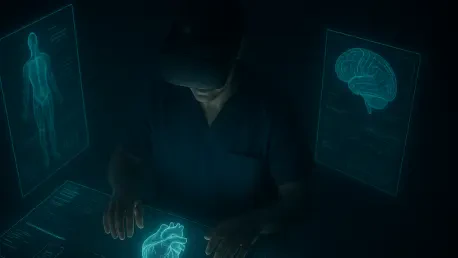
The transition from the controlled safety of a classroom to the frantic, unscripted environment of an emergency scene is often a jarring experience that contributes to early career attrition. Traditional legacy training methods frequently fail to replicate the complex sensory and cognitive demands that define high-performance field care. Immersive technology serves as a vital pedagogical scaffold, offering a realistic yet safe space where trainees can bridge the gap between textbook knowledge and clinical execution through repeated exposure to multi-variable scenarios. By placing a student in a digital replica of a busy intersection or a cramped apartment, instructors can simulate the “tunnel vision” and auditory exclusion that often strike during real calls. This repeated immersion allows responders to develop the spatial awareness and situational focus necessary to remain effective when the environment becomes unpredictable or hostile.
While adhering to clinical protocols for conditions such as strokes, seizures, or respiratory distress remains foundational, the true challenge of EMS often lies in managing the chaotic periphery. Advanced simulation platforms now integrate AI-driven bystanders, distraught family members, and filming onlookers to force lead clinicians to maintain clinical focus amidst significant social friction. This approach treats scene management and crowd control as technical skills as critical as the medical interventions themselves. By requiring a paramedic to execute life-saving care while simultaneously de-escalating a hysterical bystander, the training mirrors the multi-tasking nature of real-world operations. This holistic methodology ensures that the medical intervention is never compromised by external environmental pressures, effectively training the provider to prioritize tasks and maintain executive function during the most stressful moments of a shift.
Forging Emotional Calluses: The Role of Cognitive Resilience
A prominent trend in contemporary EMS education involves a shift toward “emotional durability” as a core strategy to combat the national retention crisis. Professional burnout is rarely the result of a single traumatic event; instead, it stems from the cumulative stress of navigating high-pressure and often confrontational environments day after day. By utilizing virtual reality to expose students to disruptive onlookers and emotionally charged situations before they enter the field, agencies can help trainees develop what experts call “emotional calluses.” This proactive approach to mental health suggests that high confidence and familiarity with stress are the primary defenses against professional exhaustion. When a responder has successfully navigated a simulated riot or a grieving family in a controlled virtual space, the “anxiety of the unknown” is significantly mitigated, allowing them to approach real patients with a sense of calm authority.
Beyond immediate clinical performance, the integration of psychological stressors into training curricula serves a long-term occupational health function. Developing cognitive resilience early in the educational cycle allows responders to process the sensory input of an emergency scene without being overwhelmed by a fight-or-flight response. This sustained exposure therapy, delivered through AI-augmented simulations, ensures that the visceral nature of the job does not lead to rapid psychological fatigue. As agencies in 2026 grapple with the need for a more sustainable workforce, the focus has shifted toward building a cohort of providers who are not only technically proficient but also professionally durable. By equipping technicians with the tools to manage their own physiological reactions to stress, these advanced platforms are helping to create a workforce that is better prepared to remain engaged and productive throughout a decades-long career in public safety.
Clinical Specialization: Differentiating Foundational and Advanced Modules
The evolution of virtual training platforms is increasingly categorized into distinct functional levels to match the career progression of medical responders. Foundational modules, such as VRNA EMS (Basic), focus heavily on procedural mastery and the development of the muscle memory required for Basic Life Support (BLS) tasks. These tools allow entry-level students to practice essential hands-on skills, such as airway management or splinting, until the movements become second nature. In a virtual environment, a student can perform a procedure dozens of times in the span of an hour without the logistical hurdles of resetting physical equipment or using consumable medical supplies. This repetitive practice builds a solid clinical base, ensuring that when the student eventually moves to the field, the mechanics of care are already deeply ingrained, allowing them to dedicate more of their cognitive bandwidth to the patient and the surrounding scene.
In contrast, advanced modules like VRNA AEMS are designed for paramedics and Advanced EMTs who must function as lead clinicians in high-acuity situations. These scenarios elevate the training to include complex pediatric and adult Advanced Life Support (ALS) interventions, such as cardiac rhythm interpretation and advanced pharmacology. The primary objective at this level is the refinement of clinical judgment and leadership under pressure, requiring the trainee to oversee the entire scene rather than just performing isolated manual tasks. By simulating high-stakes calls like status epilepticus or acute strokes, the technology forces the advanced provider to make rapid diagnostic decisions while managing their team and communicating with medical control. This level of simulation bridges the final gap between being a competent technician and becoming a decisive leader, providing a level of realism that was previously only available through years of field experience.
Data-Driven Performance: Measuring Success in Virtual Environments
Perhaps the most transformative aspect of integrating AI into medical education is the shift toward objective, data-driven proficiency metrics. Traditional role-playing exercises, while useful, often suffer from the subjective biases of the observer or the limitations of the actors involved. Modern virtual reality platforms overcome this by utilizing integrated online portals to track every action, decision, and clinical outcome in real-time. This wealth of granular data allows for evidence-based debriefs where instructors can pinpoint the exact second a trainee deviated from a protocol or failed to recognize a change in patient vitals. By replacing vague feedback with measurable performance metrics, agencies can eliminate provider complacency and ensure that every member of the team meets a rigorous standard of care. This transition to a data-centric model allows for a more personalized approach to education, as specific weaknesses can be identified and addressed with targeted simulation sessions.
Furthermore, these technological advancements offer a scalable and cost-effective solution for agencies that have historically struggled with limited resources. High-fidelity live simulations involving multiple actors and specialized equipment are often prohibitively expensive and logistically difficult to organize, especially for smaller rural departments or volunteer squads. Virtual reality provides a portable alternative that maintains a high standard of realism without the overhead costs of traditional simulation centers. In 2026, the ability to bring world-class training to a remote fire station via a headset and a cloud-based AI platform has democratized access to elite medical education. This ensures that all responders, regardless of their geographical location or the size of their department’s budget, have access to the same high-tier preparation and continuing education. This universal standard of training is essential for maintaining a consistent level of public safety across the entire nation.
Future Pathways: Transforming Public Safety Through Technology
The adoption of virtual reality and artificial intelligence signaled a broader cultural shift in emergency services, moving away from a simple “check-the-box” compliance mindset toward a permanent culture of continuous preparedness. Agencies that implemented these immersive systems found that increasing the scene readiness of their responders led directly to improved patient outcomes and a measurable strengthening of public trust. A confident, well-trained provider was far better equipped to handle the vulnerabilities of the public during their most critical moments, leading to a reduction in clinical errors and scene-related complications. Ultimately, the future of training was found at the intersection of clinical excellence and psychological durability. As these technologies matured, they became the central pillar for forging a new generation of responders who were not only technically skilled but also resilient enough to withstand the rigors of a career in emergency medicine.
Moving forward, the implementation of AI-driven benchmarks must become a standard requirement for all accredited EMS programs to ensure national uniformity in provider competency. Educational directors should prioritize the integration of social-stressor simulations alongside traditional medical algorithms to produce clinicians who are truly “scene-ready” for the diverse challenges of the modern world. Agencies must also invest in long-term data tracking to correlate simulation performance with real-world clinical success, creating a feedback loop that continuously refines training protocols. By addressing the mechanics of medical care alongside the complex human factors of the job, these immersive tools provided a unified framework to solve the workforce crisis. This proactive technological stance ensured that the heroes of public safety were prepared for whatever challenges they faced on the street, securing the long-term viability of the emergency medical system for years to come.