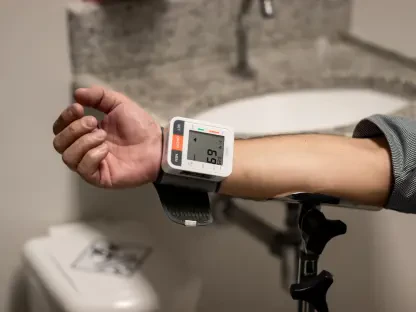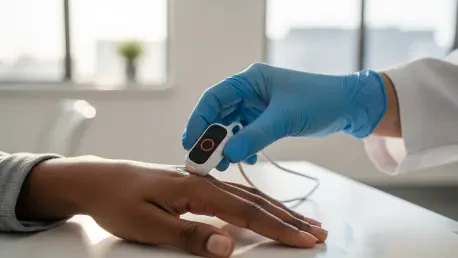

The persistent gap in medical diagnostics has long meant that the simple act of measuring blood oxygen levels could yield dangerously inaccurate results depending solely on the amount of melanin in a patient’s skin. Philips recently achieved a pivotal milestone by securing FDA 510(k) clearance for its latest SpO₂ clip sensor, an innovation specifically engineered to confront these long-standing systemic biases in pulse oximetry. For many years, clinicians have observed that traditional light-based sensors frequently provide skewed data for individuals with darker skin, as higher concentrations of melanin interfere with the absorption of specific light wavelengths. This technological advancement represents a concerted effort to ensure that respiratory monitoring is no longer a source of health inequality. By refining the hardware and the algorithms that process light signals, the medical community finally has a tool that offers dependable and equitable measurements for every patient demographic in clinical settings.
Technical Precision: Addressing Disparities in Respiratory Monitoring
The technical foundation of this new sensor rests on advanced optical refinements that significantly enhance the signal quality across a wide spectrum of patient ethnicities and skin tones. Philips reported an accuracy root mean square value of 1.6%, a metric that comfortably surpasses the 3% threshold traditionally required by international regulatory bodies. Perhaps the most striking achievement is the reduction of variance between readings for light-skinned and dark-skinned patients to less than 0.5%, a level of precision that effectively neutralizes the hardware limitations that once led to disparate care. This level of calibration ensures that the oxygen saturation data remains consistent regardless of the individual’s physical characteristics. By prioritizing these precision engineering standards, the device provides clinicians with a higher degree of confidence during critical care moments when every percentage point of oxygen saturation can dictate the next life-saving step.
The necessity for such rigorous engineering was underscored by extensive research conducted during the height of respiratory health crises, which highlighted the phenomenon of occult hypoxemia. This condition occurs when standard pulse oximeters indicate healthy oxygen levels while the actual arterial blood saturation is dangerously low, a discrepancy that was found to be significantly more common in Black and Hispanic patients. Notable studies published in major journals like the New England Journal of Medicine identified these errors as a primary driver of delayed medical intervention and poorer overall health outcomes for minority populations. The systemic failure of traditional technology to account for biological diversity meant that many patients were denied intensive care simply because a sensor could not “read” through their skin. This new sensor directly addresses these historical failings by ensuring that the light-skin interaction is optimized for accuracy.
Strategic Compliance: Regulatory Evolution and Global Implementation
As technology evolves, regulatory bodies are simultaneously updating their frameworks to ensure that medical hardware is tested against the biological realities of the entire global population. The FDA has been drafting more stringent validation requirements that mandate significantly larger and more diverse participant pools during the clinical testing phases of new devices. Philips chose to proactively align its development and testing processes with these emerging standards, anticipating a permanent shift toward higher expectations for transparency and inclusivity in medical manufacturing. This approach marks a departure from the historical reliance on narrow demographic data, which often excluded the very populations most vulnerable to sensor inaccuracies. By adhering to these rigorous new protocols, the industry is setting a precedent where medical devices must prove their efficacy across all human variables before they can be introduced into the clinical environment for general use.
The successful clearance and deployment of this specialized sensor established a clear mandate for healthcare systems to prioritize equitable diagnostic technology. Medical institutions were encouraged to audit their inventories to phase out legacy sensors that demonstrated significant skin tone bias, replacing them with hardware validated across diverse populations. It became apparent that clinical protocols needed to incorporate checks for occult hypoxemia, especially in settings where older equipment remained in use. Industry leaders like Medtronic also shifted their focus toward integrating these inclusive standards into every phase of research and development. These actions proved that systemic health disparities could be mitigated through focused engineering and rigorous regulatory oversight. Ultimately, the industry moved toward a standard where diagnostic reliability was guaranteed for every patient, ensuring that the color of a person’s skin no longer dictated the accuracy of their medical care.