
The rhythmic click of a mechanical keyboard often serves as the modern soundtrack to a medical consultation, creating an invisible wall between the healer and the hurting. While the physician remains physically present within the four walls of the examination room, their cognitive focus is frequently tethered to a glowing monitor. This phenomenon, often termed the “screen stare,” signifies more than just a distraction; it represents a fundamental breakdown in the traditional patient-provider bond. Patients often perceive this digital preoccupation as a lack of empathy or a sign of personal indifference, yet the reality is far more complex and systemic.
The current state of healthcare in 2026 reveals that clinical exhaustion is not a personality defect but a design failure of the digital age. As medical data continues to expand, the tools meant to organize it have instead become sources of profound cognitive overload. However, a significant shift is occurring as artificial intelligence evolves from a passive recording tool into a proactive clinical assistant. By offloading the mechanical burdens of data synthesis, technology is finally showing the potential to restore the “listening” phase of medicine, allowing physicians to look away from the screen and back toward the individual in need of care.
The Screen Stare: The Silent Erosion of Clinical Empathy
The paradox of the “physician presence” has become a central challenge in modern clinical environments. A doctor may be standing just inches from a patient, yet the mental energy required to navigate complex digital interfaces creates a psychological distance that is difficult to bridge. This detachment is rarely a choice; rather, it is a survival mechanism for clinicians who must document every detail in real-time to meet administrative requirements. When the interface becomes the primary focus, the subtle cues of patient distress—a furrowed brow, a hesitant tone, or a slight change in posture—are often missed entirely.
Misinterpreting this systemic exhaustion as a lack of bedside manner leads to a breakdown in trust. Patients feel like data points in a machine rather than human beings seeking comfort and expertise. The digital interface, originally intended to improve accuracy and safety, has inadvertently become a barrier that stifles the natural flow of conversation. To reclaim the human connection, the medical community must address the fact that technology currently demands more attention than the patients it was designed to serve.
The Invisible Burden: The Modern Medical Workflow
Electronic Health Records (EHRs) have transitioned from simple data repositories into overwhelming sources of cognitive fatigue. In the current landscape, physicians are forced to perform what is known as a “chart biopsy,” a grueling manual process of digging through fragmented medical histories to find pertinent information. This digital archeology consumes precious minutes that should be spent in dialogue. The finite nature of empathy means that when mental resources are depleted by technical friction, the ability to provide compassionate care is significantly diminished.
Beyond the psychological toll, there are serious economic and reputational consequences for specialized practices. When a provider is bogged down by a clunky workflow, the patient-provider engagement suffers, leading to lower satisfaction scores and a potential decline in referrals. In specialized fields like oncology or neurology, where the data is particularly dense, the burden is even heavier. The struggle to maintain a high level of cognitive performance while wrestling with archaic data entry models creates a ceiling on the quality of care that any single practitioner can offer.
From Data Entry to Specialty Intelligence: A New Paradigm
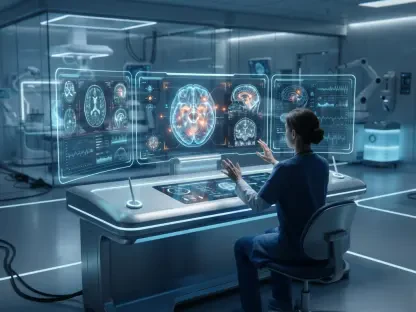
Redefining the role of AI requires shifting the focus from simple documentation tools to proactive specialty intelligence. A new model is emerging that mirrors the “Resident-Attending” relationship found in medical training. In this framework, AI acts as the resident, synthesizing high-signal briefings that summarize what has changed since the last visit and highlighting urgent lab results. This allows the attending physician to enter the room with a clear, high-level understanding of the patient’s status without having to hunt for information during the consultation.
Context-aware technology is essential because a dermatologist has vastly different data needs than a cardiologist. Moving toward a “storytelling” data model prioritizes the patient’s narrative over isolated, disconnected data points. When AI can accurately thread together a patient’s history across multiple visits and specialties, it transforms the EHR from a cluttered filing cabinet into a coherent clinical roadmap. This evolution enables the physician to lead with a plan rather than a series of repetitive questions.
Expert Perspectives: The Cognitive Evolution of Care
Clinical leaders are increasingly recognizing that physician “burnout” is often a misnomer for a design flaw in the tools provided to them. By rethinking the cognitive load placed on doctors, healthcare organizations are finding that the “listening” phase of medicine naturally returns when the digital distractions are removed. There is a direct correlation between lightened mental burdens and the restoration of clinical empathy. When a doctor is not preoccupied with the logistics of data entry, they are free to engage in the high-level decision-making and emotional support that define the profession.
Automated synthesis allows for immediate recall, which is a cornerstone of effective consultations. Experts suggest that when a physician can reference a specific detail from a previous visit without looking at a screen, it reinforces the patient’s sense of being known and valued. This cognitive evolution does not replace the doctor; instead, it sharpens their ability to provide personalized care. The goal is to reach a state where technology operates in the background, invisible yet indispensable, supporting the clinical intuition that no machine can replicate.
Strategic Framework: Reclaiming the Patient Experience
To implement this change, healthcare executives must begin by quantifying the digital burden through the tracking of “after-hours” documentation and pre-visit review times. Measuring the ratio of screen-to-face time in the exam room provides a clear metric for how much the technology is interfering with the patient experience. Auditing the tech stack should prioritize “mental energy” savings over simple data capacity. If a tool does not demonstrably reduce the cognitive load on the provider, it may be a liability rather than an asset.
Implementing specialty-specific noise reduction is the final step in eliminating the manual data hunting that plagues modern medicine. Organizations that prioritized these human-centric technological shifts saw a dramatic improvement in both provider retention and patient outcomes. The successful integration of specialty-specific intelligence ultimately proved that technology could serve as a bridge rather than a barrier. By 2026, the transition toward clinical assistants allowed physicians to return to the core of their calling, ensuring that the human connection remained the heartbeat of medical practice.