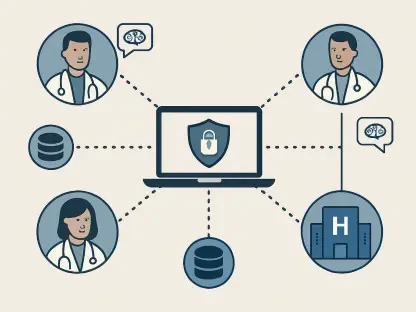

The persistent financial hemorrhage caused by systemic claim denials has reached a breaking point, forcing healthcare providers to confront a reality where clinical excellence is frequently undermined by administrative inefficiency. The AI Revenue Cycle Management represents a significant advancement in the healthcare financial sector. This review explores the evolution of the technology, its key features, performance metrics, and the impact it has had on various applications. The purpose of this review is to provide a thorough understanding of the technology, its current capabilities, and its potential future development.
Understanding AI-Native Revenue Cycle Management
The emergence of AI-native revenue cycle management (RCM) marks a departure from traditional billing software, moving toward a model where autonomous agents handle end-to-end financial workflows. Rather than simply providing a dashboard for human coders, these systems utilize generative intelligence to interpret payer requirements and execute tasks independently. This shift is a direct response to the $262 billion annual claim denial crisis that has plagued the American healthcare system, where nearly 12% of all initial claims are rejected by insurance carriers.
In the broader technological landscape, this technology acts as a critical intervention against rising administrative costs and the increasingly opaque requirements of insurance portals. As carriers utilize more sophisticated algorithms to flag errors, providers must adopt equally advanced tools to protect their margins. This innovation serves not just as an efficiency tool, but as a necessary defensive layer in a landscape where manual labor can no longer keep pace with the volume of bureaucratic challenges.
Core Features and Technical Architecture
Large Language Models in Claims Processing
At the heart of this technical evolution is the deployment of large language models (LLMs) configured to simulate human decision-making and digital navigation. Unlike legacy software that relies on rigid, rule-based logic, these LLMs can autonomously browse complex insurance portals, identify specific reasons for denial, and draft highly detailed medical appeals. This capability represents a move beyond traditional tracking software, as the AI understands the nuance of clinical documentation and maps it to specific payer policies.
The significance of this architecture lies in its ability to handle unstructured data. Most claim denials stem from “missing information” or “lack of medical necessity,” categories that were previously too complex for standard automation. By leveraging LLMs, the system can synthesize patient records and physician notes into a coherent argument, effectively mimicking the work of a highly skilled billing specialist while operating at a much higher frequency and scale.
Hybrid Expert Oversight and Quality Assurance
Maintaining accuracy in medical billing is paramount, which is why the leading platforms integrate a hybrid approach combining AI speed with human expertise. This architecture includes specialized “human-in-the-loop” checkpoints where certified experts review exceptions or high-value claims that fall outside standard parameters. Such oversight ensures that the machine learning models do not hallucinate information or violate regulatory standards during the appeal process.
This integration of human intelligence ensures high “win rates” for contested claims, providing a level of reliability that pure automation often lacks. By managing exceptions through this hybrid workflow, the technology maintains quality assurance while freeing up human staff to focus on only the most difficult cases. This synergy allows for a more robust financial operation that can handle the volatility of changing insurance regulations without requiring a proportional increase in headcount.
Recent Advancements and Investment Trends
The field has seen a notable influx of capital and a shift toward platforms that are built from the ground up to be AI-native. Recent market activity, such as Amperos Health’s $16 million Series A funding round led by Bessemer Venture Partners, signals strong industry confidence in this approach. This investment, bringing total capital to $21 million, reflects a belief that the “cost to collect” can be fundamentally lowered through deep technical integration rather than minor software updates to legacy systems.
These advancements are characterized by a transition from passive tools to active agents. Investors are increasingly betting on companies that can demonstrate an “end-to-end” solution rather than niche products that only solve one part of the billing cycle. The trend suggests that the future of healthcare finance will be dominated by platforms that manage the entire lifecycle of a claim, from initial submission to final revenue recovery, with minimal manual interference.
Real-World Impact and Sector Applications
The real-world application of this technology has already demonstrated substantial results across thousands of clinical locations. AI-native platforms are currently managing hundreds of thousands of claims annually, recovering hundreds of millions in outstanding revenue that would have otherwise been written off. For instance, national providers have reported recovering upwards of $60 million in less than two months, illustrating the speed at which these autonomous systems can clear backlogs and stabilize cash flow.
In specialized sectors like dermatology, implementation has improved visibility into payment cycles and accelerated production for billing departments. Organizations such as DOCS Dermatology have utilized auto-claim statusing tools to maintain discipline around their collection costs. These implementations prove that the technology is not merely a theoretical improvement but a practical necessity for maintaining the viability of medical practices in a low-margin environment.
Navigating Industry Obstacles and Limitations
Despite its potential, the technology faces significant technical hurdles, particularly regarding integration with legacy electronic health records (EHR). Many clinical systems are built on aging infrastructure that does not easily share data with modern AI platforms. Furthermore, the regulatory complexity surrounding healthcare data and HIPAA compliance necessitates a cautious approach to how LLMs process sensitive patient information, creating a constant tension between innovation and security.
Development efforts are currently focused on mitigating these limitations through more seamless API connections and enhanced data encryption. The chronic staffing shortages in the healthcare sector continue to drive the demand for these solutions, but the transition requires a cultural shift within administrative teams. Overcoming the “black box” perception of AI and proving its reliability in high-stakes financial environments remains a primary objective for developers in the coming years.
The Evolution Toward Comprehensive Administrative Automation
The trajectory of this technology points toward a future of total administrative automation within the healthcare system. The expansion into adjacent areas like prior authorization and insurance verification represents the next logical step in reducing the burden on providers. By automating these front-end tasks, platforms can prevent denials before they happen, shifting the focus from revenue recovery to revenue protection.
Future developments will likely aim for the total automation of the “cost to collect” cycle, drastically reducing the overhead associated with medical billing. This shift promises a long-term impact on the healthcare landscape, potentially allowing providers to redirect billions of dollars from administrative bureaucracy back into direct patient care. As these systems become more integrated, the friction between insurers and providers could be significantly reduced by standardized, AI-driven communication protocols.
Final Assessment of AI in Healthcare Finance
The review of AI-native revenue cycle management demonstrated that the technology successfully addressed the financial instabilities plaguing modern healthcare. The efficiency gains and revenue recovery capabilities observed in various clinical settings confirmed that autonomous agents could outperform traditional manual workflows. The integration of LLMs with human oversight provided a reliable framework that managed to stabilize provider margins during a period of economic pressure.
The move toward end-to-end automation proved to be a decisive factor in modernizing medical administration. By streamlining the recovery of denied claims and preparing for front-end automation, these platforms established a new standard for financial operations. Ultimately, the adoption of these intelligent systems laid the groundwork for a more sustainable healthcare economy, where administrative costs no longer dictated the quality of care provided to patients.