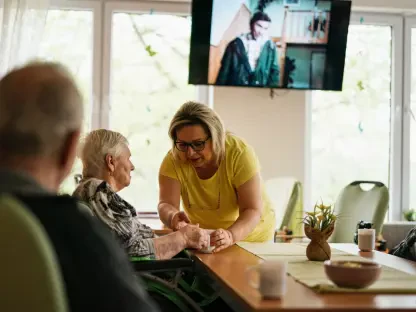

The United States federal government is currently spearheading an ambitious fifty-billion-dollar initiative known as the Rural Health Transformation Program to revitalize medical services in the country’s most isolated regions. This massive financial commitment serves as a strategic cornerstone for modernizing healthcare delivery at a time when traditional funding models are under significant strain across the heartland. Policymakers are increasingly positioning artificial intelligence as the primary mechanism to offset projected reductions in Medicaid spending over the next decade, hoping that digital efficiencies can bridge the gap left by a shrinking workforce. While high-level officials in Washington envision a future populated by AI-driven nurses and digital avatars providing concierge-style mental health support, many local practitioners view these proposals with a mix of cautious optimism and profound skepticism. The disconnect between these futuristic federal visions and the immediate operational needs of small-town clinics highlights a central tension in the current technological rollout. For rural providers, the challenge is not merely about adopting the latest software but ensuring that any new technology addresses the physical infrastructure deficits and staffing shortages that have plagued their communities for years. As this digital transformation accelerates, the success of the program will likely depend on whether these tools can actually sustain a high standard of care in environments where resources are chronically limited and the nearest specialist may be several hours away by car.
Operational Efficiency: Overcoming Clinician Burnout
In practice, some rural facilities are already seeing the immediate benefits of focused technological integration, particularly through the use of automated documentation systems that alleviate daily stress. At institutions like the Cherry County Hospital in Nebraska, physicians are utilizing AI-powered scribes that record patient interactions and instantly generate detailed medical notes for the electronic health record. This shift addresses one of the most significant contributors to clinician burnout: the overwhelming burden of administrative data entry that often consumes more time than actual patient care. By automating these repetitive tasks, the technology allows doctors to maintain direct eye contact and engage in meaningful conversations with their patients during consultations, effectively restoring a human-centric focus to the medical exam room. These tools do not replace the expertise of the physician but rather serve as a digital assistant that manages the background noise of modern healthcare logistics. This specific application of machine learning demonstrates how technology can be used to augment the existing workforce, making the daily routine of a rural doctor more sustainable in the face of increasing caseloads. As more clinics adopt these systems, the emphasis remains on reducing the cognitive load on healthcare professionals so they can devote their energy to complex clinical decision-making and empathetic patient interactions.
Despite the success of administrative tools in streamlining workflows, clinical administrators are quick to point out that software solutions cannot fix the fundamental structural issues inherent in rural medicine. While an AI scribe can save a doctor several hours of paperwork each day, it cannot prevent a regional hospital from closing due to insolvency or replace the physical presence of a surgeon in an operating room. Local healthcare leaders emphasize that technology must be viewed as a supportive framework rather than a substitute for the essential human professionals who are the backbone of these communities. There is a persistent concern that an over-reliance on digital tools might lead to a further erosion of the physical healthcare infrastructure if policymakers decide that virtual care is an adequate replacement for brick-and-mortar facilities. For a rural patient suffering from an acute trauma or requiring specialized diagnostic imaging, a digital avatar is of little use compared to a fully staffed emergency department. Therefore, the integration of these technologies must be balanced with continued investment in the physical presence of medical staff and facilities. The goal is to create a hybrid model where technology enhances the reach and efficiency of the human workforce without undermining the necessity of localized, hands-on medical intervention.
Geographic Inclusion: Addressing Urban Data Bias
A critical hurdle in the equitable deployment of medical AI is the significant lack of diverse data used to train the underlying algorithms, which often leads to what experts call an urban data bias. Currently, the vast majority of AI diagnostic tools are developed and validated within large academic medical centers located in major metropolitan areas like Boston, San Francisco, or New York. Consequently, these systems are fine-tuned to the demographics, lifestyle factors, and environmental exposures typical of urban populations, which can differ substantially from those found in the rural Midwest or the Appalachian highlands. For instance, an algorithm trained solely on city dwellers may not account for the specific occupational hazards of industrial farming or the unique dietary patterns and genetic lineages found in isolated rural enclaves. When these tools are applied to rural patients, there is a legitimate risk that the diagnostic accuracy could diminish, leading to inappropriate treatment recommendations or missed diagnoses. This disparity creates a new form of the digital divide, where the benefits of advanced medical technology are not equally distributed across different geographic regions. To rectify this, developers must actively seek out and incorporate data from rural clinical settings to ensure that the tools are truly representative of the entire national population.
The absence of rigorous, peer-reviewed research focusing specifically on rural healthcare outcomes further complicates the safe implementation of these technologies across the country. Academic reviews of medical literature from 2026 and the preceding years reveal a startling lack of evidence regarding how AI performs in low-resource environments with limited connectivity and different patient flows. Without clinical trials that specifically include rural cohorts, providers are essentially asked to participate in a large-scale experiment with very few safeguards or benchmarks for success. This research gap makes it difficult for rural hospital boards to justify the high costs of implementation when the long-term clinical benefits remain largely theoretical. Furthermore, the infrastructure required to support high-speed AI processing—such as reliable fiber-optic internet and advanced local servers—is often lacking in the very areas where the federal government hopes to deploy these tools. If the technology is not resilient enough to function in areas with intermittent connectivity, it could fail during critical moments of patient care. Bridging this gap requires a concerted effort from both the public and private sectors to fund and execute localized studies that validate the performance of AI in the specific environmental and social contexts of rural America.
Clinical Accountability: Balancing Patient Trust
Public perception remains a formidable barrier to the widespread adoption of automated healthcare solutions, as many residents in small-town communities express a profound preference for personal interaction. In regions like South Dakota and rural Montana, patients have voiced significant concerns that the introduction of AI will lead to a depersonalization of the medical experience, turning a trusted relationship into a cold, transactional process. There is a deep-seated fear that shifting toward algorithmic triage or digital health assistants will result in diagnostic errors that a human doctor, familiar with the patient’s family history and local environment, would have easily avoided. For many rural Americans, healthcare is not just a service but a pillar of community life where trust is built over decades of face-to-face encounters. This skepticism is not necessarily a rejection of technology itself but rather a demand for accountability and a guarantee that the human element will not be sacrificed for the sake of digital efficiency. State governments have responded to these concerns in various ways, resulting in a fragmented landscape of implementation where some jurisdictions prioritize administrative savings while others cautiously experiment with clinical applications. This lack of a unified national standard for AI use in healthcare creates confusion and makes it difficult to establish consistent safety protocols across state lines.
To ensure that the massive federal investment in rural health technology actually yielded positive results, the focus shifted from simple adoption metrics toward rigorous outcome-based evaluations. In the latter half of the decade, health authorities and local leaders prioritized the development of standardized frameworks that measured the impact of AI on reducing emergency room visits and improving the overall quality of life for residents. Policymakers established more transparent oversight committees that included rural clinicians and patient advocates to ensure that technology served the specific needs of the community rather than the interests of software vendors. The implementation process became more deliberative, with an emphasis on creating feedback loops where doctors could report errors or biases in real-time to the developers. By treating these technologies as evolving tools that required constant human supervision and local adaptation, the healthcare system moved toward a more resilient model. Ultimately, the successful integration of AI in rural America required a commitment to maintaining the physical presence of medical professionals while using digital innovation to amplify their capabilities and safeguard the health of underserved populations.