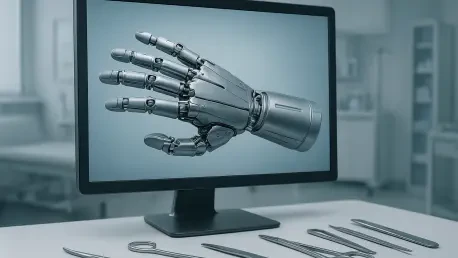

Technological sovereignty allows a continent to prioritize its own health challenges without being at the mercy of global shipping delays or exchange rates. Nneile Nkholise is spearheading a transformative movement in African healthcare by merging mechanical engineering with digital design to create patient-centric medical solutions. As the founder of iMed Tech, she is challenging the traditional philosophy of medical manufacturing, which has historically forced African patients to rely on imported technology. By localizing the production of medical devices, she is addressing a systemic disconnect where equipment designed for foreign markets often fails to meet the specific anatomical and economic needs of the continent. Her work is centered on the belief that healthcare technology must be responsive to the local environment to be truly effective. By moving away from the role of a passive consumer and becoming an active creator of biomedical solutions, Nkholise is fostering a future of healthcare autonomy. This shift ensures that African innovation leads to superior clinical outcomes and a higher quality of life for patients across the region.
Overcoming the Limitations of Imported Medical Technology
Addressing Anatomical Mismatches: The Need for Localized Design
For decades, African healthcare systems have struggled with medical devices designed primarily for demographics in the Global North, which often results in a suboptimal fit for local patients. In the specialized world of prosthetics and bio-implants, a poor fit is more than a minor annoyance; it can lead to chronic physical discomfort, skin irritation, and significantly limited mobility. Nkholise recognized that these mechanical failures were essentially engineering opportunities to create products that respect and mirror the unique anatomical nuances of African users. By focusing on the specific physiological needs of the local population, she has moved the needle from generic medical solutions toward high-precision tools. This transition is essential because a prosthetic that does not account for local lifestyle factors or bone density variations will eventually be discarded by the user. Therefore, localizing the design phase ensures that every device produced is medically appropriate and physically sustainable for the long term.
Mitigating Logistical Friction: Reducing Costs and Delivery Times
Beyond the physical limitations of foreign-made equipment, the heavy reliance on international procurement introduces significant logistical delays and inflated costs that cripple local clinics. Patients often wait months for life-altering devices due to complex global supply chains, fluctuating exchange rates, and high import duties that make modern medicine a luxury. By establishing localized manufacturing facilities, iMed Tech drastically reduces these wait times and makes high-quality medical interventions more accessible and affordable for the average patient. This approach turns a previously exclusionary system into an inclusive one, where the distance between a patient’s diagnosis and their treatment is no longer measured by ocean crossings. Furthermore, local production allows for faster repairs and adjustments, which are critical for growing children or active adults. By removing the bureaucratic and geographic barriers to entry, Nkholise is effectively democratizing access to the next generation of biomedical technology and ensuring that no patient is left behind.
The Digital Revolution in Biomedical Engineering
Implementing Additive Manufacturing: The Power of Personalized Care
The cornerstone of Nkholise’s innovation is the use of additive manufacturing, commonly known as 3D printing, to bridge the gap between clinical needs and technical execution. Unlike traditional manufacturing, which relies on expensive mass-production molds that are difficult to modify, digital modeling allows for the creation of customized “digital twins” of a patient’s anatomy. This enables the production of one-of-a-kind prosthetic devices and bio-implants that are perfectly tailored to the individual’s measurements and lifestyle. The agility of 3D printing means that designers can incorporate complex internal structures that mimic natural bone or tissue, a feat that was nearly impossible with older machining techniques. This high-tech approach ensures that the resulting product is not just a tool, but a biological extension of the user. By utilizing these advanced digital workflows, iMed Tech is setting a new global standard for how personalization can be achieved at scale without the prohibitive costs usually associated with custom medical engineering.
Enhancing Surgical Precision: Utilizing Advanced Digital Modeling
This digital revolution extends deep into the operating room through the creation of 3D anatomical models and specialized surgical planning tools that are revolutionizing complex procedures. These physical representations allow surgeons to visualize and practice intricate operations before the first incision is made, significantly increasing the precision of medical interventions. When a surgical team can hold a physical model of a patient’s specific cardiac or orthopedic deformity, they can identify potential complications and refine their strategy in a risk-free environment. By utilizing rapid prototyping, iMed Tech can quickly iterate on designs based on direct feedback from clinicians, ensuring the final product is both medically sound and mechanically robust. This feedback loop reduces the time a patient spends under anesthesia and improves overall success rates for high-stakes surgeries. The integration of these tools into standard hospital protocols represents a major shift toward data-driven medicine where every move is calculated and every outcome is optimized through engineering.
Fostering a Multidisciplinary and Entrepreneurial Ecosystem
Integrating Clinical Expertise: The Synergy of Mechanics and Biology
Nkholise’s success is built on a convergence of disparate fields, requiring constant synchronization between surgeons, mechanical engineers, and software designers. This interdisciplinary loop ensures that the technology is truly responsive to the biological requirements of the human body rather than just a mechanical approximation. When an engineer creates a model for a complex reconstructive surgery, they are providing a tool that directly improves the safety and success rate of the procedure. This collaborative environment encourages a holistic view of patient care, where technical design is informed by real-world clinical observation. By placing engineers in direct contact with medical professionals, the development cycle is shortened, and the resulting devices are more intuitive for doctors to use. This synergy is critical in 2026, as the boundaries between technology and biology continue to blur. Ultimately, this teamwork fosters a culture of shared responsibility, where every innovation is measured by its ability to restore function and dignity to the individual patient.
Scaling Innovation: The Role of Strategic Business Mentorship
The transformation of these technical concepts into a sustainable business was further accelerated by entrepreneurial support and strategic mentorship that bridged the gap between the lab and the market. By securing seed capital and business training through the Tony Elumelu Foundation, Nkholise was able to navigate the complex regulatory landscapes and quality control standards of the healthcare industry. This fusion of engineering expertise and commercial strategy ensures that her innovations do not remain stuck as academic prototypes but actually reach the clinical settings where they are needed most. Building a resilient startup in the biomedical sector requires more than just technical brilliance; it requires a deep understanding of supply chain management and investor relations. Through these partnerships, iMed Tech has established a scalable model that can be replicated across other emerging markets. This entrepreneurial foundation has allowed the company to expand its reach, proving that African-led tech ventures are not only viable but essential for the continent’s long-term economic and physical health.
Driving Socio-Economic Growth and Technological Sovereignty
Cultivating Regional Talent: Diversity and Representation in STEM
The impact of iMed Tech goes far beyond medical outcomes, serving as a powerful catalyst for gender and regional representation in various STEM fields across the continent. Nkholise’s leadership provides a visible and inspiring path for young African professionals, particularly women, to excel in high-tech industries like biomedical engineering and digital fabrication. By training a local workforce in advanced digital prototyping and additive manufacturing, she is helping to build a sustainable technological infrastructure that reduces “brain drain” and keeps intellectual property within the region. This investment in human capital ensures that the skills needed to maintain and evolve these systems are homegrown rather than imported. When local engineers see their peers leading global industries, it fosters a sense of agency and possibility that transforms the educational landscape. Consequently, the company is not just producing medical parts; it is producing a new generation of problem solvers who are equipped to tackle the most pressing technological challenges of their own communities.
Strengthening Infrastructure: Resilience through Localized Production
Ultimately, Nkholise’s journey is a quest for African technological sovereignty, creating a resilient healthcare ecosystem that is less vulnerable to global supply chain disruptions or political shifts. When a continent possesses the capacity to design and build its own medical devices, it can prioritize the specific health challenges, such as trauma-related injuries or localized diseases, that affect its own population. This shift from aid-dependency to local production marks a new era where African engineers are global leaders in health technology, creating better machines to build better lives. Sovereignty in this context means having the power to innovate without permission and the ability to maintain critical care during global crises. By establishing this foundation, iMed Tech has demonstrated that self-sufficiency is the most effective form of insurance against an unpredictable global economy. This robust infrastructure ensures that the medical needs of the people are met with locally designed solutions that are as sophisticated as any found in the major tech hubs of the world.
Establishing a New Standard for Regional Medical Self-Sufficiency
The transition toward locally manufactured medical technology successfully moved the narrative of African healthcare from one of consumption to one of creation. Innovators like Nneile Nkholise demonstrated that the integration of digital engineering and clinical practice provided a viable roadmap for reducing the continent’s dependence on foreign imports. This shift allowed medical facilities to implement highly customized treatments that were previously cost-prohibitive, resulting in measurable improvements in patient recovery times and long-term mobility. The initiative established a precedent for how specialized engineering could solve systemic logistical problems while simultaneously boosting the regional economy through the creation of high-value STEM jobs. As these localized systems matured, they offered a blueprint for other emerging markets to follow, proving that technological independence was the key to resilience. Stakeholders identified that the next logical step involved the standardization of digital medical workflows across regional borders to facilitate even broader access to these life-saving innovations. Future efforts likely focused on expanding the use of these digital models in educational settings to train the next cohort of surgeons and engineers in a unified, tech-forward environment.