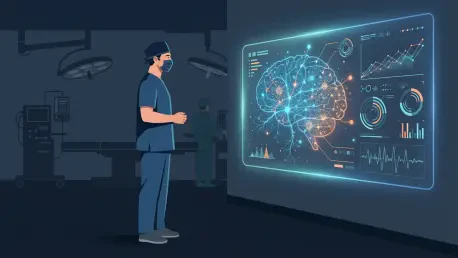

Junior neurosurgery residents often face steep learning curves when managing complex intracranial emergencies during high-pressure night shifts. These medical professionals are frequently the first line of defense during late-night hours when senior faculty may not be immediately available on-site, requiring them to make rapid, life-altering decisions. The cognitive load associated with assessing intracranial pressure, identifying acute hemorrhages, and determining surgical candidacy is immense, especially for those in their initial years of postgraduate training. Recognizing this critical challenge, researchers have explored whether advanced artificial intelligence can serve as a real-time decision-support system. A recent prospective study published in BMC Medical Education investigated the efficacy of ChatGPT-4 in augmenting the accuracy of these residents. By providing a digital safety net, Large Language Models might stabilize clinical reasoning when fatigue or inexperience threatens to compromise patient safety and hospital outcomes.
Quantifying Results: Significant Gains in Resident Accuracy
The methodology of this prospective study involved a rigorous within-subject design to ensure the validity of the findings. Fifty-five frontline neurosurgery residents were tasked with navigating ten validated emergency vignettes that mimicked real-world clinical scenarios. These simulations included cases ranging from acute traumatic brain injuries to sudden neurological deficits requiring immediate surgical intervention. To prevent the residents from simply remembering the correct answers from their first attempt, the research team implemented a strict 48-hour washout period between the unaided session and the session conducted with AI assistance. This structural approach allowed for a direct comparison of how the same individual would perform when given access to advanced Large Language Models. Participants were required to articulate their diagnostic reasoning, imaging selections, and management plans in detail, providing a comprehensive view of their clinical proficiency.
When the final data were tallied, the results pointed toward a dramatic shift in diagnostic and management capabilities. The average accuracy of the participants rose from a baseline of 58.0% when working unaided to an impressive 81.0% with the support of ChatGPT-4. This increase was not merely a minor fluctuation but represented a statistically significant leap with a large effect size, quantified by a Cohen’s d of 1.6. Such a high effect size indicates that the intervention had a substantial and practical impact on the residents’ ability to navigate the complexities of neurosurgical emergencies. The AI acted as a sophisticated cognitive assistant, helping to organize clinical data and suggesting evidence-based pathways that may have been obscured by the pressure of the simulated emergency. This evidence supports the hypothesis that Large Language Models can effectively bridge the cognitive gap that often exists when junior doctors are forced to operate at the edge of their expertise.
Implementation Standards: Bridging Clinical Gaps and Future Needs
The most striking observation from the data was the disparate impact of the AI tool on different levels of training seniority. Junior residents, who traditionally struggle with the transition to independent decision-making, saw their accuracy scores skyrocket from 45.8% to 83.0%. This significant improvement effectively closed the performance gap between novice practitioners and their more experienced counterparts. Beyond general accuracy, secondary outcomes showed that the completeness of clinical responses rose from 71% to 92%, with pharmacology showing a notable 26.2 percentage point jump. Furthermore, the residents’ subjective sense of professional confidence improved from a score of 2.8 to 4.1 on a five-point scale. Importantly, the researchers noted that this increased confidence did not lead to dangerous overconfidence, as participants remained aware of the need to verify AI suggestions against hospital protocols and established neurocritical care guidelines to ensure safety.
Healthcare institutions prioritized the implementation of AI literacy programs to ensure that residents understood both the capabilities and the inherent limitations of these digital tools. Rather than viewing technology as a replacement for human intellect, the medical community adopted a collaborative approach that emphasized the development of independent clinical judgment alongside technological assistance. Strategic governance frameworks were established to monitor the safety of AI-integrated workflows in high-stakes environments like neurosurgery. Moving forward, the focus shifted toward longitudinal studies that tracked whether these simulation-based gains translated into improved patient survival rates and reduced complication frequencies in live operating rooms. By treating AI as a temporary scaffold that was removed as trainee competence increased, departments successfully fostered a new generation of surgeons who were tech-savvy and clinically proficient. These efforts ensured that the fusion of human and machine intelligence remained centered on patient safety.