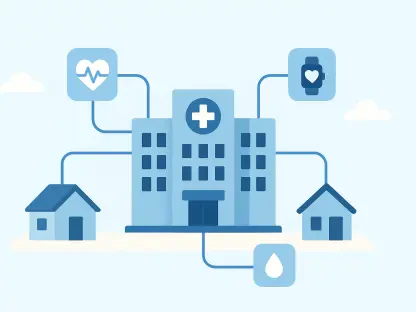

The recent signing of a comprehensive agreement between the Mexican Ministry of Health and the Mexican Social Security Institute represented a pivotal transition toward a truly integrated national healthcare system that prioritized patient data portability above all else. This landmark initiative was designed to finally bridge the digital divide that has historically isolated patient information within specific administrative silos like those of the ISSSTE or IMSS-Bienestar. By mandating a unified framework for electronic clinical records, the government took direct aim at the fragmentation that often forced patients to repeat expensive tests or lose their medical histories when moving between different insurance providers. The overarching goal was to ensure that a citizen’s health journey remained continuous and documented, regardless of whether they were a formal sector employee or part of the uninsured population, marking a significant evolution in how public health services are delivered and managed across various states.
Pilot Implementation: Scaling Workflows and Technical Landscapes
The operational phase of this ambitious national project gained significant traction through the selection of the Hospital of the Woman in Mexico City as the primary pilot site for testing new digital workflows earlier in 2026. This facility served as a critical proving ground where medical professionals received specialized training on integrated software systems designed to manage electronic health records across institutional boundaries. This hands-on approach was essential for identifying potential bottlenecks in data entry and retrieval before the system scaled nationally to larger medical hubs. The choice of a high-specialty maternity hospital highlighted the government’s intent to secure health data for vulnerable populations from the very start of the lifecycle. This rigorous testing phase was strategically timed to ensure all protocols were refined prior to the January 1, 2027, deadline, which marked the inaugural phase of formal service exchanges between different health agencies.
Despite the clear political will driving these reforms, the technical landscape remained a mosaic of varying digital maturity levels that complicated the path toward full inter-institutional interoperability. While the Mexican Social Security Institute demonstrated remarkable progress in internal digitization, managing millions of digital prescriptions and records across its units, this internal success did not automatically translate to external compatibility. Experts in the field of health information technology emphasized that local digitization was merely the first step; the true challenge lay in harmonizing divergent data languages and communication protocols. Research indicated that a vast majority of specialists identified the lack of shared technical standards as the single greatest barrier to implementing advanced solutions like telemedicine or automated diagnostic tools. Without a common architectural foundation, the existing data islands remained isolated, preventing the seamless exchange of information.
National Infrastructure: Navigating Structural Deficits and Economic Impact
Expanding the digital health network beyond its current pilot constraints required solving deep-seated structural deficits that went far beyond simple software compatibility or hardware availability. A primary concern for administrators was the implementation of a robust and foolproof patient identity verification system that could reliably link individuals to their records across different states and medical facilities. This was particularly challenging in a country with a diverse population where administrative discrepancies in traditional identification documents could lead to dangerous clinical errors or record duplication. Furthermore, the new framework had to clearly define legal protocols for data responsibility, specifically addressing which institution is liable for accuracy when multiple providers contributed to a single patient’s clinical history. Security remained another paramount pillar, as the transition to a unified record system increased the potential attack surface for cyber threats, necessitating advanced encryption.
The transition toward a unified data ecosystem also reshaped the broader economic landscape of the Mexican health technology market by creating a surge in demand for specialized infrastructure solutions. Private sector vendors and technology innovators found a wealth of opportunities in helping public institutions bridge the gap between legacy paper-based systems and modern cloud-based data environments. This shift encouraged a new wave of investment in localized data centers and cybersecurity firms that specialized in the unique requirements of the healthcare sector. Moreover, the government’s focus on long-term sustainability suggested that the move toward interoperability would be backed by dedicated budgetary allocations for continuous personnel training and hardware maintenance. This economic shift provided a fertile ground for startups focusing on data analytics and diagnostic tools that could plug into the national health record framework to offer predictive insights into public health trends.
Strategic Evolution: Practical Steps for System Sustainability
To ensure the long-term viability of this digital transformation, authorities must now prioritize the creation of a permanent technical oversight committee dedicated to maintaining international data standards. This body should be tasked with updating clinical coding systems periodically to reflect global medical advancements and ensuring that new healthcare technologies can be integrated without disrupting existing workflows. Furthermore, providing continuous professional development for healthcare workers is essential, as the shift from manual to digital processes requires a sophisticated level of data literacy that cannot be achieved through one-time training sessions. Encouraging public-private partnerships will also be vital for funding the continuous hardware upgrades necessary to handle the increasing volume of digital health data generated by a growing population. By establishing these formal support structures, the government can transition from a period of rapid implementation to a state of stable, sustainable operation.
The strategic roadmap for unified health data in Mexico demonstrated that technical integration was far more than a simple IT project; it was a fundamental shift in national policy. By prioritizing interoperability, the government established a framework where medical information finally followed the patient rather than staying trapped within institutional borders. Strengthening the legal framework around patient data ownership was another critical step that empowered citizens to take a more active role in their own care management. Looking back, the integration of artificial intelligence for early disease detection became a tangible possibility once the underlying data layer was stabilized and secured through these collaborative efforts. The groundwork laid by these initial agreements provided the necessary stability for a sustainable and technologically advanced public health system. Ultimately, the focus on shared standards and institutional cooperation paved the way for a new era of medical excellence that prioritized patient safety.