
Emergency departments across Oregon had been filling faster than beds could turn over, forcing hospitals to juggle surge protocols and patient transfers while clinicians chased equipment across campuses at critical moments. Against that backdrop, a fast-response medical equipment partner expanded into Portland with a model built for two-hour response plus drive time and around-the-clock fulfillment. The new branch aimed squarely at a constraint Oregon knew too well: one of the nation’s lowest bed supplies per capita, even as new towers and emergency department renovations added capacity. Same-day deliveries and biomedical-backed rentals were positioned not as a luxury but as operational infrastructure, syncing logistics with rising patient acuity. By anchoring services in Portland, US Med-Equip connected local hospitals to a national network that promised scale during flu surges, wildfire smoke events, or routine census spikes—moments when minutes would decide throughput, length of stay, and patient outcomes.
Why Capacity Pressures Demanded Faster Logistics
Portland’s Surge Math: Beds, Acuity, and the Clock
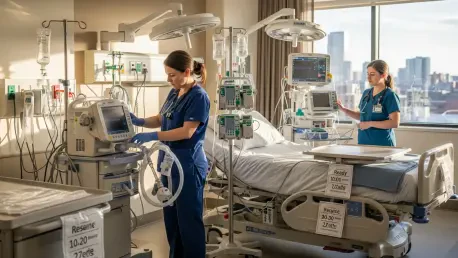
Hospitals across the Portland metro were adding hundreds of beds through new patient towers and expanded emergency departments while still running close to the margin on most weekdays. This reality reflected a more complex inpatient mix: older adults poised to outnumber minors, higher-acuity admissions, and longer recovery times after delayed procedures. That convergence amplified the need for ventilators, infusion pumps, and advanced monitors that could be staged, delivered, and validated without pulling clinicians off the floor. US Med-Equip’s Portland hub responded with a 24/7 model—same-day dispatch, two-hour response plus drive time, and vetted biomedical checks—so beds, bariatric frames, or transport ventilators arrived deployment-ready. Hospitals typically balanced owned inventories for baseline demand and turned to rentals for surges or specialized needs, converting fixed costs into on-demand access that protected capital while preserving speed.
From Idle Assets to Elastic Access
Ownership once passed for preparedness, but idle devices sitting in storage created hidden costs—calibration cycles, software updates, battery replacements, and staff time to track compliance. Renting reversed that burden. The Portland branch integrated with a national logistics and technology platform, allowing inventory visibility across regions and routing high-need items where they were most likely to relieve bottlenecks. A hospital could pull a fleet of smart infusion pumps for a cardiac step-down expansion this week, then swap for negative-pressure capable monitors during a respiratory uptick next week. Biomedical support closed a critical gap: equipment arrived with service tags current, settings validated, and user-ready accessories. That combination reduced onboarding friction for nurses and respiratory therapists, helped standardize device profiles across campuses, and lowered the risk of coverage gaps during admissions peaks.
How Hospitals Are Rewriting Equipment Strategy
The PNW Use Case: Speed, Scale, and Accountability
Health systems in Oregon and Southwest Washington had been blending command-center operations with tactical logistics to move patients faster from ED to inpatient rooms. Integrating US Med-Equip’s hub into that flow enabled case managers to align bed activations with real-time device availability. When surge teams initiated additional telemetry beds, the order triggered same-day delivery of monitors, leads, and stands, bundled and serialized for immediate placement. For bariatric care, hospitals leveraged specialized beds with integrated scales and pressure redistribution surfaces, minimizing transfers and reducing injury risk. Ventilator requests paired with circuit kits and backup batteries so respiratory care could start bedside without scavenging parts. Each delivery fed usage data back into planning dashboards, enabling leaders to see, by unit, where rentals displaced delayed discharges or trimmed PACU boarding times—hard outcomes tied to logistics done right.
What Comes Next: Playbooks, Metrics, and Local Talent
The Portland launch also created skilled jobs in dispatch, warehouse operations, field service, and biomedical engineering, placing technicians close to sites that needed rapid turnaround and post-rental checks. Building on that foundation, the next steps for health systems were clear: codify surge playbooks that link census triggers to preapproved rental bundles; track time-to-bed-opened as a core metric; and standardize device profiles to speed nurse orientation across float pools. On the vendor side, integrating order flows with bed-management software and EHR alerts would tighten orchestration, while shared KPIs—deployment time, first-pass quality, and utilization targets—would keep accountability mutual. Done well, this model rewarded agility over stockpiling. The region’s capacity crunch, sharpened by rising acuity, met a practical fix: elastic access to critical equipment that preserved capital, lowered operational drag, and kept focus on the bedside.