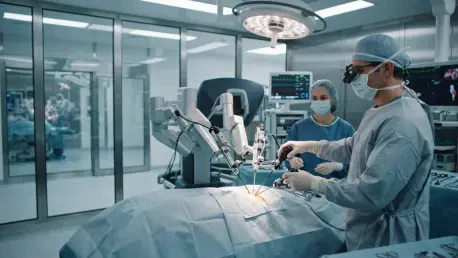

Samsung Electronics subsidiary Rainbow Robotics is currently repurposing its humanoid technology to develop laparoscopic assistants and spine surgery robots for modern operating rooms. This strategic shift reflects a broader trend among industrial powerhouses looking to capture a foothold in the high-stakes medical technology market. By integrating advanced mechanical engineering with biological precision, these firms are moving beyond simple automation to tackle complex physiological challenges. The evolution is not merely about entering a new market; it represents a fundamental reimagining of how robotic limbs and artificial intelligence can collaborate with human surgeons to improve patient outcomes. As domestic healthcare needs grow more sophisticated, the traditional barriers between heavy industry and clinical medicine are dissolving. This convergence is fueled by massive R&D investments and a national push to lead the next generation of life-saving technology, ensuring that the precision once reserved for semiconductor cleanrooms is now being applied to the delicate structures of the human body.
Diversification of Industrial Might into Clinical Applications
Samsung and the Rise of Humanoid Surgical Assistants
Rainbow Robotics is leveraging its humanoid foundation to pioneer a new era of surgical efficiency through high-profile collaborations. Working alongside firms like Erob and the Samsung Medical Center, the company is refining the Erobtics 2, a dedicated laparoscopic assistant designed to provide surgeons with a stable and responsive endoscopic view during complex procedures. This technology is being further evolved within the framework of the Korean-style ARPA-H project, where the RB-Y1 mobile humanoid serves as a central platform. Unlike traditional stationary robotic arms, the RB-Y1 utilizes a wheeled base and advanced voice-command interfaces to manage surgical instruments in real-time. This mobility allows it to adapt to the dynamic environment of a modern operating suite, effectively acting as a highly precise third hand for the surgical team. The integration of such versatile platforms is expected to streamline workflows by reducing the physical strain on human assistants while maintaining accuracy.
Precision Engineering in Sterile Operative Environments
The transition from industrial environments to the sterile operating room requires a complete overhaul of sensory and safety protocols to ensure patient well-being. Rainbow Robotics focuses on a multi-modal approach where tactile feedback and vision-based navigation allow the humanoid to operate with extreme caution around delicate internal tissues. By utilizing the RB-Y1’s articulated arms, developers aim to achieve a seamless hand-off of tools, minimizing the risk of contamination and accidental trauma. This ambitious roadmap targets full clinical integration by 2029, with ongoing trials focusing on spine surgery robots that require sub-millimeter precision. These systems are designed to bridge the gap between human intuition and machine-like stability, providing a level of surgical support that scales according to the complexity of the operation. The government-backed nature of these projects positions South Korea as a serious contender in the race to automate medical tasks previously held by professionals.
Rehabilitation and Market Competition Dynamics
Hyundai and the Wearable Rehabilitation Frontier
Hyundai Motor Group’s Robotics Lab is addressing the critical need for post-operative recovery and long-term mobility through wearable exoskeletons. The X-ble MEX represents a significant departure from the company’s industrial-focused X-ble Shoulder, transitioning from a tool for factory efficiency to a Class III medical device focused on human restoration. This sophisticated apparatus is engineered specifically to help patients rebuild lower-limb strength and relearn gait patterns following severe neurological or muscular injuries. Currently undergoing pilot testing at prestigious facilities like the Armed Forces Capital Hospital, the device has already secured the necessary regulatory approvals from the Ministry of Food and Drug Safety. By focusing on therapeutic outcomes, Hyundai is positioning its robotics division as a leader in health-centric mechanical assistance. This shift highlights a strategic realization that the same motors that empower workers can be recalibrated to provide life-changing mobility for recovering patients.
Actionable Insights for Next-Generation Medical Robotics
The shift toward medical robotics demonstrated how industrial expertise could be successfully repurposed for life-critical applications through rigorous testing and strategic partnerships. By focusing on high-growth sectors like surgical assistance and gait rehabilitation, South Korean manufacturers established a roadmap for navigating the stringent regulatory hurdles of the healthcare industry. Moving forward, it became clear that software integration and artificial intelligence were just as vital as mechanical precision. Organizations looking to follow this path should prioritize building cross-disciplinary teams that combine engineering prowess with clinical insight to ensure products meet actual hospital needs. The lessons learned during this period emphasized that long-term profitability in med-tech required a patient-first approach and a commitment to extensive clinical validation. Stakeholders who invested in comprehensive data ecosystems alongside hardware were better positioned to compete with established global leaders in the future automation landscape.