
Despite the rapid acquisition of knowledge through immersive tools, researchers noted that both VR and traditional groups experienced similar rates of information decay after a two-week interval. For decades, the rigorous curriculum of medical school has depended heavily on two-dimensional representations to teach the three-dimensional complexities of human anatomy. Textbooks, while dense with information, often lack the spatial clarity required to understand how overlapping tissues interact in tight spaces. This is particularly evident when students attempt to master the facial musculature, an intricate system of layers and insertions that dictate both function and expression. As we navigate the educational landscape of 2026, the shift toward immersive virtual reality has become more than a technological curiosity; it is a direct response to the limitations of static learning. Traditional methods like smart-screens and cadaveric diagrams provide a foundation, but they frequently fail to bridge the cognitive gap between seeing a structure and understanding its orientation in a volumetric space. This pedagogical challenge has prompted a surge in randomized trials aiming to quantify the actual benefits of wearing a headset versus attending a standard lecture. By examining the immediate performance gains and the subsequent retention rates, educators are beginning to determine whether the investment in VR hardware translates into superior clinical preparation or merely a temporary boost in student engagement.
Trial Framework: Comparing Immersive and Traditional Environments
To investigate the effectiveness of modern simulation, a structured randomized controlled trial was conducted at the University of Sumer in Iraq. The study recruited 48 second-year medical students who were systematically divided into two groups to ensure a balanced comparison. The experimental group utilized the Oculus Quest 3, a high-fidelity virtual reality headset, while the control group engaged with the same anatomical content via a traditional smart-screen presentation. This specific cohort was chosen because these students possessed a basic understanding of general anatomy but had not yet specialized in the intricacies of the facial muscle system. By selecting participants with no prior VR experience, the researchers aimed to eliminate any bias that might arise from technological familiarity or existing digital proficiency. The goal was to isolate the delivery method as the primary variable, determining if the “feeling of being there” provided by immersive hardware could translate into measurable academic success compared to the passive observation of a PowerPoint lecture.
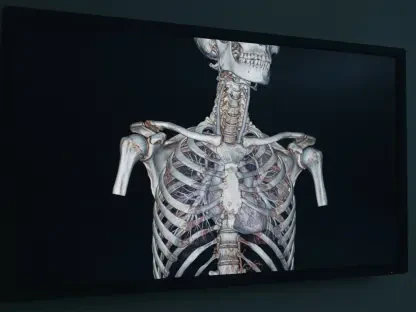
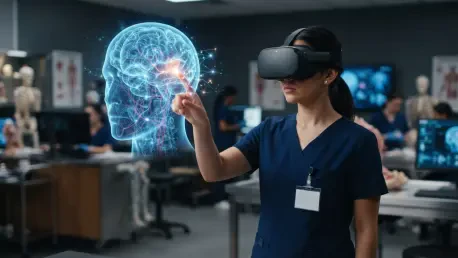
The instructional content for both groups was meticulously synchronized to prevent information disparity. In the VR setting, students spent 15 minutes exploring the Human Anatomy VR application, where they were given the autonomy to manipulate a virtual head. Using hand controllers, they could peel back layers of skin, isolate specific muscles like the zygomaticus major or the orbicularis oculi, and view these structures from various angles that are impossible to replicate in a textbook. Conversely, the smart-screen group received a 15-minute lecture from the same anatomy instructor using high-quality 2D diagrams and descriptions. While the instructor provided identical anatomical facts, the students in this group remained passive observers. They could not interact with the models or change their perspective, representing the conventional classroom experience that has defined medical education for generations. This stark contrast in interactivity allowed the research team to observe how active engagement versus passive absorption influenced the students’ ability to internalize complex spatial data.
Assessment Metrics: Quantifying Knowledge and Student Presence
The researchers implemented a rigorous multi-stage testing process to evaluate the academic impact of the two different teaching methods. To establish a baseline, all 48 participants took a pre-test consisting of 15 multiple-choice questions designed by experienced anatomy instructors. These questions were not simple recall items; they were crafted to test the students’ understanding of spatial relationships and functional interactions between facial muscles. Immediately following the 15-minute intervention, students took a post-test to measure short-term knowledge acquisition. To ensure the integrity of the data, the order of questions and the sequence of answer choices were randomized for every test administration, preventing students from relying on rote memorization of the test structure rather than the actual anatomical content. This methodology provided a clear window into how effectively the brain processed 3D versus 2D information under identical time constraints.
Beyond purely academic scores, the study employed validated psychometric scales to measure the subjective quality of the learning experience. Using a five-point Likert scale, the team assessed “Perceived Presence” and “Perceived Enjoyment,” two factors that are increasingly recognized as critical drivers of educational success. The presence scale measured the degree to which students felt they were physically inhabiting the digital environment, while the enjoyment scale tracked their emotional response to the lesson. To ensure these metrics were scientifically sound, the researchers calculated Cronbach’s alpha, which yielded high reliability scores above 0.80 for both categories. By correlating these psychological results with the academic test scores, the study was able to determine if the heightened sensory experience of VR directly contributed to better focus and motivation, or if the technology simply acted as an entertaining but ultimately distracting novelty in the classroom.
Cognitive Outcomes: Analyzing Spatial Logic and Retention
The statistical analysis of the test results revealed a significant performance gap between the two groups. At the start of the study, both the VR and smart-screen groups displayed nearly identical baseline scores, averaging around 4.4 out of 15. However, in the immediate post-test, the VR group’s average score surged to 9.46, while the smart-screen group reached only 8.20. This substantial difference indicated that the immersive environment was more effective at helping students grasp the complex 3D arrangement of facial muscles within a short period. The researchers attributed this success to the principle of spatial contiguity, where the ability to see labels and structures in the same physical space reduces the cognitive load on the brain. When students used the Oculus Quest 3 to rotate a model and see how a muscle originated from the bone and inserted into the skin, they were building a robust mental map that a flat screen simply could not facilitate.
However, the long-term data introduced a more nuanced perspective on the persistence of knowledge. Two weeks after the initial sessions, both groups were tested again to measure retention. While the VR group still maintained a higher average score of 7.00 compared to the control group’s 5.88, the rate of forgetting was remarkably similar across both populations. This finding highlighted a critical truth in medical pedagogy: while VR is an exceptionally powerful tool for initial understanding and clarifying complex spatial logic, it does not bypass the fundamental biological process of information decay. The “forgetting curve” remained a factor regardless of the technology used. This suggests that the primary value of VR lies in its ability to provide a more effective “first encounter” with a subject, but it must be paired with consistent review cycles to ensure that the knowledge gained during the immersive session is converted into long-term professional expertise.
Strategic Implementation: Assessing Long-Term Curricular Impacts
The University of Sumer study provided a clear blueprint for the future of anatomical training, though it also highlighted specific boundaries that institutions must respect. Educators concluded that the most effective use of virtual reality involved its integration as a targeted supplement rather than a complete replacement for established methods. While the VR group outperformed the screen-based group, the fact that information decay occurred at a parallel rate suggested that the technology functioned best when reinforcing the most difficult 3D concepts. The study demonstrated that for areas of the body with high spatial density, such as the face, neck, or neuroanatomy, the depth perception provided by stereoscopic vision was indispensable. Consequently, medical schools recognized that the high cost of VR hardware was justified when applied to specific, high-complexity modules where 2D tools consistently failed to convey the necessary structural relationships required for surgical or clinical precision.
In the final assessment, the research team emphasized that the psychological benefits of immersion acted as a catalyst for deeper student participation. The students who navigated the anatomical models reported a sense of agency and exploration that was absent in the traditional lecture hall. This increased engagement often compensated for the “novelty effect,” proving that even after the initial excitement of using new gadgets wore off, the interactive nature of the software continued to drive better learning outcomes. Moving forward, the study suggested that the next phase of development should involve larger, multi-university trials to validate these findings across different cultures and educational backgrounds. It also recommended that software developers focus on expanding the clinical relevance of these tools, perhaps by integrating pathology or surgical simulation into the anatomical models. As these technologies matured, they transitioned from being high-tech toys to becoming essential instruments in the modern medical toolkit.