
The recent disclosure of a highly sophisticated surgical robot by Neuralink signifies a monumental shift in the practical application of neurotechnology within modern clinical environments. This system is not merely a tool for surface-level implantation but is engineered to navigate the deep, previously inaccessible corridors of the human brain with unprecedented accuracy. By leveraging advanced mechanical actuators and high-resolution imaging, the robot circumvents the inherent limitations of human dexterity, allowing for the placement of electrode arrays in regions that were once considered too high-risk for surgical intervention. This development bridges the gap between theoretical neuroscience and tangible medical therapy, offering a scalable method to interface with the brain’s core functional centers. As the industry moves from experimental stages to broader clinical adoption, the presence of such specialized hardware suggests that the era of manual neural implantation is rapidly coming to an end. This evolution is set to redefine the relationship between biological systems and digital interfaces on a global scale.
Technical Advancements in Neural Access
Robotic Precision: Redefining Neurosurgical Standards
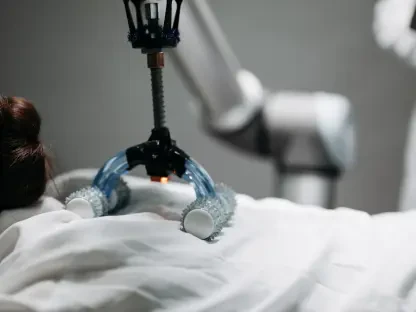
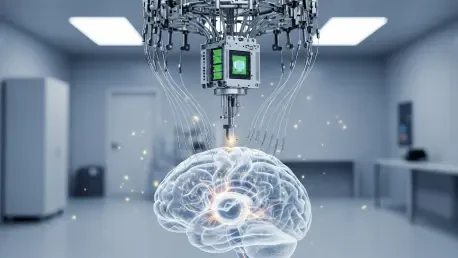
The human brain remains the most complex biological structure known, possessing a density of neurons and blood vessels that makes traditional manual surgery an incredibly high-stakes endeavor for even the most skilled practitioners. Neuralink’s robotic system addresses this fundamental challenge by utilizing a “sewing machine” approach, where individual threads, thinner than a human hair, are inserted into the brain tissue with micron-level precision. This automation eliminates the risks associated with human hand tremors, which, though slight, can cause significant vascular damage or suboptimal electrode placement. Furthermore, the robot operates at a speed and consistency that manual methods cannot replicate, ensuring that the surgical duration is minimized to reduce the patient’s exposure to anesthesia. The ability to perform such delicate tasks repeatedly across diverse patient anatomies is essential for moving BCI technology from a bespoke laboratory curiosity into a standardized medical procedure available to the general public.
Achieving a reliable connection between biological tissue and digital hardware requires more than just a steady hand; it demands an intelligent system capable of real-time adjustment. The surgical robot utilizes multiple optical sensors and high-speed computer vision to identify the precise coordinates for every thread insertion, adapting to the subtle movements of the brain caused by respiration or blood flow. This dynamic tracking allows the system to maintain a high degree of fidelity during the entire implantation process, ensuring that the electrode arrays are situated exactly where they can capture the most relevant neural signals. By standardizing the physical interface between the machine and the mind, Neuralink is effectively creating a universal deployment platform that can be updated with new software or hardware configurations as neuroscience evolves. This consistency is the bedrock upon which the reliability of neural data is built, as it provides a stable environment for machine learning algorithms to interpret complex patterns.
Deep Navigation: Mapping the Intricate Cerebral Landscape
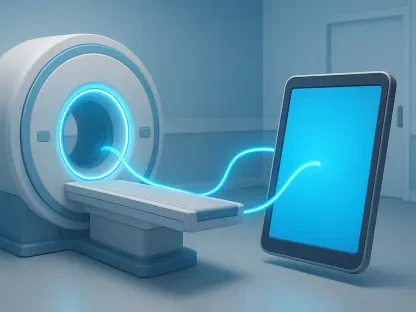
Navigating the three-dimensional labyrinth of the cerebral cortex requires an advanced understanding of the brain’s unique vascular architecture to avoid hemorrhage during the implantation of high-density sensor arrays. The robot’s navigational suite utilizes advanced pre-operative imaging data, such as high-resolution MRI and CT scans, to create a detailed roadmap that guides the surgical path around critical blood vessels. This level of planning is crucial when targeting deeper structures like the basal ganglia or the hippocampus, which are involved in motor control and memory formation but are notoriously difficult to reach without traversing vital neural pathways. By automating the trajectory of each probe, the system significantly lowers the barrier to entry for deep-brain stimulation and recording, potentially opening up new treatment avenues for conditions that were previously considered untreatable. The integration of this navigational intelligence ensures that the procedure is not only effective in terms of signal quality but also prioritizes safety.
The convergence of robotics and artificial intelligence in this surgical platform represents a new paradigm where the machine acts as an intelligent collaborator rather than just a passive tool in the surgeon’s hand. As the robot maps the brain’s topography in real-time, it generates a massive dataset that can be used to further refine the algorithms responsible for identifying optimal insertion points. This feedback loop creates a system that grows more capable with every procedure, leveraging the collective experience of multiple surgeries to improve safety outcomes across the entire fleet of robotic units. This approach is reminiscent of the progress seen in autonomous vehicles, where shared data leads to exponential improvements in performance and safety protocols. In the context of neurosurgery, this means that the risk profile of brain-computer interface implantation continues to decrease as the technology matures through from 2026 to 2028. This ongoing refinement of the interaction between AI-driven navigation and mechanical execution will define the field.
Clinical Implications and Global Trends
Medical Breakthroughs: Restoration of Neurological Function
The therapeutic potential of accessing the brain’s deeper functional zones is immense, offering a glimmer of hope for millions of individuals suffering from severe neurological impairments and degenerative diseases. With the ability to precisely target and stimulate areas responsible for motor output, this technology could provide a digital bridge for patients with spinal cord injuries, effectively allowing the brain to communicate with limbs that have been disconnected by physical trauma. Furthermore, the capacity to record from and stimulate the speech centers of the brain provides a revolutionary communication tool for those living with locked-in syndrome or severe non-verbal conditions. By decoding the neural signatures of intent, the interface can translate thoughts into digital text or synthesized speech in real-time, restoring a level of autonomy that was previously thought to be impossible. As clinical trials progress, the focus is shifting toward chronic conditions where deep-brain access could modulate the abnormal neural activity.
Beyond motor control and communication, the robot’s ability to reach specialized sensory processing areas could lead to breakthroughs in restoring sight and hearing for individuals with permanent sensory loss. For patients with damaged optic nerves, a direct neural interface could bypass the eye entirely, delivering visual information from an external camera directly to the primary visual cortex in the form of electrical pulses. This method of sensory bypass represents a radical departure from traditional medical devices, as it treats the brain as a configurable input-output system that can be rewired to accept new data streams. The implications for rehabilitative medicine are profound, suggesting that many forms of biological failure can be compensated for with a sufficiently advanced digital interface. As these technologies are refined, the goal is to provide sensory experiences that are increasingly high-fidelity, eventually matching or even exceeding the capabilities of natural biological organs. This path toward sensory restoration is a cornerstone of the broader effort to leverage BCIs for improving the quality of human life.
Ethical Scrutiny: Protecting the Sanctity of Neural Privacy
The rapid advancement of neural interfacing technology naturally brings forth significant ethical considerations regarding the privacy and security of the most intimate data generated by the human mind. As brain-computer interfaces become more prevalent, the concept of “brain privacy” has emerged as a central theme in public discourse, as the digitization of neural patterns could potentially expose an individual’s thoughts, emotions, and subconscious drives to external monitoring. Unlike traditional biometric data, neural information is inherently dynamic and reveals much more about a person’s inner state, necessitating a robust framework for data protection and informed consent. Regulatory agencies and ethicists are working to establish clear guidelines that prevent the unauthorized use of this information by third parties, ensuring that the technology remains a tool for empowerment rather than exploitation. The challenge lies in balancing the need for data sharing to improve medical outcomes with the absolute necessity of maintaining the sanctity of the mental privacy.
Another critical area of scrutiny involves the long-term biological compatibility and safety of permanent neural implants within the sensitive environment of the human brain. While the surgical robot minimizes initial trauma, the presence of foreign materials can trigger immune responses or lead to the formation of scar tissue, which may degrade the quality of the neural signal over time. Researchers are continuously exploring new biocompatible coatings and flexible substrate materials that can coexist with neural tissue for decades without causing adverse reactions. The rigorous testing required for regulatory approval ensures that every component of the system undergoes exhaustive evaluation for stability and performance. This focus on long-term safety is essential for building public trust, as the prospect of elective brain surgery requires a high degree of confidence in the technology’s endurance. As the industry advances from the current landscape of 2026, the stability of the brain-machine link will be the primary metric by which the success of the entire BCI ecosystem is measured.
Expanding the Reach of Human Capability
Future Frontiers: Beyond Therapeutic Intervention
While the current narrative is focused on medical restoration, the technical capability to access any region of the brain inevitably leads to discussions regarding the potential for cognitive and sensory enhancement. Technologists and futurists suggest that once the safety of these interfaces is established through years of clinical success, they could be used to augment memory capacity, accelerate learning processes, or facilitate direct brain-to-brain communication. Such applications would move beyond the realm of therapy and into the territory of elective human optimization, where individuals could interact with artificial intelligence as a seamless extension of their own cognitive architecture. This vision of a “symbiotic” relationship with computing hardware drives significant interest from the tech sector, which views the brain as the ultimate interface for the digital economy. Although these ideas remain speculative in the context of current medical priorities, the rapid pace of robotic and AI development suggests that the technical barriers to such enhancements are being dismantled quickly.
The integration of high-bandwidth neural interfaces could also revolutionize how humans interact with virtual and augmented reality environments, providing a level of immersion that physical peripherals cannot achieve. By directly stimulating the sensory centers of the brain, a BCI could create realistic sensations of touch, temperature, and spatial orientation within a digital world, making the experience indistinguishable from physical reality. This capability has the potential to transform industries ranging from professional training and education to entertainment and remote teleoperation of robotic systems. In these scenarios, the brain-computer interface acts as a high-speed data bus, allowing for the near-instantaneous exchange of information between the human nervous system and remote or virtual assets. As the fidelity of these interfaces improves, the line between the physical and the digital becomes increasingly blurred, leading to a future where human experience is no longer limited by the constraints of the biological body. This trajectory highlights the power of neural technology as it expands the human horizon.
Regulatory Paths: Establishing Safety for Mass Adoption
The transition of brain-computer interfaces from specialized medical experiments to widely available commercial and clinical products depends heavily on the establishment of rigorous regulatory oversight and standardized protocols. Regulatory bodies like the FDA are tasked with evaluating not only the physical safety of the surgical robot but also the integrity of the software that manages the interface and the long-term viability of the implanted hardware. The complexity of these systems requires a multi-disciplinary approach to regulation, involving experts in neurobiology, computer science, and mechanical engineering to ensure that every aspect of the technology meets the highest standards of safety. As the technology matures, the development of standardized metrics for signal quality, data security, and surgical outcomes will be necessary to facilitate the broad adoption of BCIs across different healthcare systems. This institutional framework provides the necessary guardrails to protect patients while encouraging the innovation needed to address challenging medical conditions.
Scalability is a critical factor in the widespread adoption of neural technology, and the use of a robotic system is a strategic move to ensure that the implantation process can be replicated with consistent results across the globe. By automating the most difficult aspects of the surgery, Neuralink is creating a model that can be deployed in standard clinical settings, reducing the reliance on a small number of elite neurosurgeons with specialized training in BCI placement. This democratization of access is vital for ensuring that the benefits of the technology are available to a broad population, rather than just a privileged few in specialized research centers. Furthermore, the standardization of the surgical procedure allows for better comparative analysis of patient outcomes, which in turn informs the continuous improvement of the robotic hardware and software. As the industry moves forward, the focus will remain on refining these processes to ensure that every patient receives the same high level of care, regardless of their location or the specific clinical environment.
In summary, the emergence of a specialized robot capable of deep-brain navigation marked a definitive turning point for the neurotechnology sector, as it successfully addressed the primary physical obstacles to high-bandwidth neural integration. This shift moved the industry away from invasive manual procedures and toward a future where precision and automation defined the standards of clinical excellence. The insights gained from the initial deployment of these systems provided a clear roadmap for the treatment of complex neurological disorders and the eventual exploration of cognitive enhancement. As the convergence of AI and robotics continued to mature, the focus transitioned toward the long-term management of neural health and the ethical stewardship of digital brain data. The technical groundwork laid by this robotic platform ensured that the integration of the human mind with advanced computing was conducted with the necessary safety and reliability. Ultimately, the successful automation of neural access proved to be the catalyst for a fundamental reimagining of human capability in the digital age.