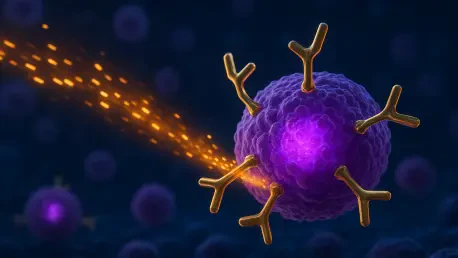

The delivery of localized radiation through targeted agents is proving more effective when paired with drugs that specifically inhibit cellular repair pathways. This fundamental shift in oncology is redefining the standard of care by transitioning from broad, systemic treatments to highly individualized molecular interventions. In this new landscape, physicians are no longer treating the tumor as a singular entity but rather as a complex biological network that can be interrogated through specialized imaging tracers. By utilizing positron emission tomography and single-photon emission computed tomography, medical teams can now visualize the exact distribution of therapeutic agents within the body. This level of precision ensures that high doses of radiation are delivered precisely where they are needed, sparing healthy surrounding tissue. The integration of diagnostic insights with therapeutic delivery, a concept known as theranostics, has matured into a standard clinical practice. As these technologies continue to evolve from 2026 to 2028, the focus is increasingly on optimizing the timing and dosage of these potent radio-ligand therapies to maximize patient outcomes and overall survival rates.
Innovations in Radiopharmaceutical Therapy
Strategic Coupling: Biological and Physical Synergy
The current clinical success of radiopharmaceuticals relies heavily on the ability to disrupt the cellular mechanisms that cancer cells use to survive radiation damage. Recent developments have focused on combining alpha-emitting isotopes with small molecule inhibitors that target the DNA repair machinery. By blocking these pathways, the therapeutic efficacy of isotopes like Actinium-225 is significantly enhanced, leading to profound tumor regression even in cases previously resistant to standard chemotherapy. This approach allows for lower overall doses of radiation, which reduces the incidence of adverse effects such as bone marrow suppression or kidney toxicity. Furthermore, the use of molecular imaging during the treatment phase provides immediate feedback on how the tumor microenvironment is responding to the combined therapy. This feedback loop is essential for adjusting treatment plans in real time, ensuring that the biological properties of the malignancy are countered at every stage of the therapeutic journey. The convergence of these fields represents a major milestone in modern medicine.
Engineering Precision: The Evolution of Ligand Development
Beyond the radioactive payload, the vehicle used to transport the isotope—the ligand—has undergone a massive transformation in its design and specificity. Advanced chemical engineering now allows for the creation of peptides and small molecules that bind with extreme affinity to unique surface proteins found on cancer cells, such as prostate-specific membrane antigen or fibroblast activation protein. These newer ligands are designed to clear from the bloodstream rapidly, which minimizes the radiation dose to non-target organs like the liver and spleen. This rapid clearance combined with high uptake at the tumor site has vastly improved the signal-to-noise ratio in diagnostic imaging, allowing for the detection of microscopic metastatic lesions that were previously invisible. Furthermore, the modular nature of these ligands means they can be easily adapted to carry different types of isotopes depending on whether the goal is imaging or treatment. This versatility has accelerated the development of new tracers from 2026 to 2028, bringing a wider array of specialized tools to the clinical frontline for various types of solid tumors.
Enhanced Visualization and Quantitative Analysis
Scanning Advancements: Redefining Diagnostic Sensitivity
The hardware supporting molecular imaging has seen a parallel evolution, with the widespread implementation of total-body PET scanners that offer unprecedented sensitivity. These systems can capture the entire human body in a single bed position, allowing for the simultaneous assessment of all organ systems and their interaction with the tracer. This global view is critical for understanding the systemic nature of metabolic diseases and advanced cancers. Because these scanners are much more sensitive than previous generations, they require significantly lower doses of radioactive tracers to produce high-quality images. This reduction in exposure is particularly beneficial for pediatric patients and those requiring frequent follow-up scans to monitor treatment progress. Additionally, the integration of artificial intelligence into the image reconstruction process has eliminated much of the noise and artifacts that once plagued traditional imaging. The resulting clarity allows radiologists to differentiate between inflammatory responses and true disease progression, providing a much clearer picture of the patient’s health.
Clinical Implementation: The Adoption of Personalized Dosimetry
The medical community successfully established a new framework for personalized dosimetry that utilized imaging data to tailor specific therapeutic intervals. Clinicians recognized that a one-size-fits-all approach to radiopharmaceutical dosing often resulted in sub-optimal outcomes, so they transitioned toward models that calculated the absorbed dose for each individual patient. This move significantly improved the safety profile of high-energy therapies and allowed for more aggressive treatment of resistant malignancies. Healthcare systems invested heavily in specialized software that could integrate multi-modal imaging data into a unified platform for treatment planning. These advancements fostered a collaborative environment where nuclear medicine physicians, oncologists, and medical physicists worked in unison to refine patient care strategies. By the end of this period, the integration of molecular imaging into the core of precision medicine provided a blueprint for managing complex diseases with surgical-like accuracy. Stakeholders prioritized the expansion of production facilities for therapeutic isotopes to ensure that these life-saving innovations reached a broader population.