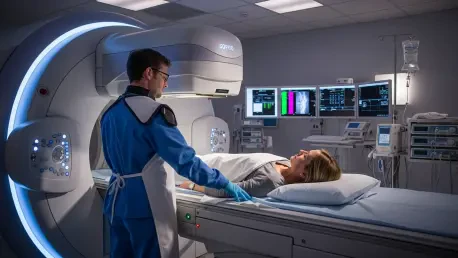

The transition from conventional systemic therapies to molecularly targeted interventions represents one of the most significant pivots in modern medical history, marking the end of the one-size-fits-all era. In the current landscape of 2026, healthcare providers are increasingly moving away from reactive treatments that address broad symptoms toward a proactive model that identifies and neutralizes disease at the cellular level. This shift is primarily fueled by the rapid maturation of nuclear medicine, which has shed its image as a purely diagnostic discipline to become a cornerstone of personalized intervention. By utilizing the specific molecular signatures of a patient’s unique biological makeup, clinicians can now visualize metabolic processes in real-time, allowing for a level of diagnostic accuracy that was previously unattainable. The evolution of the field is particularly evident when looking at the move from basic gamma imaging to the widespread implementation of hybrid PET/MRI systems that merge anatomical precision with functional insight. These sophisticated technologies have enabled the medical community to characterize the underlying biology of complex conditions, ranging from neurodegenerative disorders to metastatic cancers, with unprecedented clarity. Consequently, nuclear medicine is no longer just a supportive service but a primary driver of clinical decision-making that ensures patients receive the right treatment at the right time.
Establishing Scientific Rigor and Policy Standards
Standardizing Global Clinical Procedures: The Role of Scientific Guidelines
The European Association of Nuclear Medicine has become the vital scientific backbone of the industry, working tirelessly to ensure that technological innovation translates into consistent, high-quality patient care across international borders. By developing and disseminating rigorous procedural guidelines, the association provides a roadmap for clinicians to follow, which is essential for maintaining the integrity of diagnostic data. This standardization is not merely a bureaucratic necessity; it is the foundation upon which multi-center clinical trials are built, allowing for the comparison of results from different parts of the world. When every facility operates under the same high standards, the reliability of molecular imaging increases, giving physicians more confidence in the results they receive. Furthermore, the EANM has expanded its focus to include comprehensive training programs through the European School of Multimodality Imaging & Therapy, ensuring that the current generation of practitioners is well-versed in the latest techniques. This commitment to education bridges the gap between laboratory research and clinical application, fostering an environment where advanced methodologies can be safely integrated into daily hospital workflows.
Maintaining a unified approach to clinical practice also involves the continuous refinement of imaging protocols to account for the diverse range of equipment used in various regions. The scientific community has prioritized the creation of “living documents” that are updated as new tracers and scanning techniques emerge, preventing the field from becoming stagnant. This proactive stance ensures that even the most remote clinics can offer a standard of care that matches leading academic medical centers. Beyond technical proficiency, the focus on standardization also encompasses patient safety and the optimization of radiopharmaceutical administration. By harmonizing the way scans are performed and interpreted, the industry reduces the risk of misdiagnosis and ensures that every patient benefits from the collective expertise of the global nuclear medicine community. As these protocols become more deeply embedded in healthcare systems, the barriers to accessing advanced molecular diagnostics continue to fall, paving the way for a more equitable distribution of precision healthcare resources. This systematic approach to quality control has effectively solidified the position of nuclear medicine as a reliable and indispensable component of modern clinical practice.
Advocacy and Regulatory Frameworks: Navigating the Radiopharmaceutical Landscape
The regulatory environment for nuclear medicine requires a specialized approach that differs significantly from the frameworks used for traditional pharmaceutical products. Because diagnostic radiopharmaceuticals are typically administered in nanomolar or picomolar quantities, they do not elicit the same pharmacological or toxicological responses as conventional drugs. Experts in the field have been advocating for a more nuanced regulatory perspective that recognizes this unique safety profile, arguing that current oversight models are often unnecessarily restrictive. By engaging with policymakers, professional organizations are working to streamline the approval process for new tracers, which is essential for bringing cutting-edge technology to the bedside more quickly. These advocacy efforts are focused on creating a balanced framework that maintains strict safety standards while encouraging the rapid innovation needed to tackle emerging health challenges. Without such a tailored approach, the development of specialized tracers for rare diseases could be hindered by the prohibitive costs and time requirements associated with traditional drug regulation.
Strategic engagement with government bodies has also centered on the logistical complexities of managing radioactive materials, which require strict adherence to safety protocols during transport and handling. The current focus is on developing streamlined bureaucratic pathways that allow for the efficient distribution of short-lived isotopes without compromising environmental or public safety. By harmonizing these regulations at a regional and international level, the industry can better manage the delicate balance between rapid delivery and rigorous oversight. This effort is particularly important as the variety of available radiopharmaceuticals continues to expand, requiring more flexible and responsive regulatory systems. Furthermore, clear communication between the scientific community and regulators has helped to demystify nuclear medicine for the public, building trust in the safety and efficacy of these treatments. As the policy landscape continues to evolve, the goal remains to create a stable environment where innovation can flourish, ensuring that the regulatory hurdles of the past do not prevent the life-saving potential of molecular medicine from being fully realized in the coming years.
Driving Innovation Through Targeted Medicine
The Breakthrough of the Theranostic Model: Dual-Purpose Interventions
Theranostics has emerged as one of the most transformative concepts in modern oncology, utilizing a “see what you treat and treat what you see” methodology that links diagnostic imaging directly with therapy. This dual-purpose approach uses the same biological target to first identify the extent of a disease with a diagnostic tracer and then deliver a potent dose of radiation using a therapeutic isotope. The success of this model has been most visible in the treatment of prostate cancer, where ligands targeting the prostate-specific membrane antigen have significantly extended survival rates for patients who had exhausted other options. Beyond its current successes, the field is now exploring the potential of alpha-emitting isotopes like Actinium-225, which offer a much higher energy transfer over a very short distance. This allows for the destruction of cancer cells with minimal damage to the surrounding healthy tissue, making it a highly effective tool for treating micro-metastatic disease that might be invisible on traditional scans. The transition toward these more potent isotopes represents a significant leap forward in our ability to manage aggressive malignancies with high precision and lower toxicity.
Personalized dosimetry has become another critical component of the theranostic revolution, allowing clinicians to calculate the exact radiation dose required for each individual patient. Rather than using a standardized dosing schedule, physicians can now monitor how a therapeutic isotope is distributed throughout the body in real-time, adjusting the treatment to maximize effectiveness while protecting sensitive organs like the kidneys and bone marrow. This level of customization ensures that the treatment is as aggressive as necessary but as safe as possible, representing the true pinnacle of precision medicine. As the technology matures, researchers are looking to expand the theranostic model beyond oncology into areas like cardiology and inflammatory diseases, where targeted isotopes could identify and treat vulnerable arterial plaques or localized infections. This expansion requires a multidisciplinary effort, combining the expertise of nuclear medicine physicians, oncologists, and medical physicists to ensure that every patient receives a optimized treatment plan. The continued refinement of these “search and destroy” molecules is fundamentally changing the prognosis for many chronic conditions, offering hope to patients who previously had limited therapeutic pathways.
Integrating Artificial Intelligence: Optimizing Workflows and Accuracy
Artificial intelligence has transitioned from a theoretical concept to an active, essential tool that is currently optimizing every stage of the nuclear medicine workflow. In the reconstruction phase of imaging, AI algorithms are now capable of denoising data and enhancing image quality, which allows for shorter scan times and lower radiation doses for patients. This improvement in efficiency is particularly important for pediatric patients and those with claustrophobia, as it significantly reduces the time they must spend inside the scanner. Moreover, machine learning models are being used to assist in the detection of subtle abnormalities that might be overlooked by the human eye, acting as a powerful second set of eyes for the interpreting physician. These systems do not replace the expertise of the radiologist but rather augment it, providing a more robust and reliable diagnostic process. By automating the more repetitive aspects of data analysis, AI allows clinicians to focus their energy on the complex task of integrating imaging findings with the patient’s overall clinical picture.
The impact of AI extends into the realm of automated reporting and longitudinal tracking, where software can now compare current scans with previous results to identify minute changes in disease progression. This capability is vital for monitoring the effectiveness of therapies, as it provides objective, quantitative data on tumor shrinkage or metabolic changes. Automated reporting tools also help to standardize the language used in medical records, ensuring that the information shared between multidisciplinary team members is clear and actionable. Furthermore, AI-driven predictive analytics are beginning to help physicians identify which patients are most likely to respond to specific radionuclide therapies, further refining the selection process for targeted interventions. As these algorithms continue to learn from larger datasets, their accuracy and utility will only increase, making them an indispensable part of the precision healthcare toolkit. The synergy between high-resolution molecular imaging and advanced computational power is creating a more efficient, accurate, and patient-centered healthcare environment. This integration ensures that the vast amount of data generated by modern scanners is translated into meaningful insights that directly improve clinical outcomes and operational efficiency.
Achieving Sustainable Growth in Nuclear Healthcare
The medical community successfully recognized that the long-term viability of precision medicine depended on resolving deep-seated logistical and educational challenges. Addressing the fragility of the isotope supply chain became a top priority, as the centralized nature of production had previously left the global market vulnerable to industrial disruptions. Stakeholders worked to diversify production methods, incorporating more regional cyclotrons and dedicated research reactors to ensure that life-saving tracers remained accessible even during periods of high demand. Simultaneously, the industry prioritized the expansion of the specialized workforce, creating new career pathways for nuclear medicine technologists, radiochemists, and specialized nursing staff. This proactive investment in human capital ensured that the infrastructure for delivering radionuclide therapy could keep pace with the projected five-fold increase in patient volume. By embedding nuclear medicine as a core component of multidisciplinary tumor boards and diagnostic teams, the field moved from a peripheral role to a central position in the management of complex diseases.
Looking back, the successful integration of nuclear medicine into the broader healthcare ecosystem was achieved through a combination of scientific excellence and strategic policy advocacy. Researchers established clear links between molecular imaging and improved patient outcomes, providing the evidence needed to secure broader insurance coverage and institutional support for these advanced procedures. Hospital systems responded by investing in “Theranostic Centers of Excellence” that combined diagnostic, therapeutic, and research capabilities under one roof, streamlining the patient journey from the first scan to the final treatment. These centers also served as hubs for ongoing clinical trials, accelerating the transition of next-generation tracers from the laboratory to the bedside. As a result, the medical community entered a period where biology-targeted healthcare became the standard rather than the exception, significantly reducing the burden of chronic disease. The focus shifted toward proactive monitoring and the early detection of recurrence, ensuring that the gains made in precision healthcare were sustained over the long term. This comprehensive strategy ultimately solidified the role of nuclear medicine as a permanent and essential pillar of modern medicine.