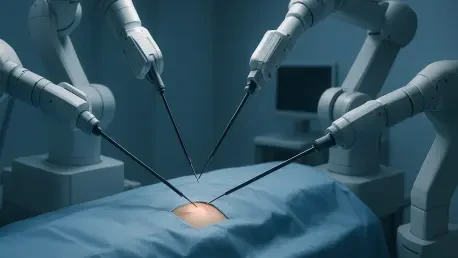

Successful adoption of robotic platforms requires a site-specific cultural integration involving nurses, technologists, and anesthesiologists alongside the primary surgeon. Emory University Hospital has established a profound benchmark in this evolution by becoming the first institution to operationalize the Liberty endovascular robotic system within a standard clinical setting. As the healthcare industry navigates through 2026, the transition toward these high-precision tools is no longer a peripheral experiment but a central strategy for addressing complex vascular conditions. Led by experts such as Dr. Zachary L. Bercu, the push for robotic integration focuses on shifting the risk-benefit ratio for patients undergoing treatments for liver cancer, kidney tumors, and chronic conditions like arthritis. By utilizing advanced image-guided medicine, interventional radiologists are finding ways to navigate the body’s most intricate pathways with a level of accuracy that was previously difficult to sustain through manual methods alone. This shift represents a commitment to the future state of medicine, where technological intervention is leveraged to reduce side effects and maximize the efficacy of localized therapies.
The movement toward robotic assistance is deeply rooted in the philosophy of “precision medicine,” aiming to provide tailored treatments that account for the unique anatomical challenges of each patient. At Emory, the focus remains on looking two decades ahead to anticipate how these systems will fundamentally alter the standard of care for the next generation of patients. The objective is not just to replace manual tasks but to enhance the physician’s ability to reach deeper into the vascular tree, delivering medication or embolization materials exactly where they are needed most. This evolution is driven by the necessity of minimizing collateral damage to healthy tissues while ensuring that high-risk procedures are performed with consistent, repeatable outcomes. As medical professionals refine their techniques in 2026, the broader interventional community is watching closely, recognizing that the integration of robotics into the angiosuite is a necessary response to the growing demand for minimally invasive yet highly sophisticated surgical options.
Technical Innovations: Portability and Compatibility
The current generation of robotic assistants has moved away from the cumbersome, fixed infrastructures that characterized early surgical robots. Systems like Liberty are built on the concept of the Portable Endovascular Disposable Robotic Assistant (PEDRA), which marks a radical departure from the massive, stationary “footprint” devices of the past. These older systems often required extensive modifications to the operating room and carried a high price tag that limited their adoption to only the wealthiest medical centers. In contrast, modern portable robots arrive in a compact form factor, roughly equivalent in size to a standard video game console, allowing them to be easily transported between different procedure rooms. This modularity means that a hospital can deploy robotic assistance on an as-needed basis without permanently dedicating floor space or incurring the massive overhead costs associated with permanent installations. The disposability factor also streamlines the sterilization process, ensuring that the components in direct contact with the patient are always pristine and ready for use.
Another transformative feature of this technology is its adherence to the “Bring Your Own Microcatheter and Microwire” (BYOMC) philosophy. In the early stages of medical robotics, many manufacturers forced physicians to use proprietary consumables, which created a significant barrier to entry and disrupted the established workflows that surgeons had perfected over years of training. The flexibility of contemporary systems allows interventional radiologists to continue using the specific tools and brands they trust most for various clinical scenarios. The robot essentially acts as a mechanical extension of the physician’s hands, providing the necessary motor control to manipulate the chosen wires and catheters with extreme finesse. This universal compatibility ensures that the learning curve focuses on mastering the robotic interface rather than relearning the tactile properties of an entirely new set of surgical instruments. Consequently, the transition to robotic-assisted surgery becomes a more natural extension of existing practices rather than a forced overhaul of the medical professional’s entire toolkit.
Advanced Operator Interfaces: The Role of Safety
The control mechanics of modern endovascular robots are designed to bridge the gap between high-tech digital interfaces and the high-stakes environment of a surgical suite. Operators guide these systems using handheld controllers that are highly reminiscent of contemporary video game hardware, featuring ergonomic grips and intuitive button layouts. However, beneath this familiar aesthetic lies a series of rigorous, FDA-approved safety protocols engineered to prevent any unintended movement during a procedure. A primary example of this is the dual-hand operation requirement, which mandates that the physician must be fully engaged with the controller for the system to execute any commands. This design serves as a “dead man’s switch”; if the operator were to drop the controller or lose their grip, the robotic system would immediately lock in place and cease all manipulation of the microwire or catheter. This ensures that the patient is protected from accidental injuries that could occur if the physician were momentarily distracted or physically incapacitated.
Beyond safety triggers, these interfaces provide a degree of fine motor control that manual manipulation often struggles to match, particularly during long and exhausting procedures. The controller typically partitions tasks between the two hands: one side is dedicated to the longitudinal movement of the microwire, while the other manages the rotation and navigation of the microcatheter. This separation of concerns allows the physician to focus on precise adjustments, such as rotating a wire a few degrees to enter a tortuous branch or advancing a catheter by fractions of a millimeter. The robotic system maintains a constant “grip” on the tools, providing superior tension control that helps stabilize the equipment within the bloodstream. This is especially critical when navigating the twisting and turning anatomy of the renal or hepatic arteries, where even a slight tremor in the hand could lead to a complication. By smoothing out these movements, the robot provides a level of mechanical stability that enhances the surgeon’s confidence and the procedure’s overall success rate.
Digital Literacy: The Evolution of Surgical Skill Sets
The integration of robotics is highlighting a fascinating intersection between digital literacy and surgical proficiency, particularly as the “Nintendo generation” of physicians enters peak professional activity. Those who have grown up playing video games and interacting with complex digital interfaces often find the transition to controller-based robotic surgery to be remarkably intuitive. This “gamer advantage” is not merely about having fun; it is about the well-developed hand-eye coordination and spatial reasoning that come from years of operating in virtual environments. For these clinicians, picking up a robotic controller feels like a natural progression rather than the adoption of a foreign technology. This familiarity allows them to focus more on the clinical nuances of the case rather than the mechanical operation of the device itself. As training programs evolve in 2026, many institutions are looking at how these digital skills can be harnessed to accelerate the proficiency of junior residents and fellows who are just beginning their interventional careers.
Despite the intuitive nature of the hardware, mastering the platform still requires a structured learning curve and the development of site-specific expertise. At pioneering centers like Emory, physicians have identified that it typically takes about five cases for a surgical team to reach a “steady state” of operational efficiency. During this initial phase, the team develops what are colloquially known as “cheat codes”—a collection of heuristic tips and tricks for using the robot to navigate specific anatomical hurdles. These might include unique controller rotations or specific sequences of movement that are more effective when performed robotically than they would be manually. This evolution of technique is not restricted to the lead surgeon; it encompasses the entire staff, as nurses and technologists must learn how to efficiently load the robot and troubleshoot the system in real-time. This collaborative learning environment ensures that the robotic platform is fully integrated into the hospital’s culture, resulting in a seamless workflow that benefits both the medical staff and the patients they serve.
Occupational Health: Mitigating Physical Strain and Radiation
One of the most significant, yet often overlooked, advantages of robotic intervention is the profound improvement it offers to the physical health of the physician. Interventional radiology is a notoriously demanding field, requiring specialists to stand for hours at the bedside while wearing heavy lead aprons to protect against radiation. This constant physical burden often leads to chronic orthopedic issues, back disabilities, and a shortened career span for many talented doctors. Robotic systems allow the operator to move away from the patient and assume a much more ergonomic position. Instead of hunching over the patient at an awkward angle to manipulate wires while looking at a distant screen, the physician can sit or stand comfortably and face a monitor directly. This shift in posture significantly reduces the mechanical strain on the spine and joints, potentially extending the professional longevity of surgeons and reducing the incidence of workplace-related injuries.
Furthermore, the introduction of robotics is a major leap forward in terms of radiation safety for medical staff. Because the robot is controlled remotely, the physician no longer needs to be in immediate proximity to the radiation “beam” during the most intensive phases of imaging. When paired with wireless foot pedals and remote control stations, the operator can move to the far corner of the room or, in some advanced setups, leave the procedure room entirely. This dramatic reduction in radiation exposure is a critical health benefit, particularly for clinicians who perform multiple procedures every day and accumulate high lifetime doses of scatter radiation. Looking ahead from 2026, this capability is laying the groundwork for “tele-catheterization,” where an expert surgeon at a central hospital could perform a procedure on a patient located hundreds of miles away in a rural or underserved area. This democratization of surgical expertise would ensure that high-end care is accessible to all, regardless of geographic location, while simultaneously protecting the health of the medical professionals delivering that care.
Clinical Implications: Toward a New Standard of Care
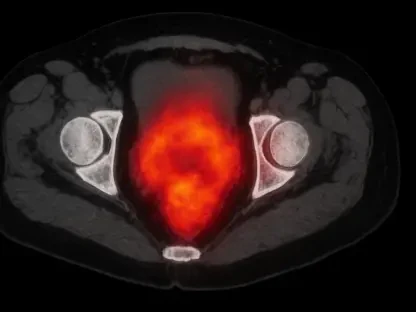
The clinical utility of robotic platforms in interventional radiology is rapidly expanding, with the technology demonstrating significant success in a wide range of complex procedures. In the treatment of liver and kidney cancer, the ability to achieve finer motor control allows physicians to navigate deep into the peripheral vasculature to deliver chemotherapy or radioactive beads directly to the tumor. This precision ensures that the therapy is concentrated exactly where it will have the most impact while sparing the surrounding healthy tissue from unnecessary damage. Similar successes have been seen in embolization procedures for enlarged prostates and chronic arthritis, where the robot’s ability to maintain a steady position within small vessels is paramount. By providing a platform that enhances the physician’s existing skills, robotic systems are helping to solve clinical challenges that were once considered too difficult or too risky to manage using traditional manual techniques alone.
The transition toward robotic-assisted care was successfully validated through rigorous clinical observation and the collection of real-world data at leading institutions. Medical leaders recognized that the value of the technology lay not in the novelty of the hardware, but in its ability to improve patient outcomes and optimize hospital workflows. As Emory University Hospital and other pioneers continued to refine their protocols, they provided a roadmap for the broader medical community to follow. The shift toward miniaturization, improved ergonomics, and radiation safety proved to be essential components of a modern interventional practice. Moving forward, the industry became focused on standardizing these robotic techniques to ensure that the benefits of precision navigation were available to every patient. The data gathered from these initial implementations served as the foundation for the next generation of image-guided medicine, where the physical constraints of the surgeon were no longer the limiting factor in the delivery of high-quality healthcare.