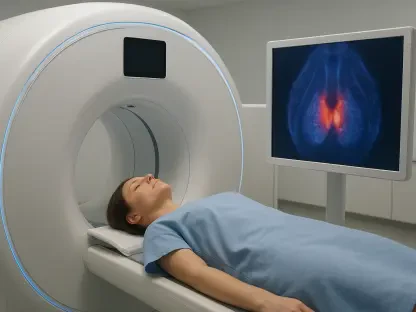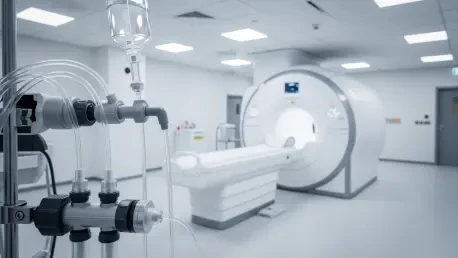

The landscape of precision medicine is undergoing a profound transformation as advanced imaging technologies provide increasingly clear windows into the human body’s complex biological systems. As the healthcare industry moves toward 2030, the market for MRI contrast agents is projected to rise from its current $1.53 billion valuation to more than $2.17 billion, reflecting a critical reliance on chemical enhancement to detect life-threatening pathologies. These specialized agents, predominantly gadolinium-based, work by subtly altering the magnetic properties of water molecules within tissues to produce images with significantly higher signal intensity. This process creates a sharp distinction between healthy and diseased regions, allowing radiologists to identify minute lesions and vascular irregularities that might otherwise remain hidden. For medical professionals, the ability to visualize these details is no longer a luxury but a fundamental requirement for early intervention and the development of personalized treatment strategies. As the demand for diagnostic accuracy intensifies, the role of these agents as essential tools in the physician’s arsenal is becoming more solidified than ever before.
The Rising Demand for High-Resolution Diagnostics
Chronic Disease: Addressing the Global Health Burden
The increasing prevalence of chronic conditions such as oncology-related illnesses and cardiovascular diseases is a primary driver behind the expanded use of MRI contrast agents in clinical settings. As the global population continues to age, the incidence of multi-system health issues has risen, necessitating more frequent and detailed diagnostic interventions to maintain patient outcomes. In the field of oncology, the ability to monitor tumor progression and evaluate the efficacy of chemotherapeutic regimens depends heavily on the high-contrast resolution provided by these specialized agents. Clinicians rely on the sharp differentiation between vascularized masses and surrounding healthy tissue to make critical decisions regarding surgical margins and treatment adjustments. This reliance is particularly evident in high-volume healthcare systems where rapid, accurate throughput is necessary to manage a growing patient load. The consistency offered by contrast-enhanced imaging ensures that longitudinal studies of chronic conditions remain reliable across different stages of care.
Beyond oncology, the role of contrast agents in managing neurological disorders has become a cornerstone of contemporary neurosurgical and psychiatric care models. Conditions such as multiple sclerosis and various forms of dementia require highly sensitive imaging to detect subtle changes in the blood-brain barrier or the presence of inflammatory plaques. The refined signal intensity provided by advanced gadolinium formulations allows for the visualization of these microscopic changes, providing a clear roadmap for early-stage intervention. As medical systems transition toward proactive health management, the integration of high-resolution diagnostics helps in reducing the long-term economic burden associated with late-stage disease complications. The ability to identify vascular issues or early-stage neurodegeneration before they manifest as severe symptoms is transforming the standard of care. This shift toward diagnostic precision is supported by a growing body of clinical evidence that emphasizes the importance of chemical enhancement in achieving definitive results for complex patient cases.
Statistical Trends: Market Expansion and Surveillance
Statistical evidence from the current period indicates a strong correlation between the rise in new cancer diagnoses and the subsequent expansion of the diagnostic imaging sector. For the growing number of individuals navigating post-treatment recovery, long-term imaging surveillance has become a standard protocol to ensure early detection of any potential recurrence. Contrast-enhanced MRI provides the necessary detail for these follow-up sessions, offering peace of mind to patients and actionable data to their medical teams. The precision of these scans is also vital for preoperative planning in complex surgeries, where understanding the exact boundaries of a lesion can significantly reduce the risk of accidental tissue damage. As healthcare providers look toward 2030, the emphasis is shifting from reactive treatment to a continuous monitoring model that utilizes these agents to maintain a high level of vigilance. This approach not only improves survival rates but also optimizes the allocation of hospital resources by targeting interventions where they are most effective.
The demand for consistency in diagnostic results is further amplified by the complexity of modern cardiovascular evaluations, where heart muscle viability must be assessed with extreme care. Contrast agents allow for the visualization of myocardial scarring and blood flow patterns that are essential for determining the necessity of invasive procedures like stent placement or bypass surgery. By providing a clear contrast between healthy and damaged muscle, these agents enable cardiologists to tailor their approaches to the specific needs of each patient’s physiology. This level of customization is a key component of the broader trend toward personalized medicine, where diagnostic data informs every step of the therapeutic journey. Furthermore, the integration of contrast-enhanced imaging in pediatric and geriatric care highlights its versatility in addressing the needs of diverse patient demographics. As imaging protocols become more standardized, the role of contrast agents as a fundamental component of the diagnostic toolkit is solidified, ensuring that high-quality care is accessible across the medical spectrum.
Technological Shifts and Market Specialization
Molecular Innovation: Safety Standards and Nanotechnology
The pharmaceutical industry is currently undergoing a transformative shift toward the development of macrocyclic contrast agents that offer superior stability and patient safety compared to traditional linear formulations. These advanced chemical structures are designed to bind gadolinium ions more tightly, significantly reducing the risk of the metal being retained in the patient’s body over time. This innovation addresses long-standing concerns regarding nephrogenic systemic fibrosis and gadolinium deposition in the brain, paving the way for more widespread use in routine diagnostics. Furthermore, the emergence of nanoparticle-based agents is opening new doors for molecular-level targeting, where agents can be engineered to attach to specific biomarkers associated with certain diseases. This targeted approach allows for a reduction in the total dosage required to achieve high-quality images, thereby minimizing potential side effects while maintaining diagnostic sensitivity. The focus on chemical safety and precision is a defining characteristic of the research and development efforts leading into 2030.
In addition to safety improvements, the industry is exploring the potential of smart contrast agents that respond to specific physiological stimuli such as pH levels or oxygen concentration. These responsive agents provide functional information about the cellular environment, going beyond simple anatomical visualization to offer insights into the metabolic state of the tissue being examined. For instance, an agent that changes its magnetic properties in response to the acidic environment of a tumor could provide a real-time assessment of disease aggressiveness. This fusion of chemical engineering and medical imaging is creating a new paradigm where the diagnostic agent itself becomes a sensor for biological processes. As these technologies mature, they are expected to play a vital role in the development of theranostics, where diagnostic imaging and targeted therapy are combined into a single clinical pathway. The integration of such sophisticated tools into the standard diagnostic workflow represents a major leap forward in our ability to understand and treat complex illnesses at the molecular level.
Market Decentralization: Expanding Access to Specialized Care
While traditional hospital settings have long been the primary hubs for advanced imaging, there is a noticeable trend toward the decentralization of these services into outpatient diagnostic centers. This shift is driven by a desire to improve patient access and reduce the logistical bottlenecks often found in large-scale medical facilities. Specialized centers focusing on fields such as sports medicine, gastroenterology, and orthopedics are increasingly adopting contrast-enhanced MRI to provide more nuanced diagnoses for their specific patient populations. This decentralization allows for a more tailored patient experience, where imaging protocols can be optimized for specific clinical questions rather than a one-size-fits-all approach. Moreover, the growth of these outpatient facilities is contributing to a more competitive market, encouraging manufacturers to produce a wider variety of contrast agents suited for different imaging environments. As these specialized clinics become more prevalent, the availability of high-resolution diagnostics is no longer restricted to urban academic medical centers.
The expansion of diagnostic capabilities in regional and specialized clinics is also supported by advancements in MRI hardware that are designed to work seamlessly with the latest generation of contrast agents. Modern scanners with higher field strengths can leverage the unique properties of these agents to produce images with exceptional clarity, even in smaller facility settings. This technological synergy ensures that the quality of diagnostic information remains consistent regardless of where the scan is performed. Additionally, the focus on specific medical niches, such as pediatric imaging, has led to the development of contrast agents with optimized safety profiles for younger patients. This level of specialization ensures that the unique physiological needs of different age groups are addressed, further enhancing the clinical utility of the imaging process. By moving diagnostic services closer to where patients live and work, the healthcare industry is effectively lowering the barriers to early detection and routine monitoring. This trend toward accessibility is a key factor in the projected growth of the contrast agent market.
Strategic Implementation of Advanced Contrast Protocols
The medical community recognized that the integration of next-generation MRI contrast agents was essential for achieving superior diagnostic outcomes. By prioritizing the adoption of macrocyclic formulations and nanoparticle-based technologies, providers successfully mitigated safety risks while enhancing the sensitivity of their imaging departments. Medical professionals realized that moving away from generic protocols toward specialized, molecular-targeted agents allowed for more precise surgical planning and more effective chronic disease management. The industry focused on training radiologists to utilize smart agents that provided metabolic insights, which transformed how oncology and neurology cases were handled. Strategic investments in outpatient infrastructure ensured that these high-resolution tools became accessible to a wider patient population, effectively decentralizing specialized care. Looking forward, the emphasis remained on the continuous refinement of chemical properties to align with higher-field MRI hardware. These collective efforts established a foundation where chemical enhancement was no longer an optional add-on but a fundamental component of proactive medicine.