
By applying the convolution theorem to light analysis, researchers have engineered a miniaturized spectrometer that delivers laboratory-grade precision at a fraction of the cost of existing hardware. This breakthrough, emerging from a strategic partnership between the University of Cambridge and the tech startup GlitterinTech, addresses a long-standing bottleneck in optical engineering that has historically limited high-end diagnostics to laboratory settings. Traditionally, the pursuit of smaller sensors has almost always come at the expense of resolution, as standard methods for dispersing light into its component wavelengths require physical distance to maintain accuracy. By reimagining the mathematical foundations of light processing, the team has produced a device roughly the size of a coin that costs only ten dollars to manufacture. This dramatic reduction in price and scale effectively dismantles the financial barriers that previously confined sophisticated spectral analysis to large research institutions and specialized industrial labs, enabling a new wave of mass-market diagnostic applications for the year 2026.
Technical Foundations and Performance Metrics
Convolutional Methodology: A Mathematical Leap in Sensing
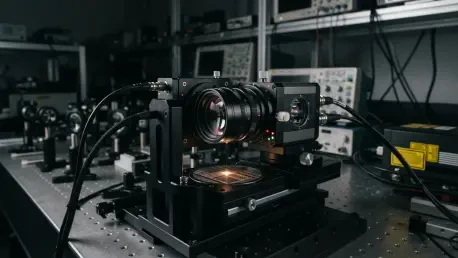
The core of this innovation lies in the transition from physical light dispersion to a mathematical reconstruction model known as a convolutional spectrometer. Traditional devices rely on prisms or gratings to separate light, which necessitates a bulky internal architecture to achieve high resolution. In contrast, this new sensor utilizes a series of sequentially arranged optical components that create a specifically defined spectral response. By applying the convolution theorem and utilizing fast Fourier transformations, the system can interpret the incoming light signals and recover a highly detailed spectrum with minimal hardware requirements. This approach allows the device to operate within the near-infrared range of 1200 to 1700 nanometers, providing the same level of data density as instruments that are hundreds of times larger. The efficiency of this mathematical process ensures that the device requires significantly less computational power than previous miniaturized iterations while remaining highly resilient to electronic interference and noise.
Furthermore, the design is inherently modular, allowing for a level of hardware flexibility that was previously unattainable in the portable sensor market. Engineering teams can now increase the spectral bandwidth or enhance the resolution of the device simply by adding more optical components to the sequence without needing to overhaul the underlying sensor architecture. During rigorous testing, the device demonstrated the capability to gather and process comprehensive data sets in less than one second, making it perfectly suited for real-time monitoring in high-stakes environments. This speed, combined with the low computational overhead, allows the spectrometer to be integrated into existing smartphone architectures or low-power wearable devices without compromising battery life or processing speed. Because the hardware relies on elegant mathematical principles rather than expensive, fragile components, it maintains a level of reliability that matches its high-speed performance, effectively bridging the gap between consumer-grade electronics and professional scientific instrumentation.
Practical Versatility: Laboratory Standards in the Field
Physical robustness is a defining characteristic of this new sensor, as it was designed to survive and function far beyond the stable, climate-controlled conditions of a traditional laboratory. The device remained fully operational across an extreme temperature range of -20°C to 80°C, ensuring its viability for outdoor environmental monitoring and high-intensity industrial applications. In liquid-based chemical analysis, the spectrometer maintained a remarkable accuracy of approximately 0.01% when determining the concentrations of various solutions. This level of precision is critical for industrial quality assurance, where even minor fluctuations in material composition can lead to significant safety risks or product failures. The sensor’s ability to provide laboratory-grade results in the heat of a factory floor or the cold of a field site represents a major shift in how companies approach material verification, as it allows for constant, decentralized testing rather than relying on periodic checks from a centralized facility.
The device also achieved a perfect success rate in classifying a wide variety of organic and synthetic materials, ranging from common household products to complex pharmaceutical compounds. In controlled trials, the sensor accurately identified substances such as coffee, flour, tea, and various plastics, effectively seeing the “hidden chemistry” that remains invisible to the human eye or standard cameras. This capability was extended to the detection of contaminants in food and liquids, providing a powerful tool for global food safety initiatives. By enabling instant verification of produce freshness and the detection of impurities in powders or solutions, the technology offered a practical solution for retailers and consumers alike. The integration of this sensor into common supply chain checkpoints allowed for a more proactive approach to quality control, identifying potential hazards before they reached the consumer. This versatility across different physical states and environmental conditions confirmed that the $10 price tag did not necessitate a compromise in performance or reliability.
Transformative Applications in Society
Personal Healthcare: The Evolution of Non-Invasive Diagnostics
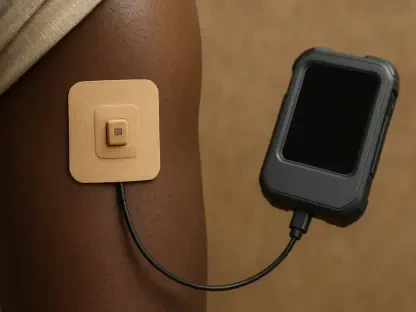
The healthcare sector stood as the most immediate beneficiary of this optical breakthrough, particularly regarding the non-invasive monitoring of critical physiological biomarkers. Clinical trials demonstrated that the sensor could accurately track skin moisture levels, blood alcohol content, and lactate concentrations in real-time under various physical conditions. Most significantly, the research team successfully utilized the spectrometer to monitor blood glucose levels without the need for invasive needle pricks. This achievement addressed a primary challenge for individuals living with diabetes, offering a potential path toward painless, continuous glucose management. By integrating the sensor into wearable devices like smartwatches or adhesive patches, the technology enabled a shift toward “invisible” healthcare, where vital signs are monitored seamlessly in the background of daily life. This allowed for more frequent data collection, providing physicians with a comprehensive view of a patient’s health rather than the snapshot provided by occasional clinical visits.
Beyond individual chronic disease management, the democratization of high-precision sensing facilitated a more proactive approach to general wellness and preventive medicine. The ability to manufacture these sensors for ten dollars meant that high-end diagnostic tools were no longer restricted to affluent populations or specialized clinics. As these sensors were incorporated into everyday consumer electronics, they provided users with immediate feedback on their physiological state, encouraging earlier intervention and more informed lifestyle choices. The transition from reactive medical treatment to continuous health oversight was accelerated by the availability of this affordable, laboratory-grade hardware. Researchers established that the $10 cost was not a barrier to quality, as the device maintained its calibration across thousands of testing cycles, proving that elegant engineering could solve complex biological monitoring problems. This advancement provided a clear template for future medical technology, focusing on making high-level diagnostics accessible, affordable, and integrated into the fabric of modern life.
Industrial Oversight: Next Steps in Quality Control
The successful deployment of the convolutional spectrometer across various industries provided a new framework for environmental and industrial oversight. In the manufacturing sector, these sensors were utilized on assembly lines to monitor the consistency of plastic polymers and pharmaceutical mixtures in real-time, drastically reducing the rate of material waste. Environmental researchers leveraged the portability of the device to conduct high-frequency water quality and soil health assessments in remote locations, which previously would have required expensive logistical support to transport samples to a lab. This decentralized data collection allowed for a more granular understanding of environmental changes, enabling faster responses to pollution or ecological shifts. By making sophisticated sensing affordable, the innovation empowered smaller organizations and local municipalities to take control of their own monitoring efforts, leading to a more collaborative and data-driven approach to global safety and environmental protection.
Actionable next steps following this development involved the widespread integration of these sensors into the global Internet of Things ecosystem to create a massive network of chemical and biological data points. The focus shifted toward developing standardized software interfaces that allowed different industries to easily interpret the spectral data produced by the hardware. This facilitated the creation of massive material libraries, where the optical signatures of thousands of substances were cataloged and shared across platforms for instant identification. Future considerations included the development of even wider spectral bandwidth sensors using the same convolutional principles to expand the range of detectable chemicals. The triumph of this research lay in its ability to prove that complex scientific challenges could be solved through mathematical insight rather than increasing hardware complexity. By bringing the cost of precision sensing down to a nominal level, the Cambridge team and their partners set a new standard for the democratization of technology, ensuring that the tools of the future remained within reach of the entire global community.