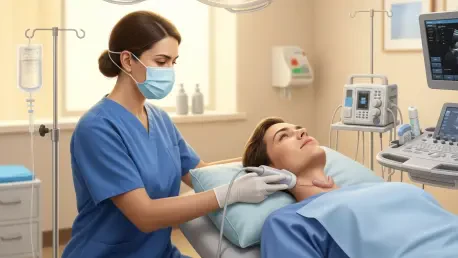

The medical landscape in Eastern India is currently undergoing a monumental shift as specialized oncology services finally bridge the gap between rural necessity and urban availability. For decades, a diagnosis of thyroid cancer for a resident of Bihar or Jharkhand often meant an immediate and stressful exodus toward metropolitan centers like Delhi or Mumbai, adding financial exhaustion to an already heavy emotional burden. This geographic disparity in healthcare access created a bottleneck where patients frequently delayed life-saving treatments due to the sheer logistical complexity of traveling thousands of miles for specialized care. The recent establishment of a comprehensive thyroid cancer treatment facility at AIIMS Patna represents a pivotal turning point, effectively dismantling these barriers. By consolidating high-end diagnostics and therapeutic interventions into a single regional hub, the institution is not merely adding beds but is fundamentally re-engineering the patient journey for thousands of people.
Building on this structural advancement, the institute has integrated the revolutionary concept of Theranostic Nuclear Medicine to provide a more cohesive clinical experience. This sophisticated approach utilizes the same biological pathways for both identifying and treating malignant cells, creating a seamless loop from detection to eradication. In the past, a patient might have visited multiple clinics for imaging, surgery, and subsequent radiation, but the new centralized model at AIIMS Patna eliminates these fragmented steps. By offering a unified infrastructure where every stage of the oncological process is managed under one roof, the hospital significantly reduces the time between diagnosis and the commencement of therapy. This efficiency is critical in oncology, as early intervention often dictates the long-term prognosis. Consequently, the regional healthcare system is moving away from a model of referral and toward a model of self-sufficiency that prioritizes the patient’s time and resources.
Technological Precision: The Role of Targeted Radio-Iodine Therapy
The technical backbone of this new facility rests on the deployment of advanced PET-CT scans and gamma camera imaging, which provide clinicians with unprecedented anatomical and functional clarity. These tools allow medical teams to pinpoint the exact location of primary tumors and, more importantly, identify any metastatic spread to distant organs or lymph nodes that might otherwise remain undetected. Once the diagnostic phase is complete and the surgical removal of the thyroid gland is performed, the focus shifts to the therapeutic application of radio-iodine. This targeted treatment specifically seeks out and destroys any residual microscopic cancer cells that may have lingered post-surgery. Because thyroid cells have a unique affinity for iodine, this radioactive isotope acts like a guided missile, delivering a lethal dose of radiation to malignant tissues while sparing the surrounding healthy structures. This level of precision is the gold standard in modern oncology, ensuring that the treatment is as effective as it is minimally invasive for the patient’s overall health.
This strategic investment in nuclear medicine marks the beginning of a broader movement toward affordable, high-tech healthcare within the government sector. As the only state-run institution in the region to provide such a comprehensive suite of thyroid services, AIIMS Patna is setting a new benchmark for public health expectations. The facility is designed to scale its operations from 2026 to 2028, aiming to accommodate an increasing volume of patients who previously had no choice but to seek expensive private care. By offering these advanced procedures at a fraction of the market cost, the institute is effectively democratizing access to elite medical technology. Moving forward, healthcare providers in the region should focus on establishing early-screening protocols and public awareness campaigns to ensure that these new facilities are utilized at the earliest possible stage of the disease. Strengthening the referral networks from smaller district hospitals to this central hub will be the next logical step in creating a truly resilient and comprehensive cancer care ecosystem for the population of Northern India. This transition proved that localizing specialized medicine is the most effective way to improve survival rates and reduce the socioeconomic impact of chronic illness.