
The oncology landscape is currently undergoing a massive shift with the rise of Radioligand Therapy, a revolutionary approach that combines molecular precision with the destructive power of radioactive isotopes. Unlike traditional pills or biological drugs that rely primarily on chemical interactions, this new class of medicine is governed by the rigid laws of nuclear physics, presenting a unique set of challenges for healthcare systems across the globe. The central struggle for the Asia-Pacific region involves mastering the “Isotope Clock,” which refers to the unstoppable and relentless decay of radioactive matter that begins the very second an atom is created in a reactor or accelerator. As clinical demand surges for these targeted treatments, the distinction between being a downstream consumer and an upstream producer has become the primary factor in determining which nations will lead the next generation of cancer care. Sovereignty in this field is no longer just a matter of pharmaceutical manufacturing; it is a question of controlling the physical source of the medicine itself before it disappears into thin air.
The Physics of Disappearing Medicine
Navigating the Decay Window: The Race Against Time
The current industry standard for therapeutic isotopes is Lutetium-177, a beta-emitter that has transformed the treatment of prostate cancer and neuroendocrine tumors due to its effective energy profile and manageable logistics. With a half-life of approximately 6.6 days, Lutetium-177 offers a narrow but workable window for international shipping under ideal conditions, yet this timeframe remains fraught with operational risks. By the time a batch of the isotope is purified at a nuclear facility, transported to a pharmaceutical lab to be conjugated with a targeting molecule, and then cleared through rigorous quality control protocols, a significant portion of its radioactivity has already diminished. This logistical pressure creates a scenario where a single flight delay or a minor customs bottleneck does not simply result in a late delivery; it can render the medicine entirely useless, forcing the cancellation of patient appointments and the waste of high-value clinical resources.
To mitigate these inherent risks, the industry in Asia is increasingly prioritizing the establishment of “green lanes” and specialized courier networks that operate outside the traditional cargo paradigms. In high-density regions such as Southeast Asia and the coastal provinces of China, the proximity between the production site and the treatment center is becoming the most critical variable in the clinical success of Radioligand Therapy. Because the therapeutic punch of these drugs is tied directly to their radioactivity at the moment of injection, any time lost in transit is effectively a reduction in the drug’s dosage and efficacy. Consequently, the focus has shifted toward building regional manufacturing hubs that can serve multiple metropolitan areas within a six-hour transport radius, ensuring that the medicine arrives at the hospital with the maximum possible energy for the patient.
Advancing Alpha Emitters: The Potency of Actinium and Lead
While beta-emitters like Lutetium have laid the groundwork, the next frontier in the field involves alpha-emitting isotopes such as Actinium-225, which are prized for their ability to deliver much higher energy over a significantly shorter range. Actinium-225 possesses a 10-day half-life, making it slightly more stable for distribution than some of its counterparts, yet its supply remains extremely constrained because it has historically been harvested from limited Cold War-era stockpiles of Thorium-229. The clinical potential of alpha particles is immense, as they can cause irreparable double-strand breaks in the DNA of cancer cells while sparing the surrounding healthy tissue from unnecessary radiation exposure. However, the scarcity of Actinium-225 has created a bottleneck that prevents widespread adoption in the Asia-Pacific region, leading to a frantic search for domestic production methods that do not rely on aging foreign stockpiles.
At the most extreme end of the logistical spectrum is Lead-212, an isotope with a half-life of only 10.6 hours that requires a radically different approach to manufacturing and delivery. Because more than half of the material decays every ten hours, Lead-212 cannot be shipped across international borders or even across large countries using conventional methods; instead, it demands a decentralized production model where the medicine is created almost at the bedside. This necessitates the installation of “generator” technology or small-scale automated labs directly within hospital systems or very close to clinical centers. For a production site to be viable for Lead-212, it must be located within a few hours’ drive of the patient, making geographical proximity a non-negotiable component of the business model. This shift toward ultra-local production is forcing a total rethink of how pharmaceutical companies interact with hospital infrastructure across Asia.
Financial Drivers and the Theranostic Strategy
Commercial Realities: The See-and-Treat Revolution
The market demand for radioligands is experiencing an unprecedented surge, largely driven by the massive commercial success of blockbuster therapies that have proven the financial viability of nuclear medicine. Investors have taken note of how these radioactive molecules have transitioned from niche experimental treatments to billion-dollar assets, leading to a projected annual growth rate of over 22% in the Asia-Pacific nuclear medicine sector through the end of the decade. The appeal lies in the “theranostic” model, which elegantly combines diagnostic imaging and targeted therapy into a single, cohesive clinical workflow. By using a diagnostic isotope like Gallium-68 to visualize the tumor first, clinicians can confirm that the targeting molecule is successfully binding to the cancer cells before they ever administer the therapeutic dose. This ensures that the expensive therapeutic isotope is only used on patients who are virtually guaranteed to respond to the treatment.
This “see-and-treat” methodology provides a level of certainty and efficiency that is rarely seen in traditional oncology, making it highly attractive to healthcare payers and private hospital groups. Once a medical facility invests in the expensive PET/CT scanners and lead-shielded hot labs required for the diagnostic phase, it becomes a permanent and lucrative node in the supply chain for therapeutic isotopes. This structural stability is attracting significant interest from global pharmaceutical giants who are looking to secure long-term revenue streams by locking in hospital networks. In Asia, where private healthcare groups play a major role in the medical landscape of countries like India, Malaysia, and Thailand, the adoption of theranostic infrastructure is seen as a key competitive advantage that can attract international medical tourists seeking the most advanced cancer care available.
Capital Inflow: The Industrialization of Nuclear Medicine
The industrialization of the radioligand sector in Asia is being accelerated by a massive influx of capital from both state-backed funds and private equity firms focused on biotechnology infrastructure. These investors are moving beyond just funding drug discovery; they are increasingly financing the “hard” assets of the industry, such as high-energy cyclotrons and automated radiochemistry suites. Unlike traditional drug manufacturing, where the primary costs are related to raw materials and laboratory labor, the radioligand industry requires massive upfront investments in heavy machinery and radiation shielding. However, once this infrastructure is in place, it creates a high barrier to entry for competitors and provides a reliable platform for launching multiple different drug candidates. This capital-intensive nature of the business is leading to a consolidation of the market, where a few well-funded players are beginning to dominate the regional landscape.
Furthermore, the rise of domestic radioligand startups in hubs like Sydney, Seoul, and Shanghai is creating a vibrant ecosystem where innovation is no longer strictly imported from the West. These companies are leveraging their local knowledge to navigate complex regulatory environments and build tailored logistics solutions that work within the specific constraints of Asian infrastructure. By developing their own proprietary molecules and securing domestic isotope sources, these regional players are attempting to bypass the dependency on North American and European supply chains. This trend is not just about profit; it is about creating a self-sustaining medical economy where the critical components of cancer care are developed, manufactured, and administered within the same geographic region, thereby reducing the vulnerability to global political and economic shifts.
Breaking the Western Supply Monopoly
Global Vulnerabilities: The Risk of Centralized Production
A significant hurdle facing the radioligand market is the extreme concentration of the global isotope supply in a handful of aging nuclear reactors located primarily in Europe and North America. This centralized production model creates a massive systemic risk for the rest of the world, as any technical failure or scheduled maintenance at one of these facilities can trigger an immediate global shortage. In recent years, outages at major reactors have caused widespread disruptions, forcing hospitals to pause life-saving clinical trials and leaving thousands of patients without access to necessary treatments. For nations in the Asia-Pacific, being at the end of a long and fragile supply chain means they are often the first to lose access during a crisis, highlighting the urgent need for regional isotope independence.
The gap between the soaring demand for isotopes like Actinium-225 and the current global output is staggering, with modern facilities only producing a small fraction of what is needed for late-stage clinical trials. Many Asian pharmaceutical companies find themselves at a disadvantage, often having to wait months for material that is prioritized for Western domestic markets. This scarcity has transformed isotopes into a strategic commodity, much like rare earth metals or high-end semiconductors, where access to the “raw material” is the primary bottleneck for technological progress. To address this, regional powers are now treating isotope production as a matter of industrial policy, seeking to build their own facilities to insulate their healthcare systems from the volatility of the global market.
Technical Innovation: Cyclotrons and Accelerator Platforms
To break the reliance on traditional nuclear reactors, researchers and companies across Asia are turning to alternative production technologies such as high-energy cyclotrons and electron accelerators. These machines offer a cleaner and more flexible way to produce medical isotopes without the long-term environmental and security concerns associated with nuclear fission. Cyclotrons can be installed in urban or suburban settings, much closer to the point of care, allowing for the production of isotopes with shorter half-lives that would otherwise be impossible to transport. This technological shift is democratizing the production of radioactive atoms, enabling even smaller nations to establish their own domestic supply chains for high-demand diagnostic and therapeutic materials.
In addition to traditional cyclotrons, the development of massive, high-power linear accelerators is promising to solve the global Actinium-225 shortage. Several major partnerships have formed between regional energy companies and biotech startups to build these “isotope factories” that can churn out medical-grade materials at an industrial scale. By using accelerators to bombard targets with high-speed particles, producers can create specific isotopes with high purity and without the radioactive waste associated with reactor-based methods. This move toward an “accelerator-first” strategy is a key component of the Asia-Pacific’s roadmap for radioligand sovereignty, as it allows the region to leapfrog the older reactor-based infrastructure of the West and build a more modern, efficient, and localized production network.
Strategic Regional Power Plays
Domestic Initiatives: The Australian and Korean Models
Australia currently stands as a regional leader in the radioligand space, possessing a comprehensive “full stack” ecosystem that ranges from the domestic production of isotopes to the successful commercialization of global drug candidates. The OPAL multi-purpose reactor at Lucas Heights provides a stable source of Lutetium-177, while the country’s significant mining industry offers access to the raw materials needed for next-generation alpha emitters. This vertical integration has allowed Australian biotech firms to move faster than many of their international peers, conducting clinical trials and bringing new products to market with a degree of supply chain security that is the envy of the region. By owning both the “atoms” and the chemistry, Australia has created a blueprint for how a mid-sized power can dominate a high-tech medical niche.
South Korea has followed a similarly aggressive path, but with a more direct state-driven approach that treats isotope self-sufficiency as a critical component of national security. After several instances where reactor outages abroad left Korean patients in a precarious position, the government published a comprehensive roadmap to become a net exporter of medical isotopes by the middle of the next decade. Significant investments are being poured into the Hanam reactor project and other specialized facilities designed specifically for medical production. This state-led strategy ensures that the necessary infrastructure is built even when the immediate commercial return might be uncertain, prioritizing the long-term health and economic resilience of the nation over short-term financial gains. This proactive stance has already made South Korea a hub for Actinium-225 research and production.
Bridging the Infrastructure Gap in China and Japan
Japan has long been a global diagnostic powerhouse, boasting one of the world’s highest densities of cyclotrons per capita, which has traditionally been used for advanced medical imaging. However, the Japanese pharmaceutical industry is now undergoing a strategic pivot to leverage this existing infrastructure for therapeutic purposes. Major domestic firms are forming alliances with international isotope producers to build out the “hot lab” networks required for the delivery of radioligands like Lead-212. Japan’s compact geography and highly efficient transportation networks make it an ideal environment for isotopes that require rapid, local delivery. By repurposing its diagnostic expertise for therapy, Japan is positioning itself to become the primary hub for localized radioligand manufacturing in North Asia.
China represents the largest potential market for these therapies, yet it still faces significant structural challenges that must be overcome to achieve true sovereignty in the field. While Chinese biotech companies are rapidly advancing their own radioligand pipelines, the country currently lacks the number of PET/CT scanners and specialized nuclear medicine physicians found in more developed healthcare systems. Furthermore, many of the leading Chinese players still rely heavily on Western partnerships to secure the reliable isotopes needed for their clinical trials. To bridge this gap, the Chinese government is encouraging the development of domestic “isotope parks” where reactors, accelerators, and pharmaceutical labs are co-located. This effort to centralize the supply chain is aimed at reducing logistical friction and ensuring that China can meet the massive domestic demand for advanced cancer treatments without relying on external suppliers.
Redefining Healthcare Autonomy
Mastering the Logistics of the Hot Lab
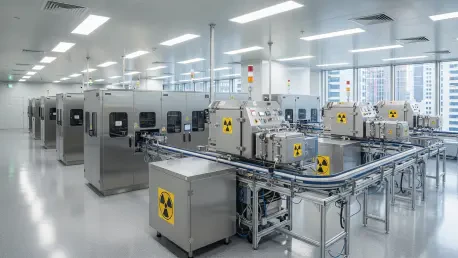
The ultimate success of the radioligand revolution in Asia will depend on the region’s ability to master the complex logistics of the “hot lab,” where the raw radioactive atoms are transformed into sterile, patient-ready medicine. This process is far more demanding than traditional drug compounding, as it requires specialized robotic equipment, lead-shielded environments, and real-time monitoring of radioactive decay. As the industry moves toward using alpha emitters with even shorter half-lives, the traditional model of a single large factory serving an entire continent will become obsolete. Instead, the future belongs to a network of decentralized manufacturing sites that function like “medical micro-factories,” located within or very close to major hospital centers to ensure the drug reaches the patient at peak potency.
Securing sovereignty in this context means more than just having a domestic reactor; it requires the entire supporting ecosystem, from specialized logistics software that tracks isotopes in real-time to a highly trained workforce capable of handling nuclear materials safely. Nations that fail to develop this integrated infrastructure will remain dependent on the maintenance schedules and export policies of foreign entities, potentially leaving their citizens at a disadvantage in the fight against cancer. By investing in the “last mile” of delivery, Asian countries are not just improving patient outcomes; they are building a robust and autonomous medical-industrial base that can respond to the unique needs of their populations. This focus on logistical mastery is what will separate the leaders of the radioligand era from those who simply follow the trends.
Securing the Final Mile of Precision Oncology
The transition toward regional self-sufficiency proved to be the defining characteristic of the pharmaceutical landscape as the decade progressed. Nations that prioritized the construction of domestic accelerators and streamlined their regulatory “green lanes” for radioactive materials successfully insulated their populations from global supply shocks that had previously derailed clinical progress. This strategic shift not only secured consistent patient access to life-saving treatments but also catalyzed a new era of economic growth centered on high-tech nuclear medicine and localized manufacturing. The successful players in the Asia-Pacific region demonstrated that clinical excellence remained inseparable from logistical mastery and upstream control of the atomic supply chain, effectively ending the era of Western isotope monopolies.
Stakeholders within the Asian healthcare sector emphasized the need for continued investment in both human capital and physical infrastructure to maintain this momentum. Moving forward, the focus shifted toward harmonizing regional regulations to allow for the rapid cross-border movement of short-lived isotopes where domestic production was not yet feasible. Policymakers and industry leaders recognized that while the “Isotope Clock” remained a formidable challenge, it also served as a catalyst for innovation in decentralized manufacturing. By embracing the unique physics of radioligands, the region established a new standard for oncology that was both technologically advanced and geographically resilient. This evolution ultimately transformed the way cancer was treated across the continent, proving that sovereignty in medicine was achievable through a combination of atomic ownership and logistical precision.