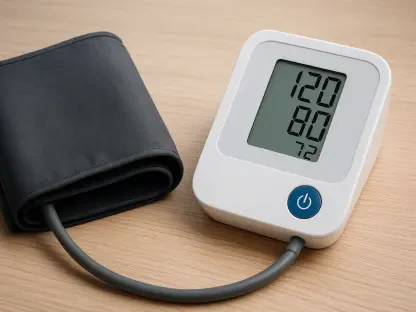

A patient with congestive heart failure could receive an alert before the crisis begins. Wearable sensors detect subtle changes days before a problem comes up and alerts the care team before the situation requires emergency intervention. This is the operational reality that connected medical devices are delivering at scale, and it represents a fundamental shift in how healthcare executives must think about technology investment. The Internet of Medical Things (IoMT) is a strategic infrastructure decision that directly affects readmission rates, operational costs, care capacity, and patient retention. This article covers how healthcare executives can lead that transition, from building the right technical foundation and addressing data interoperability to managing cybersecurity risk and deploying AI that turns continuous sensor data into timely clinical action.
From Episodic Visits to Continuous Monitoring
Traditional healthcare operates on a reactive premise: patients seek care when something feels wrong. The clinical and financial problem with that model is that serious conditions rarely announce themselves before significant damage has occurred. Connected medical devices change the equation by moving the point of care from the clinic into the patient’s daily environment.
Wearable sensors and remote patient monitoring systems now track heart rate, blood pressure, glucose levels, and oxygen saturation continuously. For healthcare leaders managing chronic disease populations, this real-time visibility reduces emergency department pressure and creates more predictable, manageable care patterns. Healthcare organizations with mature connected device programs have reported 50% hospital readmission rate reductions for cardiac patients. Those are not marginal efficiency gains. They are the kind of outcome improvements that reshape reimbursement conversations and strengthen the case for technology investment at the board level.
Connected care also positions hospitals well for value-based care models, where reimbursement ties to long-term health outcomes rather than service volume. Providers that can prove their connected care programs reduce emergency visits, stabilize chronic conditions, and improve patient adherence are better positioned to succeed financially as reimbursement models continue shifting toward outcome-based performance.
Delivering those outcomes consistently requires more than connected devices alone. It depends on a secure and scalable digital foundation that enables data to move reliably across care settings and supports real-time clinical decision-making.
Building the Technical Foundation for Connected Care
Connected healthcare technology only delivers value when the underlying infrastructure can move clinical data securely and fast enough to support real-time decision-making. This is less about technical design choices and more about ensuring the system can support clinical and operational reliability at scale.
Different connected device use cases require different connectivity approaches. High-bandwidth monitoring applications use 5G networks. Personal wearables typically use short-range wireless protocols optimized for battery efficiency. Devices that follow patients across geographic boundaries, such as remote cardiac monitors used during travel, require cellular connectivity that roams across networks automatically. Matching the connectivity approach to the clinical use case affects device reliability and ultimately the quality of the clinical data the device generates.
Local data processing, where the device or a nearby system analyzes data before sending it to the cloud, has become a critical capability for time-sensitive healthtech applications. For life-critical devices such as automated insulin delivery systems or cardiac monitors, processing speed directly affects patient safety. A delayed alert is not an inconvenience. It is a potential adverse event. Healthcare leaders evaluating connected care vendors should view reliability and responsiveness as core safety requirements, not optional features.
The strategic value of that infrastructure becomes clearer when health organizations begin operating connected care programs at scale. The ability to collect, process, and prioritize patient data efficiently has direct implications for staffing models, resource allocation, operational costs, and long-term system capacity.
The Operational Economics of Connected Healthcare Technology
At scale, health systems face a clear operational challenge: rising costs, persistent staff shortages, and growing patient populations that demand more capacity than current staffing models can efficiently support. Connected healthcare technology addresses that challenge directly by allowing clinical staff to monitor more patients more effectively without proportional increases in headcount.
A single registered nurse using a connected monitoring platform can oversee dozens of remote patients simultaneously, receiving alerts only when clinical intervention is required. This model does not replace clinical judgment. It repositions clinical expertise toward higher-value decisions and away from routine monitoring activity.
As programs scale, efficiency gains compound. Healthcare systems can expand chronic disease management and patient populations without equivalent growth in administrative burden. Research from healthcare systems with mature connected device programs consistently demonstrates improvements in resource allocation efficiency. Realizing these gains depends on one condition: patient data must flow across systems in a coordinated way. Without interoperability, connected healthcare programs risk fragmentation that limits their effectiveness.
Solving the Interoperability Problem
Connected healthcare technology creates value only when data flows freely across systems. The biggest obstacle to that value is data fragmentation, where patient information remains isolated in proprietary systems that cannot communicate with electronic health records, specialty platforms, or competing devices. A cardiac monitoring system that cannot share data with the patient’s primary care record does not improve coordinated care. It creates another silo.
The healthtech industry has moved toward open data exchange standards, most notably Fast Healthcare Interoperability Resources (FHIR) created by Health Level Seven International (HL7), as the common framework for sharing clinical data across platforms. Healthcare leaders evaluating connected device investments should treat interoperability compliance as a non-negotiable procurement requirement rather than a feature to negotiate. Vendors that trap data in proprietary formats create long-term dependency that limits clinical effectiveness and constrains future technology choices.
Health organizations that prioritize interoperability gain a more complete clinical view, improve coordination across care teams, and preserve the ability to adopt better technologies over time without structural lock-in. At the same time, greater connectivity across devices and platforms increases exposure to cybersecurity threats, making security inseparable from operational resilience.
Security as a Board-Level Healthcare Technology Priority
Every connected medical device expands the attack surface of the healthcare system. As deployments scale, cybersecurity shifts from an IT concern to a board-level responsibility. The risk is not abstract. A compromised device can create both data exposure and, in some cases, clinical risk. Healthcare executives must ensure connected device programs include strong encryption, strict access controls, and network segmentation that prevents compromised devices from becoming entry points into broader clinical or administrative systems.
This level of security is not simply a compliance requirement. It is essential to maintaining patient trust and protecting the long-term credibility of connected care programs. A major healthcare breach can damage organizational reputation, weaken patient confidence, and reduce participation in the digital health initiatives designed to improve outcomes. The goal for healthcare leaders should be operational containment, ensuring that a single compromised endpoint cannot cascade across the organization.
Once connected healthcare systems reach a level of interoperability and security, the challenge shifts from managing data flow to making that data clinically actionable at scale. Artificial intelligence is increasingly becoming the layer that transforms continuous data streams into timely clinical insight.
AI as the Intelligence Layer in Connected Healthcare Technology
Connected devices generate continuous streams of physiological data across large patient populations. Without an intelligence layer to analyze, prioritize, and contextualize that data, the volume becomes unmanageable and the clinical signal gets lost in noise. Artificial intelligence helps convert this data into actionable clinical intelligence.
AI systems identify patterns that signal emerging risk earlier than traditional monitoring approaches. Early-stage cardiac arrhythmias, deteriorating respiratory function, and emerging diabetic complications often show measurable physiological signals hours or days before a patient experiences symptoms. Pattern recognition systems trained on large clinical datasets can flag these signals and surface them to care teams with recommended interventions.
Healthcare leaders evaluating AI capabilities in healthtech platforms should focus less on the sophistication of the underlying algorithms and more on the clinical workflow integration. AI only creates value when insights are delivered directly into clinical workflows where decisions are made. If insights are isolated in separate systems, they have limited impact on care outcomes. When embedded into existing workflows, they can meaningfully influence clinical decisions and reduce adverse events. As AI improves remote monitoring capabilities, connected healthcare technology is also expanding the geographic and structural reach of care delivery.
Expanding Healthcare Access Through Connected Technology
Connected healthcare technology extends care delivery beyond traditional geographic constraints. Rural communities, underserved urban populations, and patients with mobility limitations can now access continuous monitoring and specialist input without requiring physical proximity to care facilities. This shift is significant for chronic disease management, where consistent monitoring is often more important than in-person visits. Patients can remain connected to clinical teams regardless of location, enabling earlier intervention and more continuous oversight.
During system-wide disruptions or public health events, distributed monitoring also helps reduce pressure on centralized healthcare facilities by enabling remote triage and early detection. Healthcare organizations that invest in connected care infrastructure are not only improving efficiency. They are expanding their effective service footprint and strengthening long-term patient relationships.
Conclusion
Connected healthcare technology has moved past the pilot phase. The health organizations that treated IoMT as a peripheral experiment five years ago are now managing the consequences: higher readmission rates, less efficient clinical staffing, limited capacity to scale chronic disease programs, and growing gaps relative to competitors who made the investment. The economic and clinical case for connected care is no longer speculative. It is documented in the outcomes of healthcare organizations that committed to the infrastructure, the security posture, the interoperability standards, and the AI capabilities required to make it work.
Healthcare leaders who have not yet aligned their technology investment strategy with the shift toward continuous, data-driven care are not simply behind on a technology trend. They are operating a care delivery model that is becoming less competitive with every year that passes. The financial pressure of value-based reimbursement, the operational pressure of labor shortages, and the demographic pressure of aging populations are all moving in the same direction. Connected healthcare technology is how leading clinicians are managing all three simultaneously.
The question for every healthcare executive is whether the organization is moving fast enough and investing strategically enough. The priority is building a secure and scalable connected care infrastructure that supports continuous patient monitoring and value-based care delivery. As the competitive and regulatory environment tightens, the cost of delay may soon become too high to absorb.