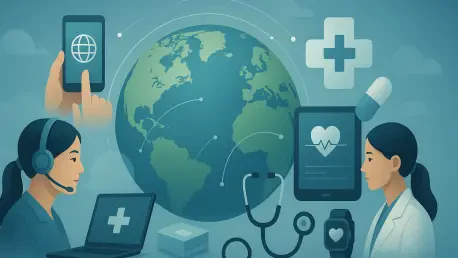

Healthcare organizations increasingly rely on a wider service ecosystem of advisors, managed service providers, and global capability centers to modernize. Healthcare leaders face a market where digital change, guided by ethical AI frameworks, is driving competition. The discussion below looks at how these service models are shaping HealthTech adoption and care delivery.
Drawing on global service models and the current state of clinical automation, this discussion gives a broad view of how healthcare organizations can run their operations more efficiently. It favors actionable insights and measurable business impact. Readers will see how managed services, global capability centers, and digital health innovations are converging to change how care is delivered, paid for, and managed.
This article explores how:
- Agentic AI and managed services are changing operations at health systems, payers, and life sciences firms;
- Digital health platforms, clinical AI, and remote monitoring are improving patient access and clinical workflows;
- Responsible AI, data governance, and human oversight shape the practical use of AI across healthcare and the services that support it;
- Global capability centers and workforce strategies help healthcare organizations scale clinical and technical expertise.
Navigating Modern Managed Services and Health Systems
Health systems and their service partners are prioritizing agentic AI, starting with administrative work such as revenue cycle management, prior authorization, claims, and scheduling. Their strategies are shifting from simple automation toward autonomous agents that can run complex workflows with limited human intervention. Broad adoption is still ahead. Between December 2025 and May 2026, only 17% to 20% of U.S. businesses used AI, rising to 37% among firms with 250 or more employees, according to the Census Bureau’s Business Trends and Outlook Survey. Physicians are moving faster. More than four in five U.S. physicians (81%) now use AI in their practices, more than double the 2023 rate, according to the American Medical Association.
Effective agents need AI-ready data because their performance depends on the quality and governance of the information they use. In healthcare, that means clean, interoperable patient and claims data. Modernization programs now report directly to health system leadership and move legacy billing and data systems to the cloud. Organizations that treat AI as a foundational capability can respond more proactively to market volatility. A focus on responsible AI keeps transparency central, protecting patient trust while improving efficiency.
HealthTech Dealmaking and Transaction Strategy
The move toward executive-level advisory centers on leadership responsibilities, often through specialized arms that handle growth strategy and transaction execution. This consulting stands apart from general advisory by focusing on high-stakes decisions and long-term value creation. In healthcare, it covers health system mergers, due diligence on digital health targets, and private equity investment in physician practices and care delivery. Kaufman Hall counted 18 announced hospital and health system transactions in Q2 2026, among the highest Q2 totals since 2019. Two-thirds involved systems that sought a partner themselves. Investors are also returning to digital health. U.S. startups raised $7.4 billion across 244 deals in H1 2026, up from $6.4 billion a year earlier, according to Rock Health.
Organizations increasingly want a single narrative that ties their financial goals to operational realities. Specialized expertise for health system CEOs and CFOs keeps strategic planning both industry-specific and scalable. Leaders can then approach affiliations, service line restructuring, or market expansion with a clear understanding of the risks and rewards. The goal is a cohesive strategy built around strong transaction execution.
Managed Services and Global Capability Centers
A major trend in current operational models is the rise of the as-a-service paradigm and the professionalization of Global Capability Centers. Leading firms have moved beyond project-based consulting into long-term operational partnerships, offering managed services across revenue cycle, health IT, cybersecurity, and regulatory compliance. This lets providers and payers outsource critical but non-clinical functions, freeing internal resources for patient care and innovation. Cybersecurity is a pressing concern. Healthcare has had the costliest data breaches of any industry for 14 years, averaging $7.42 million per breach in IBM’s 2025 study, and its breaches took the longest to identify and contain, at 279 days.
The development of capability-center-as-a-service playbooks reflects a global consensus that operational efficiency is best achieved through a blend of internal hubs and external expertise. Life sciences leads the way. Twenty-three of the world’s top 50 life sciences companies have capability centers in India, according to EY, handling work such as clinical data management, drug safety monitoring, and regulatory submissions. By optimizing offshore and nearshore operations, companies can maintain a 24-hour business cycle while ensuring consistent quality across all regions. This maturity in managed services provides a stable foundation for scaling.
Regulation, Compliance, and Sustainability in Healthcare
Compliance is one of the heaviest service demands in healthcare, covering patient privacy rules such as HIPAA, medical device regulation and, increasingly, AI. Automated compliance and reporting platforms reduce the risk of manual error and improve transparency. The regulatory picture is shifting, though. Under the EU’s May 2026 agreement to amend the AI Act, high-risk obligations for AI built into regulated products such as medical devices now apply from August 2028, and those for stand-alone high-risk systems from December 2027.
The EU’s December 2025 deal to simplify its sustainability reporting rules limits mandatory reporting to companies with more than 1,000 employees and over €450 million in net turnover. The stated aim is to reduce the reporting burden and limit the trickle-down of obligations to smaller companies. For large health systems and pharmaceutical companies, sustainability is still becoming a standard measure of performance. The sector’s footprint is significant: health care accounts for 4.4% of global net greenhouse gas emissions, according to a 2019 Health Care Without Harm estimate. Taken together, this broad view of risk keeps healthcare organizations resilient.
Digital Health Platforms and Patient Access
In healthcare technology, the focus has moved to a digital front door that makes it easier for patients to get care. Telehealth services and clinician marketplaces are central to this effort, particularly in fast-developing markets across the Middle East, North Africa, and India. India’s scale shows the demand. Its national telemedicine service, eSanjeevani, passed 500 million consultations across all 36 states and union territories in September 2026.
These platforms combine doctor discovery, video consultations, and pharmacy integration in one place, replacing fragmented, phone-based booking systems. The main goal is to broaden access and create a smoother experience for patients navigating complex healthcare networks. Providers in Europe and the Middle East are building trust and efficiency with verified patient reviews and practice management software. Digital-first care gives providers better control over patient volume and lets people quickly find and book the right level of care.
Clinical AI and Decision Support
The intelligence layer of modern medicine is defined by software that influences or produces clinical judgments through diagnostic accuracy and administrative efficiency. Clinical AI and decision support tools increasingly follow a human-in-the-loop model, where technology assists clinicians, and the clinician keeps the final say. Ambient AI scribes now convert patient conversations into clinical notes. A randomized trial of 238 physicians at UCLA Health found that one such tool reduced time spent on notes by 9.5% compared with the control group, and burnout scores improved by about 7%.
The same trial found that AI-generated notes occasionally contained clinically significant errors, which is why clinicians still review them. In diagnostics, symptom assessment engines and imaging software interpret complex data such as X-rays and genomic sequences. This work supports faster triage and treatment plans tailored to each patient’s genetic profile. These advancements represent a critical step toward a more data-driven healthcare system today.
Remote Patient Monitoring and Wearable Technology
Healthcare is increasingly moving out of traditional clinical settings and into patients’ daily lives through sophisticated monitoring and wearable technology. This trend covers a wide spectrum of devices, from clinical-grade remote patient monitoring systems to consumer rings and scales. Wearable ownership has reached 46% of US adults, up from 13% in 2015, according to a Rock Health survey of 8,000 people fielded in December 2025, and 59% of owners have already discussed their wearable data with a healthcare provider.
These tools continuously track physiological signals such as sleep patterns, blood pressure, and activity levels, giving a fuller view of patient health. Specialized tracking for chronic conditions, such as musculoskeletal issues or women’s health, supports more targeted interventions and digital exercise therapy. Pharmaceutical companies and health systems are also using these platforms to monitor patients remotely, aiming to improve adherence to treatment regimens and catch potential risks early. This integration of hardware and software gives patients a more active role in managing their health and provides clinicians with a constant stream of vital data.
Clinical Workforce Strategy and Talent Development
Healthcare’s biggest constraint is people. The World Health Organization projects a shortfall of 11 million health workers by 2030. Modern workforce strategies prioritize diversity, equity, and inclusiveness, recognizing that various perspectives bring fresh ideas. The emphasis on flexibility and mobility matches current employee expectations, offering personalized career development paths that adapt to changing labor market needs. Travel nursing, locum tenens, and on-demand staffing platforms give providers another way to cover shifts and specialties, while AI tools such as ambient scribes aim to give clinicians back time.
This view of the workforce lifecycle, from clinical training to retention, supports hiring and retaining the clinical and digital expertise modern care demands. By connecting individual career goals with a shared organizational purpose, healthcare organizations build a culture of excellence that supports growth and stability.
Conclusion
HealthTech is evolving through advances in clinical AI, digital health platforms, and remote monitoring, supported by a global ecosystem of advisory, managed services, and capability centers. Responsible AI governance, reliable data, and human oversight remain central to putting these technologies to practical use.
Healthcare organizations that link strategic planning to operational needs can improve service delivery, improve patient outcomes, and respond to changing market demands.