
The partnership between Sayvant and the BMJ Group represents a fundamental shift from administrative automation to deep clinical integration within the modern healthcare landscape. For years, ambient AI tools have primarily focused on reducing the heavy clerical burden placed on medical professionals by automating the transcription of patient visits into electronic health records. However, this new collaboration moves beyond passive recording by embedding BMJ’s rigorous clinical intelligence directly into the documentation process in real time. By prioritizing high-pressure environments such as emergency departments, the initiative aims to transform how physicians interact with data during the actual patient encounter. Instead of acting as a digital scribe that organizes information after the fact, the system serves as an active assistant that identifies patterns and suggests evidence-based pathways. This approach ensures that medical documentation is a clinical asset used during critical patient moments.
Bridging the Gap: Medical Knowledge and Acute Care
The technical backbone of this initiative lies in the seamless synergy between Sayvant’s proprietary ambient documentation platform and the sophisticated clinical knowledge graph maintained by BMJ. Sayvant’s artificial intelligence is engineered to listen to complex, often chaotic clinician-patient interactions and distill them into structured, defensible medical notes that improve billing accuracy and drastically reduce manual charting time. While the transcription alone provides significant relief, the integration of the BMJ knowledge graph adds a layer of depth that was previously missing from such tools. This graph is a highly computable framework encompassing millions of interconnected medical data points, including symptoms, latest treatment protocols, and intricate drug-disease interactions. By connecting the spoken word to this vast repository of expert-curated evidence, the AI can query and verify clinical information in an instant to recognize the significance of patient complaints.
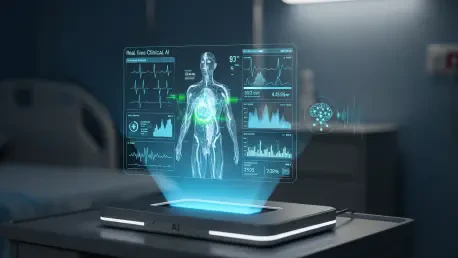
A central objective of this collaborative effort is to effectively bridge the clinical evidence gap where vital medical information often reaches a physician too late to influence the initial diagnosis. Standard electronic medical record systems frequently rely on static rules or retrospective alerts that fail to account for the fluid and fast-moving context of an emergency room setting. By transitioning toward true ambient intelligence, the platform offers real-time safeguards such as ranked differential diagnoses and drug interaction warnings without requiring the clinician to pause their workflow to consult a manual reference. This level of integration ensures that the physician remains focused on the patient rather than navigating through multiple software tabs to verify a rare condition or a complex treatment regimen. The ability to surface these insights during the encounter creates a safer environment for patients and provides clinicians with confidence that their decisions are backed by data.
Real-World Validation: Achieving Operational Excellence
To ensure the technology could withstand the extreme pressures of high-stakes medicine, the integrated system underwent extensive pressure-testing by Vituity, a prominent physician-owned partnership in the United States. Vituity served as a strategic design partner, providing the necessary real-world environment to evaluate how the AI performs under the heavy cognitive load of a busy emergency department. This phase of development was essential for refining the tool to meet the operational realities of clinicians who are frequently forced to make rapid and accurate decisions based on evolving information. The testing focused on how naturally the AI could distinguish between multiple voices in a loud room and how accurately it could map conversational cues to complex clinical codes. By observing the tool in action, the developers were able to eliminate friction points that often hinder the adoption of new technologies. The feedback allowed for iterative improvements that prioritize speed.
One of the most significant challenges in deploying artificial intelligence within healthcare is overcoming the skepticism surrounding “black box” algorithms that offer recommendations without visible reasoning. The partnership addresses this by ensuring that the clinical workflow is both seamless and transparent, grounding every suggestion in traceable, evidence-based documentation. Because the data is sourced directly from BMJ’s reputable and peer-reviewed knowledge graph, every prompt or diagnostic hint surfaced by the AI can be traced back to its original medical source. This level of transparency is crucial for building the trust required for physicians to rely on AI-driven insights during life-critical moments. Rather than simply providing an answer, the system offers a rationale that clinicians can quickly verify, which reinforces their own expertise. This collaborative model between human intelligence and machine precision fosters a more resilient healthcare system for providers.
Implementation Strategies: Looking Toward Future Standards
The preliminary outcomes of this partnership indicate significant advancements across three primary domains: diagnostic accuracy, operational efficiency, and the integrity of medical documentation. By surfacing the right information at the right time, the platform helps to standardize the quality of medical care across different hospital shifts, which is particularly beneficial in high-turnover environments. It reduces the necessity for doctors to toggle between disparate software systems, thereby decreasing the risk of information silos and errors related to data entry. The platform’s ability to generate structured notes directly from the patient interaction also ensures that the documented history is more accurate and comprehensive than traditional post-hoc dictation methods. This improvement in documentation integrity not only aids in better patient tracking but also streamlines billing processes. Furthermore, the reduction in cognitive load allows physicians to dedicate more time to care.
Organizations seeking to implement these advanced AI systems recognized that the success of such tools depended heavily on the underlying quality of their existing data infrastructure and the willingness of staff to embrace workflow changes. It became clear that healthcare leaders needed to prioritize the integration of computable knowledge sources over simple transcription tools to achieve meaningful clinical improvements. The implementation process required a focus on maintaining rigorous data hygiene and ensuring that AI outputs remained subject to human oversight. Future considerations for medical facilities included the expansion of these ambient tools into specialized surgical settings and long-term care facilities to provide a continuous thread of evidence-based support. Stakeholders who invested in these integrated platforms found that the most effective strategy involved early collaboration with clinical teams to tailor the AI’s suggestions to specific departmental needs for better safety.