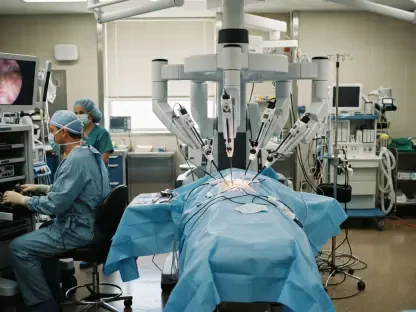

Early-rotation students are often excluded from direct surgical observation to minimize the risk of infection, creating a need for immersive instructional alternatives. In 2026, medical institutions are facing unprecedented pressure to deliver expert-level clinical training while adhering to increasingly rigid patient safety protocols. This tension is most palpable in orthopedic departments, where procedures like Total Hip Arthroplasty (THA) demand extreme precision and a sterile field that cannot be compromised. THA is historically one of the most demanding surgeries to teach because the anatomical alignment must be perfect to ensure long-term prosthetic success. However, the high risk of periprosthetic infection means that the number of people in the operating room must be kept to a minimum. This exclusion leaves students with a significant gap in their practical education, as theoretical textbooks and standard video lectures often fail to capture the visceral reality of the operating room.
The Methodology: Bridging Theory and Practice
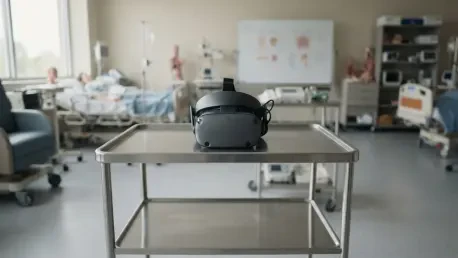
To address this educational bottleneck, recent research utilized a quasi-experimental approach to evaluate the effectiveness of 360-degree virtual reality recordings. The study compared two distinct cohorts of medical students to see if immersive video could serve as a functional surrogate for physical presence. The intervention group engaged with VR headsets that displayed actual surgical procedures, allowing them to look around the room and focus on specific instruments or staff movements at will. Meanwhile, the control group used conventional online learning platforms that are standard in many modern curricula. The methodology focused on assessing procedural knowledge, instrument identification, and sterile technique compliance. By utilizing a 20-item questionnaire with high internal consistency, the study aimed to prove that spatial immersion provides a superior cognitive framework for medical trainees. This setup ensured that any differences could be attributed solely to the instructional medium.
The pedagogical shift toward VR is driven by the need to bridge the gap between static theory and the dynamic, three-dimensional reality of surgery. Conventional digital education typically presents information in a linear, two-dimensional format, which can hinder a student’s ability to understand the complex spatial relationships between the surgeon, the assistants, and the equipment. In contrast, 360-degree video technology captures the entire environment, providing a sense of presence that traditional media lacks. This allows students to mentally map the operating room and understand the flow of the procedure in a way that feels authentic. For students in 2026, these simulations offer a low-stakes environment where they can repeat viewings as often as necessary to master difficult concepts. By removing the pressure of the live environment while retaining visual complexity, these technologies prepare students for the moment they finally cross the sterile line to participate in real-world patient care.
Quantitative Insights: Analyzing Performance Surges
The statistical data from the study provided clear evidence of a performance surge among those using immersive technology. While both groups began the training with nearly identical baseline knowledge, the post-intervention scores for the virtual reality group rose dramatically. Specifically, their mean scores jumped from a baseline of 7.22 to an impressive 12.83, reflecting a high level of comprehension and retention. On the other hand, the control group, which relied on standard online modules, showed virtually no significant improvement, with scores moving only slightly from 6.00 to 6.72. These findings underscore a critical failure in traditional digital methods when applied to technically demanding surgical tasks. The disparity suggests that reading about a procedure or watching a flat screen does not engage the same cognitive pathways as a fully immersive visual experience. This data serves as a compelling argument for the immediate integration of VR into surgical training programs to prevent educational stagnation.
Beyond the simple improvement in test scores, the research highlighted a remarkably large effect size that favors virtual reality over traditional learning. This indicates that the advantage provided by VR is not just a minor improvement but a transformative shift in how information is processed. The 360-degree format mimics the experience of standing at the surgical table, offering situational context that is often lost in conventional instructional videos. Students are not just passive observers of a screen; they are active participants in a reconstructed space. This sense of immersion helps them internalize the nuances of the procedure, such as the exact timing of instrument hand-offs and the subtle movements required for anatomical alignment. This level of detail is essential for mastering THA, where minor errors can lead to major postoperative complications. The research demonstrated that when students feel present in the room, their ability to navigate complex protocols improves exponentially.
Strategic Implementation: Enhancing Educational Outcomes
One of the most significant findings of the research was that virtual reality acted as an equitable educational tool, leveling the playing field for all participants. In the control group, there was a strong correlation between pretest scores and post-intervention success, meaning that students who started with less knowledge often remained behind their peers. However, the VR group showed no such correlation, suggesting that the immersive experience was effective regardless of a student’s initial understanding. This immersion advantage provides a standardized learning experience that can lift the performance of an entire cohort simultaneously. By providing a repeatable and safe environment, VR allows every student to achieve a baseline level of competence before entering a high-pressure clinical environment. This inclusivity is vital for modern medical education, as it ensures that the next generation of surgeons is prepared uniformly, reducing the variability in training quality that can occur in traditional apprenticeship models.
The study ultimately proved that 360-degree virtual reality was a superior method for educating students in complex surgical procedures. By overcoming the physical barriers of the operating room, this technology offered a scalable solution to the ongoing challenge of clinical access and patient safety. Researchers concluded that the integration of these immersive tools into standard curricula should have occurred years ago, as they provided the spatial awareness necessary for modern surgery. Medical schools were encouraged to adopt these systems to ensure that students felt confident and prepared before their first clinical rotation. As surgical techniques continue to advance through 2028 and beyond, the reliance on these digital bridges will only grow. The transition to VR-based training programs represented a pivotal moment in medical pedagogy, successfully merging technological innovation with the rigorous demands of surgical excellence. This approach ensured that future professionals possessed the skills required to handle the operating room.