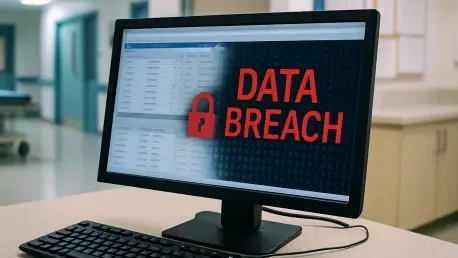

The delicate intersection of public health and digital security has once again become a high-stakes arena as New York City’s primary healthcare provider confronts allegations of a catastrophic data exposure. When a prominent threat actor group claimed to have successfully exfiltrated several terabytes of sensitive patient information from NYC Health + Hospitals, the immediate reaction across the metropolitan area was one of profound concern. This public healthcare system, which serves millions of residents and maintains a sprawling network of clinics and acute care facilities, represents one of the most significant repositories of personal health information in the United States. However, the organization quickly mobilized its internal security teams to investigate these claims, eventually issuing a robust denial that suggested the alleged breach might be a fabrication or a misidentification of the target entity. This situation highlights the growing trend of digital extortionists using psychological pressure to force settlements from large institutions before any actual evidence of a system compromise is presented.
Cybersecurity Claims: Analyzing the Nature of Alleged Extortion
The group behind the announcement, often associated with sophisticated ransomware-as-a-service operations, published a listing on their dark web leak site claiming to hold data ranging from medical records to internal financial documents. In many of these modern cyberattacks, the primary goal is not merely the theft of data but the erosion of public trust, which serves as a powerful lever during ransom negotiations. By naming a high-profile target like NYC Health + Hospitals, the attackers aim to create a sense of urgency that bypasses traditional forensic verification processes. Industry experts have observed that these claims frequently involve recycled data from older breaches or information obtained from secondary vendors rather than the primary network of the named organization. In this specific instance, the discrepancy between the volume of data claimed and the observed activity on the health system’s network led investigators to believe that the threat actor might be exaggerating their success to bolster their reputation within the underground cybercrime community.
Upon conducting an exhaustive audit of their server logs and endpoint activity, NYC Health + Hospitals reported that they found no evidence of unauthorized access to their core clinical or administrative systems. This investigative process involved scanning thousands of individual workstations and cloud storage buckets to identify any signatures of malicious software or unusual data egress patterns that would indicate a successful exfiltration event. The technical teams utilized advanced behavioral analytics and machine learning tools to compare current system states against historical baselines, searching for the subtle anomalies often left behind by persistent threat actors. Their findings suggested that while the organization remains a constant target for automated scanning and phishing attempts, the specific breach described in the ransom demand did not correspond to any physical reality within their digital environment. This rigorous verification demonstrates the necessity for organizations to maintain high-fidelity logging capabilities that can provide definitive answers when faced with high-pressure claims.
Digital Governance: Strengthening Infrastructure and Oversight
While the primary systems of a major hospital network might be secure, the complexity of modern healthcare delivery often involves hundreds of third-party vendors, each representing a potential entry point for malicious actors. Investigators looking into the recent claims noted that even if the central network remained unbreached, smaller contractors or software service providers might have suffered localized incidents that were later attributed to the larger health system. This highlights a critical challenge in cyber attribution where the boundaries between different corporate entities become blurred in the eyes of the public and the attackers themselves. To address this vulnerability, NYC Health + Hospitals has reportedly tightened its oversight of the digital supply chain, requiring all external partners to adhere to stringent encryption and reporting standards. By enforcing these rigorous requirements, the organization seeks to create a unified defensive perimeter that extends beyond its own physical data centers, acknowledging that the security of even the smallest partner has large implications.
Moving forward, robust technical auditing and transparent public reporting provided the most effective countermeasures against the psychological warfare employed by modern cybercriminal syndicates. To further strengthen their position, institutions found it necessary to adopt a comprehensive zero-trust framework that eliminated implicit trust for any user or device within the network perimeter. Leadership teams emphasized the importance of regular, simulated breach exercises to ensure that both technical and administrative staff were prepared to respond to sophisticated extortion attempts with precision and speed. The integration of automated incident response playbooks allowed for the immediate containment of suspicious activity, significantly reducing the window of opportunity for attackers to establish a foothold. Furthermore, the focus shifted toward enhancing employee awareness training, treating every staff member as a vital sensor in the organization’s defensive network. These strategic investments proved instrumental in maintaining the continuity of care while protecting the privacy of millions.