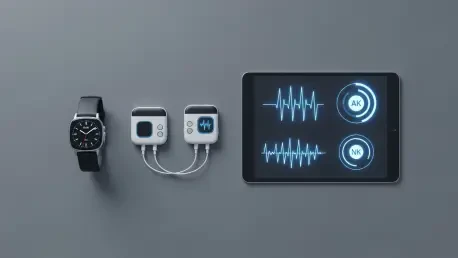

The clinical environment is no longer confined to the four walls of a hospital as millions of Americans now carry sophisticated medical-grade sensors in their pockets and on their wrists every single day. What began a decade ago as a niche trend for fitness enthusiasts has blossomed into a full-scale digital health movement that is fundamentally altering the patient-provider relationship. Today, nearly 60% of American adults own at least one connected health device, ranging from sophisticated smartwatches to discreet health rings and continuous glucose monitors. This analysis explores whether the United States is truly prepared to handle this massive deluge of personal data, examining the friction between consumer enthusiasm and clinical readiness. The purpose of this investigation is to highlight how these devices redefine personal health management while exposing the economic barriers and regulatory shifts currently shaping the industry.
From Niche Gadgets to Essential Health Tools
Understanding the current surge in health technology requires an examination of the rapid acceleration within the consumer market over the last decade. In the mid-2010s, only a small fraction of the population reported owning a wearable device, yet by 2026, that number has nearly quadrupled. This shift marks the transition of wearables from “nice-to-have” accessories to essential health infrastructure. Key developments, such as the commercial success of advanced smartwatches and the evolution of biometric rings, have shifted public perception toward a more proactive stance on wellness.
These historical developments matter because they have normalized the concept of continuous monitoring. The market has moved beyond simple step counting to tracking complex physiological markers like heart rate variability, blood oxygen levels, and sleep architecture. This normalization sets the stage for a future where health data is no longer a periodic snapshot taken once a year at a doctor’s office but a constant, living record of a person’s well-being. This transition represents a shift from reactive sick-care to a model focused on preventative, data-driven maintenance.
Bridging the Gap: Consumer Tech and Clinical Practice
The New Dialogue: Bringing Device Data to the Doctor’s Office
A critical shift in modern medicine is the increasing frequency of patients bringing their own data to clinical appointments. Recent findings indicate that 60% of wearable owners have discussed their device data with a healthcare provider, signaling that patients are no longer passive recipients of care. Instead, they act as proactive data contributors who want clinicians to analyze the long-term view of their health metrics. This dialogue offers the potential for more accurate diagnoses and highly personalized treatment plans based on real-world evidence rather than laboratory conditions.
However, this trend faces significant hurdles within the established medical system. Many healthcare organizations are hesitant to integrate third-party data platforms into their official patient portals due to technical and legal concerns. The primary issue involves liability; providers fear the legal consequences if a critical alert, such as an instance of atrial fibrillation, is buried within thousands of hours of consumer-generated data and goes unnoticed. Without streamlined workflows, this influx of data remains a logistical burden for overstretched medical staff.
The Healthy and Wealthy Paradox in Tech Adoption
While technology is advancing rapidly, its distribution across the American population remains significantly uneven. A persistent demographic imbalance exists where the primary users of health wearables are younger, wealthier, and often already in relatively good health. Over half of these users purchased their devices out-of-pocket, while only a small fraction received them through an employer or a dedicated insurance provider. This creates a paradox where those who stand to benefit most from continuous monitoring are the least likely to have access.
Individuals managing chronic illnesses in underserved communities often lack the financial resources to participate in this digital revolution. This divide poses a significant challenge to the promise of wearables as a tool for public health improvement. If left unaddressed, the revolution risks widening the existing gap in health outcomes between different socioeconomic groups. Expanding access through subsidized programs and insurance coverage is essential to ensure that technological progress serves the entire population rather than just a privileged subset.
Navigating the Regulatory and Liability Minefield
The integration of wearables into the medical establishment is further complicated by institutional inertia and regulatory ambiguity. Many clinicians remain on the sidelines because the infrastructure to filter and interpret wellness data into actionable medical insights is still in its infancy. There is also a common misunderstanding regarding the classification of these devices. While many consumers view their smartwatches as legitimate medical tools, the regulatory environment often treats them as wellness products to avoid the rigorous hurdles of clinical-grade certification.
This distinction is crucial for understanding why a doctor might be skeptical of a heart rate spike recorded by a consumer app versus one recorded by a hospital-grade EKG. Furthermore, the lack of standardized data formats makes it difficult for different systems to communicate effectively. Until federal guidelines provide clearer pathways for the clinical validation of consumer hardware, many practitioners will continue to treat wearable data as supplemental rather than foundational to medical decision-making.
Scaling the Mountain: Future Trends and Policy Shifts
The trajectory of the wearable health revolution will likely be defined by a more permissive regulatory environment and new economic models between 2026 and 2028. Recent federal guidance suggests a shift toward encouraging wearable use by lessening the oversight on devices intended for general wellness, even if they track metrics like blood pressure. Simultaneously, the Centers for Medicare & Medicaid Services are experimenting with reimbursement models that would pay for technology-backed care for chronic conditions.
Partnerships between tech innovators and traditional insurers are becoming more common, signaling a move toward a world where a wearable might be prescribed by a doctor and covered by a health plan. Industry experts predict that the next frontier involves the seamless, automated integration of this data into Electronic Health Records. This evolution will allow for passive monitoring that alerts doctors only when specific physiological thresholds are crossed, reducing alert fatigue while maintaining a high level of patient safety and oversight.
Strategic Considerations: A Connected Healthcare System
The transition to a wearable-first health model requires a coordinated strategy from all stakeholders involved in the ecosystem. For healthcare providers, the focus should be on implementing automated data-filtering tools to manage liability risks and extract meaningful insights without increasing administrative workloads. For insurers and employers, the goal must be to subsidize these devices for high-risk populations, moving beyond the current model of out-of-pocket ownership to ensure equitable access across all demographics.
Consumers should focus on using these devices as tools for behavioral change rather than just data collection points. Best practices suggest that wearables are most effective when paired with professional medical guidance rather than used for self-diagnosis. By bridging the gap between consumer hardware and clinical software, the industry can turn a flood of raw data into a lifeline for patient care. Success requires moving away from data silos and toward a collaborative environment where information flows securely and usefully.
A Turning Point: American Public Health in Review
The analysis demonstrated that the wearable health revolution was not merely a consumer trend but a fundamental shift in the American medical infrastructure. It was clear that while the hardware reached a high level of maturity, the economic and legal frameworks remained in a state of catch-up. The data indicated that massive adoption occurred among the affluent, yet the potential for life-saving intervention was greatest among those currently excluded from the market. Strategic focus was shifted toward integrating passive data streams into clinical workflows to prevent provider burnout and mitigate legal risks.
Future success in this sector depended on the ability of policy makers to standardize data privacy and ensure that digital health tools were treated as essential rather than elective. Organizations were encouraged to prioritize interoperability, allowing different platforms to share critical alerts without friction. Ultimately, the transformation of American public health was found to rely on the equitable distribution of these technologies. The focus transitioned from simply collecting data to applying it in ways that proactively saved lives and reduced the overall cost of chronic disease management.