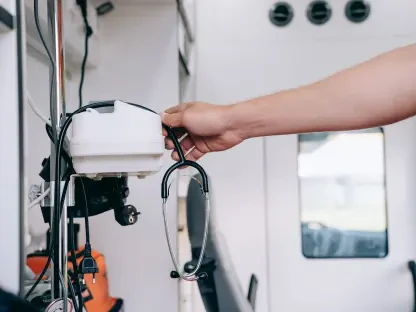

The sudden impact of a high-speed collision on a remote county road in southwestern Minnesota once meant a desperate race against the clock where survival depended entirely on the limited resources immediately available inside a single ambulance. Today, this isolation is being dismantled as high-tech virtual care platforms integrate directly into emergency vehicles, effectively placing a team of board-certified trauma surgeons and critical care nurses alongside paramedics in the field. By establishing a robust network across eighteen counties, this initiative leverages advanced mobile telehealth to bridge the vast geographic gaps that have historically compromised patient outcomes in rural regions. This transformation is not merely about adding a screen to a dashboard; it represents a fundamental shift in how emergency medicine is practiced, turning every ambulance into a mobile extension of the region’s most sophisticated medical centers. As these virtual hubs become operational, they ensure that the standard of care is mirrored in the quietest corners.
Virtual Hubs: Synchronizing the Chain of Survival
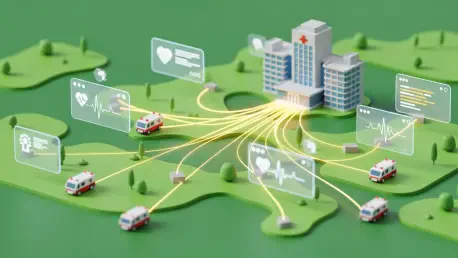
The core of this logistical evolution lies in the creation of specialized virtual hubs that facilitate instantaneous communication between three distinct and vital parties during a crisis. When a call is dispatched, the ambulance crew on the ground, the staff at the local receiving hospital, and a remote team of specialists at a tertiary medical center are all synchronized through a single encrypted digital channel. This multi-way connectivity allows for a seamless handoff process, where the local emergency room is briefed on a patient’s condition in real-time, often viewing live video feeds of the treatment being administered in the vehicle. Such transparency eliminates the blind handoff that frequently occurs when paramedics arrive at a hospital with an unstable patient, as the receiving doctors have already observed the physiological trends and have pre-ordered the necessary interventions. This collaborative environment ensures that the entire medical team is prepared for the arrival of a trauma case.
Operating on a massive scale, the program currently networks fifty-four different emergency medical service systems, effectively blanketing one hundred and nine ambulances with advanced telecommunication tools. By connecting twenty-seven regional hospitals into a cohesive grid, the project creates a high-density safety net that covers thousands of square miles of agricultural and residential land. This modernization is particularly crucial for smaller municipal services that have historically struggled with professional isolation and limited access to continuing education or real-time clinical support. Through this network, even the most remote volunteer ambulance service can tap into the same level of diagnostic expertise found in a major metropolitan trauma center. The infrastructure provides a level of professional security to rural first responders, knowing they are never truly alone when facing a complex medical scenario. This systematic approach to networking hospitals and mobile units represents a significant leap forward in care.
Seamless Reliability: Engineering the Mobile Clinical Environment
Reliability serves as the backbone of this technological rollout, as any lapse in communication during a cardiac arrest or severe stroke could lead to catastrophic outcomes for the patient. To combat the persistent issue of spotty cellular coverage in rural Minnesota, the system utilizes a sophisticated communication architecture that features automatic failover to satellite backups. This redundancy ensures that high-definition video and audio streams remain uninterrupted even when an ambulance travels through dead zones or valleys where traditional cell signals vanish. The hardware installed in these vehicles is specifically designed for the high-vibration environment of emergency transport, maintaining clear signals and stable connections during high-speed travel on unpaved or poorly maintained roads. By prioritizing connectivity resilience, the program allows paramedics to focus entirely on patient care rather than troubleshooting technical glitches, which is a vital distinction in high-stress environments.
Beyond simple video conferencing, the integrated telehealth platform enables the real-time transmission of sophisticated diagnostic data, including twelve-lead EKG readings and continuous vital sign monitoring. This stream of information allows remote board-certified emergency physicians to analyze heart rhythms and respiratory patterns as they occur, providing a level of diagnostic precision that was previously impossible outside of a hospital setting. Doctors can remotely guide paramedics through complex procedures, such as advanced airway management or the administration of potent cardiovascular medications, ensuring that every move is validated by an expert eye. The ability to monitor a patient’s status continuously from the scene of the accident to the hospital doors allows for dynamic adjustments in treatment protocols based on the patient’s response to initial interventions. This continuous flow of data not only improves immediate care but also creates a comprehensive digital record.
Clinical Outcomes: Redefining the Golden Hour
The concept of the golden hour has long been the standard for emergency medicine, emphasizing that the chances of survival for trauma patients increase exponentially if they receive definitive care within sixty minutes. In rural environments, this window is frequently closed by the sheer distance between the patient and the nearest specialized trauma center, with transport times often exceeding forty-five minutes. Mobile telehealth effectively expands this window by bringing the hospital to the patient, allowing advanced medical protocols to be initiated the moment the paramedics arrive on the scene. By starting specialized treatments earlier, medical teams can stabilize internal hemorrhages or begin neuroprotective measures for stroke victims long before the ambulance reaches the hospital helipad or emergency bay. This shift in the timeline of care significantly reduces the physiological damage caused by delayed intervention, potentially decreasing the length of hospital stays and improving overall recovery rates.
Empowering local paramedics with a virtual specialist also leads to more accurate triage and resource allocation, which is essential when managing multiple-casualty incidents on rural highways. With a remote physician assisting in the assessment, the decision to call for an expensive and limited air-medical transport can be made with greater confidence and speed. This ensures that the most critical patients are prioritized for helicopter transport to major trauma centers, while others can be safely managed at regional facilities, optimizing the use of scarce emergency resources. Furthermore, the presence of a virtual doctor helps mitigate the immense psychological pressure felt by rural first responders who may encounter life-altering injuries with only a small team of peers. The collaborative decision-making process fostered by the telehealth link enhances the clinical accuracy of field diagnoses, reducing the likelihood of misidentifying a subtle but life-threatening condition during these high-stress interactions.
Economic Viability: Sustainability and Rural Equity
Financing such a comprehensive initiative required a substantial commitment of federal funds, totaling nearly ten million dollars to cover the initial equipment costs and five years of operational expenses. This investment highlights a growing recognition of healthcare technology as a fundamental piece of public infrastructure, comparable to roads, bridges, or high-speed internet. To ensure the long-term viability of the program beyond the initial grant period, researchers at the University of Minnesota have launched a rigorous study to quantify the program’s impact on patient outcomes and overall healthcare costs. By documenting how earlier interventions lead to reduced disability and lower long-term care requirements, the study aims to provide the evidence necessary to secure permanent legislative support and insurance reimbursement models. This proactive approach to sustainability acknowledges that for a medical innovation to be truly transformative, it must prove its economic worth as well as its clinical efficacy.
Looking back at the project’s success, state-level policymakers drafted standardized regulations for telehealth reimbursements that accounted for these mobile interventions, treating the virtual consult as a distinct medical service. These guidelines encouraged neighboring counties to invest in similar infrastructure, creating a regional ripple effect that expanded the coverage area even further. Administrators realized that the primary challenge was not the technology itself, but the cultural shift required for paramedics and physicians to work together in a virtual, collaborative space. To facilitate this, they implemented mandatory simulation training that allowed teams to practice the technical aspects of the equipment while refining communication protocols. These sessions established clear hierarchies of command and standardized language, which proved essential for minimizing confusion during actual emergencies. By treating the ambulance as a sophisticated point-of-care facility, the healthcare industry paved the way for broader applications.